

 登录
B
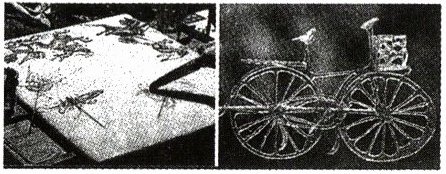
Sugar painting is a traditional Chinese form of art. Just as its name suggests, the paintings are made of sugar. They can be either regarded as works of art or eaten as desserts. In and around China's southwestern Sichuan Province, it is usual to see some folk artists producing sugar paintings along the streets, in the parks and around the schools.
The art of sugar painting goes back to the Ming Dynasty, about 400—600 years ago. At that time, the upper-class people used sugar paintings as offerings (祭品) to gods. Some common patterns were tigers, lions, dragons and so on. Later is spread among the common people. In the Qing Dynasty, sugar painting became more popular. Many people made a living by making and selling sugar paintings as desserts. The patterns for sugar paintings included all kinds of things that people liked.
Sugar painting is very different from the other forms of painting. First, the artist doesn't use brushes, oil paints or paper to create paintings. Instead, the artist uses brown sugar or white sugar as the main material, a spoon and a shovel (铲子) as the tools, and a marble slab(大理石板) as the "paper". When the painting is done, the artist uses a wooden stick to hold it. Second, the artist has to produce the work very quickly, since it's nearly impossible to paint if the hot sugar cools down. Third, the sugar painting is finished in one stroke(笔画), so the artist should design a pattern and the order of stroke in mind before any action. And the artist must follow the order while making the painting, or he/she will ruin it. To know the whole process very well, the painter has to practise hundreds of times in the first place.
4. In the Ming Dynasty, people used sugar paintings to .
A. make their houses beautiful
B. show respect and love for gods
C. celebrate important festivals
D. make children happy
5. To get the pattern right, the sugar painting artist must
A. follow a certain order
B. cut a pattern on the marble first
C. paint slowly and carefully
D. keep the sugar as hot as possible
6. The underlined word "ruin" in Paragraph 3 has the closest meaning to "".
A. change
B. fix
C. break
D. miss
7. What is the main purpose of this passage?
A. To introduce a traditional Chinese art form.
B. To teach us how to make sugar paintings.
C. To explain why sugar painting is popular.
D. To encourage people to learn sugar painting.
答案
4. B 5. A 6. C 7. A
解析
【分析】
先通读全文,明确文章围绕中国传统艺术形式“糖画”展开,介绍其起源、制作特点等内容。解题时,针对不同题型定位原文对应信息:第4题找明朝糖画用途,第5题找制作糖画的要求,第6题结合语境推测词义,第7题归纳文章主旨。
【解析】
4. 细节理解题。根据第二段“At that time, the upper-class people used sugar paintings as offerings (祭品) to gods.”可知,明朝上层阶级将糖画作为供奉给神的祭品,即表达对神的尊敬与爱戴,对应选项B。
5. 细节理解题。根据第三段“Third, the sugar painting is finished in one stroke... And the artist must follow the order while making the painting, or he/she will ruin it.”可知,艺术家必须遵循一定的笔画顺序才能完成正确的图案,对应选项A。
6. 词义猜测题。根据前文“制作糖画需遵循顺序”的描述,可知不按顺序会导致作品失败,“ruin”意为“破坏、毁掉”,与break意思相近,对应选项C。
7. 主旨大意题。全文介绍中国传统艺术糖画的起源、制作特点等,主要目的是介绍这一传统艺术形式,对应选项A。
【答案】
4. B 5. A 6. C 7. A
【知识点】
阅读理解细节理解、词义猜测、主旨大意
【点评】
本题是关于中国传统艺术糖画的阅读理解题,考查细节查找、词义推测和主旨归纳,难度适中,学生可通过定位原文信息完成解答。
【难度系数】
0.7
