

 登录
第一部分 听对话回答问题
本部分共有10道小题,每小题你将听到一段对话,每段对话听两遍。在听每段对话前,你将有5秒钟的时间阅读题目;听完后,你还有5秒钟的时间选择你认为最合适的备选答案。在听到“嘀”的信号后,进入下一小题。
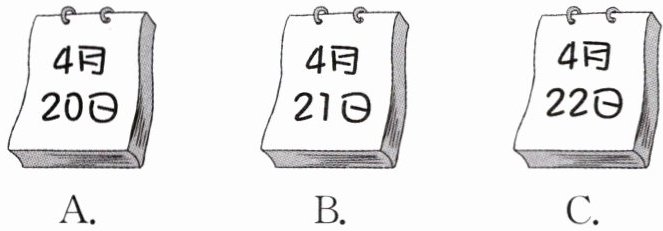
1. When was the first Earth Day celebrated?
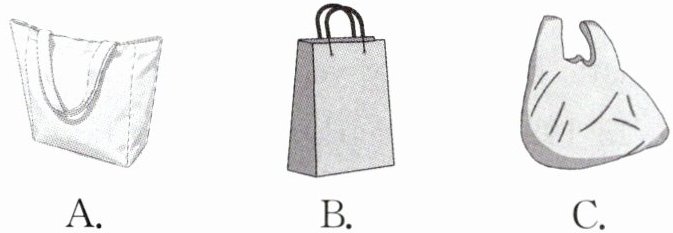
2. What kind of bag does Jenny use?
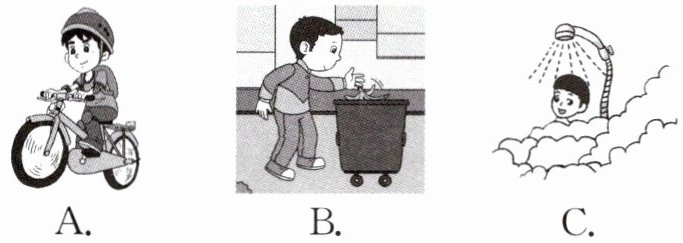
3. What doesn't Frank advise the girl to do?
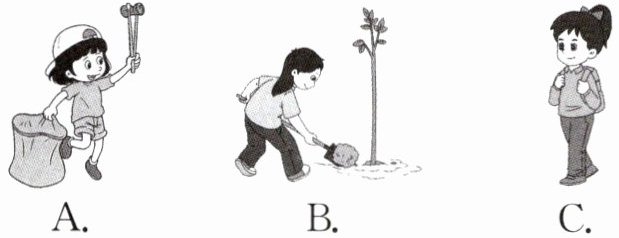
4. What does Andy think we can do to live a green life?
5. Who was born in 1981?
A. Deng Yaping. B. Wang Nan.
C. Zhang Yining.
6. What does the man mean?
A. He wants to eat ice cream.
B. He wants to play football.
C. He is not well.
7. What is the main cause of pollution in the city according to the man?
A. Too many cars. B. Wastewater.
C. Littering in the street.
8. Why does Jack like drawing on old boxes?
A. He wants to sell the boxes.
B. He wants to make his sister happy.
C. He studies Art at school.
9. When did the girl start bringing a cloth bag when shopping?
A. Five weeks ago. B. Five months ago.
C. Five years ago.
10. How many students take showers for less than ten minutes?
A. 15. B. 30. C. 45.
本部分共有10道小题,每小题你将听到一段对话,每段对话听两遍。在听每段对话前,你将有5秒钟的时间阅读题目;听完后,你还有5秒钟的时间选择你认为最合适的备选答案。在听到“嘀”的信号后,进入下一小题。
1. When was the first Earth Day celebrated?
2. What kind of bag does Jenny use?
3. What doesn't Frank advise the girl to do?
4. What does Andy think we can do to live a green life?
5. Who was born in 1981?
A. Deng Yaping. B. Wang Nan.
C. Zhang Yining.
6. What does the man mean?
A. He wants to eat ice cream.
B. He wants to play football.
C. He is not well.
7. What is the main cause of pollution in the city according to the man?
A. Too many cars. B. Wastewater.
C. Littering in the street.
8. Why does Jack like drawing on old boxes?
A. He wants to sell the boxes.
B. He wants to make his sister happy.
C. He studies Art at school.
9. When did the girl start bringing a cloth bag when shopping?
A. Five weeks ago. B. Five months ago.
C. Five years ago.
10. How many students take showers for less than ten minutes?
A. 15. B. 30. C. 45.
答案
1. C 2. A 3. A 4. C 5. C 6. C 7. A 8. B 9. B 10. A
听一段对话,回答第 11~12 小题。答题完毕,请等待"嘀"的信号,进入第一篇短文。
11. What does the boy want to do?
A. Write an article. B. Save some money.
C. Recycle paper.
12. How many ways of saving the environment do they talk about?
A. Two.
B. Three.
C. Four.
11. What does the boy want to do?
A. Write an article. B. Save some money.
C. Recycle paper.
12. How many ways of saving the environment do they talk about?
A. Two.
B. Three.
C. Four.
答案
11. A 12. B
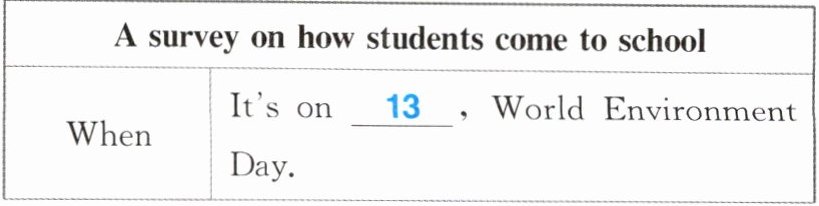
听第一篇短文,回答第13~15小题,请根据短文内容,选择正确答案,完成信息记录表。答题完毕,请等待"嘀"的信号,进入下一篇短文。
(续表)
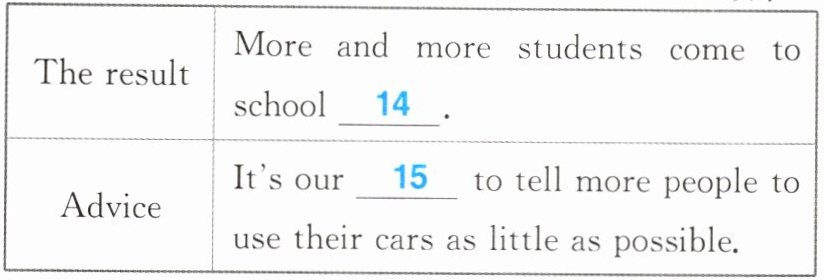
13. A. May 4th B. June 5th C. July 6th
14. A. by bus B. by taxi C. by car
15. A. duty B. chance C. choice
听第二篇短文,回答第16~20小题。
16. Which materials were the medals made from?
A. Natural materials. B. Recycled materials.
C. Expensive materials.
17. How much silver was needed to make the medals?
A. 2,400 kg. B. 3,200 kg. C. 3,500 kg.
18. What were set up across cities around Japan?
A. Gold companies.
B. Collection centres.
C. International schools.
19. When did the activity end?
A. In March, 2017. B. In March, 2019.
C. In April, 2019.
20. What did the project provide for the world?
A. A new way to save more money.
B. A new way to solve the e-waste(电子垃圾) problem.
C. A new way to collect old phones and computers.
(续表)
13. A. May 4th B. June 5th C. July 6th
14. A. by bus B. by taxi C. by car
15. A. duty B. chance C. choice
听第二篇短文,回答第16~20小题。
16. Which materials were the medals made from?
A. Natural materials. B. Recycled materials.
C. Expensive materials.
17. How much silver was needed to make the medals?
A. 2,400 kg. B. 3,200 kg. C. 3,500 kg.
18. What were set up across cities around Japan?
A. Gold companies.
B. Collection centres.
C. International schools.
19. When did the activity end?
A. In March, 2017. B. In March, 2019.
C. In April, 2019.
20. What did the project provide for the world?
A. A new way to save more money.
B. A new way to solve the e-waste(电子垃圾) problem.
C. A new way to collect old phones and computers.
答案
13. B 14. C 15. A 16. B 17. C 18. B 19. B 20. B
