

 登录
阅读下列短文,从每题所给的A、B、C、D四个选项中选出最佳选项。
A
Battling e-waste

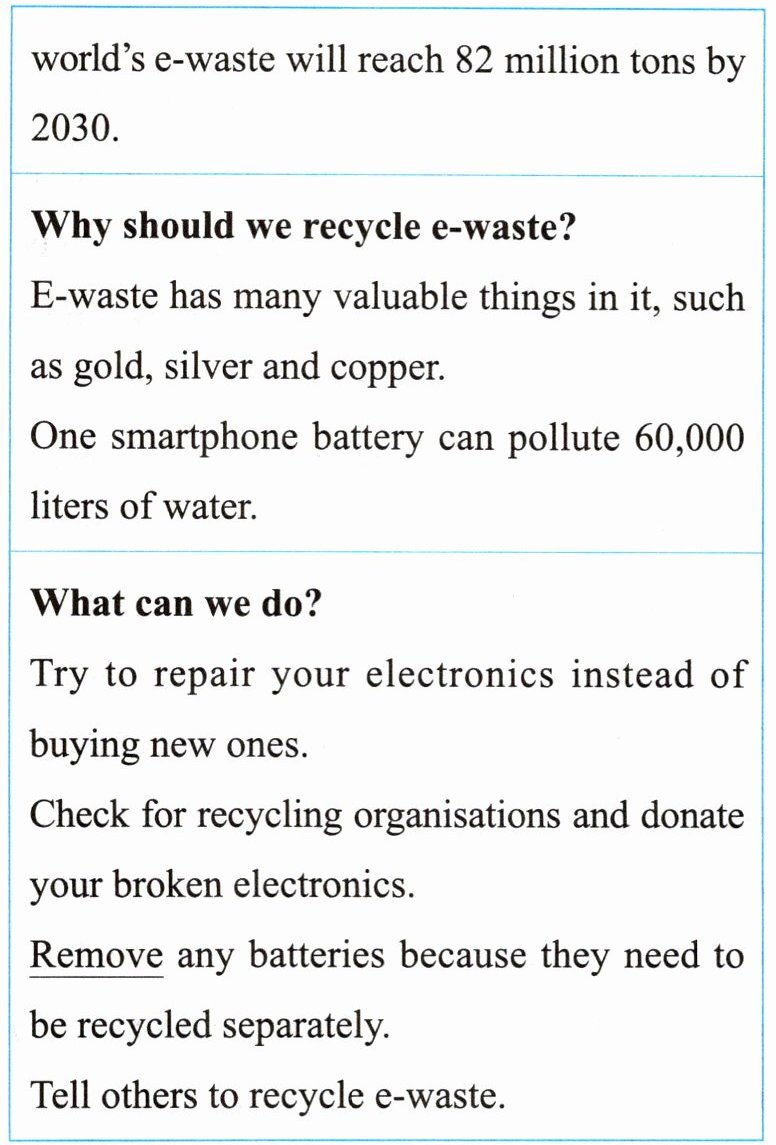
56. Where does e-waste come from?
A. Only from computers.
B. Only from smartphones.
C. From computers and other electronics.
D. From paper and plastic.
57. How much e-waste did the world produce in 2022?
A. About 30 million tons.
B. About 40 million tons.
C. About 62 million tons.
D. About 82 million tons.
58. What should we do with batteries in broken electronics?
A. Leave them in.
B. Throw them away with the electronics.
C. Recycle them together with the electronics.
D. Remove them and recycle them separately.
B
Sounds from human activities spread across the ocean, causing much trouble to ocean animals. However, according to a new study, climate change might influence how sound travels through the water.
Human-caused climate change influences the ocean in many ways, such as changing its temperature, salt level, and acidity (酸度). For example, when the water becomes more acidic, it can't take in certain sounds. So those sounds travel further, adding to the noise in some areas. However, this effect is not as big as other changes. Changes like temperature and salt level can affect how the ocean's different layers (层) mix. That, in turn, affects how sound travels.
Researchers used computers to model how those changes influence noise levels across the ocean. They compared the models of the world now to those of the world in about 70 years if climate change continues. In the North Atlantic, they saw an increase in sound levels in the upper 125 metres of the ocean.
This was caused mostly by ice melting from Greenland, forming a cold layer of water near the ocean's surface. When sound travels through water, it turns towards the coldest layer. This made sound waves get stuck in the cold top layer and spread further out across the water instead of travelling deeper. As a result, the sound became louder at this depth in the North Atlantic.
The rising noise levels in the Atlantic Ocean are worrying as they could disturb animals' communication, hunting and travelling. Sharks already avoid loud ships, but with noise levels increasing everywhere, what will happen to them?
59. How did researchers carry out the study?
A. By modelling changes in ocean noise levels.
B. By finding areas with increasing ocean noise.
C. By doing field research in the North Atlantic.
D. By comparing today's ice size to that of the future.
60. What do we know about the sound travelling through water?
A. It can be easily blocked by ice.
B. It can get stuck by the seaside.
C. It goes towards the colder areas.
D. It travels faster in the deep ocean.
61. What is the main idea of the text?
A. Ice melting brings changes to water level.
B. Some ocean animals keep away from ships.
C. The more acidic the ocean is, the more sounds it takes in.
D. Climate change may influence the way sounds travel in the ocean.
A
Battling e-waste
56. Where does e-waste come from?
A. Only from computers.
B. Only from smartphones.
C. From computers and other electronics.
D. From paper and plastic.
57. How much e-waste did the world produce in 2022?
A. About 30 million tons.
B. About 40 million tons.
C. About 62 million tons.
D. About 82 million tons.
58. What should we do with batteries in broken electronics?
A. Leave them in.
B. Throw them away with the electronics.
C. Recycle them together with the electronics.
D. Remove them and recycle them separately.
B
Sounds from human activities spread across the ocean, causing much trouble to ocean animals. However, according to a new study, climate change might influence how sound travels through the water.
Human-caused climate change influences the ocean in many ways, such as changing its temperature, salt level, and acidity (酸度). For example, when the water becomes more acidic, it can't take in certain sounds. So those sounds travel further, adding to the noise in some areas. However, this effect is not as big as other changes. Changes like temperature and salt level can affect how the ocean's different layers (层) mix. That, in turn, affects how sound travels.
Researchers used computers to model how those changes influence noise levels across the ocean. They compared the models of the world now to those of the world in about 70 years if climate change continues. In the North Atlantic, they saw an increase in sound levels in the upper 125 metres of the ocean.
This was caused mostly by ice melting from Greenland, forming a cold layer of water near the ocean's surface. When sound travels through water, it turns towards the coldest layer. This made sound waves get stuck in the cold top layer and spread further out across the water instead of travelling deeper. As a result, the sound became louder at this depth in the North Atlantic.
The rising noise levels in the Atlantic Ocean are worrying as they could disturb animals' communication, hunting and travelling. Sharks already avoid loud ships, but with noise levels increasing everywhere, what will happen to them?
59. How did researchers carry out the study?
A. By modelling changes in ocean noise levels.
B. By finding areas with increasing ocean noise.
C. By doing field research in the North Atlantic.
D. By comparing today's ice size to that of the future.
60. What do we know about the sound travelling through water?
A. It can be easily blocked by ice.
B. It can get stuck by the seaside.
C. It goes towards the colder areas.
D. It travels faster in the deep ocean.
61. What is the main idea of the text?
A. Ice melting brings changes to water level.
B. Some ocean animals keep away from ships.
C. The more acidic the ocean is, the more sounds it takes in.
D. Climate change may influence the way sounds travel in the ocean.
答案
56. C 57. C 58. D 59. A 60. C 61. D
