登录
登录
1. 八点整
2. 一点四十五
eight o'clock
2. 一点四十五
one forty - five
=a quarter to two
答案
1. eight o'clock; 2. one forty - five; a quarter to two
解析
1. 整点表达用“基数词+o'clock”,“八点整”即“eight o'clock”。
2. “一点四十五”可直接表达为“one forty - five”,也可表示为差十五分钟两点,即“a quarter to two”(“a quarter”表示一刻钟,“to”表示“差”)。
2. “一点四十五”可直接表达为“one forty - five”,也可表示为差十五分钟两点,即“a quarter to two”(“a quarter”表示一刻钟,“to”表示“差”)。
1. 六点半
2. 九点五十
3. 三点二十
six thirty
=half past six
2. 九点五十
nine fifty
=ten to ten
3. 三点二十
three twenty
=twenty past three
答案
1. six thirty;half past six
2. nine fifty;ten to ten
3. three twenty;twenty past three
2. nine fifty;ten to ten
3. three twenty;twenty past three
解析
本题考查时间的两种表达方式,一种是直接按照小时和分钟来读,另一种是当分钟数超过30时,可以用“(相差的分钟数) to (下一小时)”来表示,或者当分钟数小于或等于30时,可以用“(分钟数) past (小时)”来表示。
1. “六点半”可以直接表示为“six thirty”,也可以用“half past six”来表示。
2. “九点五十”可以直接表示为“nine fifty”,也可以用“ten to ten”来表示。
3. “三点二十”可以直接表示为“three twenty”,也可以用“twenty past three”来表示。
1. “六点半”可以直接表示为“six thirty”,也可以用“half past six”来表示。
2. “九点五十”可以直接表示为“nine fifty”,也可以用“ten to ten”来表示。
3. “三点二十”可以直接表示为“three twenty”,也可以用“twenty past three”来表示。
课文再现 你通常何时起床?
When
do
/______ do you usually get up?答案
When do
解析
询问时间用疑问词"When","通常"是"usually",句子结构为"When + 助动词 + 主语 + 动词原形",此处主语是"you",助动词用"do",所以填"When do"。
迁移运用 1. 爱玛什么时候吃早餐?
2. He does housework on weekends.(对画线部分提问)
3. 现在几点钟?
What time
/______When
does Emma have breakfast?2. He does housework on weekends.(对画线部分提问)
When does
he do housework?3. 现在几点钟?
What time
is it now?答案
1. What time; When
2. When does
3. What time
2. When does
3. What time
解析
1. 询问“什么时候”用固定搭配"What time"或"When",句首首字母大写。
2. 画线部分"on weekends"表时间,用"When"提问,原句含实义动词"does",主语是第三人称单数,助动词用"does"。
3. 询问“几点钟”用固定句型"What time is it?",句首首字母大写。
2. 画线部分"on weekends"表时间,用"When"提问,原句含实义动词"does",主语是第三人称单数,助动词用"does"。
3. 询问“几点钟”用固定句型"What time is it?",句首首字母大写。
课文再现 1. 然后,我7:50上学。Then I go to school
2. 上学日你通常何时起床? What time do you get up
at
7:50.2. 上学日你通常何时起床? What time do you get up
on
a school day?答案
1. at 2. on
解析
1. 在具体时刻前用介词at,“7:50”是具体时间点,故填at。2. “在上学日”用固定搭配on a school day,故填on。
1. 你是在六点起床吗?Do you get up
2. 在上学的晚上我不能看电视。I can't watch TV
3. 我们有时在下午做运动。We sometimes play sports
at
six?2. 在上学的晚上我不能看电视。I can't watch TV
on
school nights.3. 我们有时在下午做运动。We sometimes play sports
in
the afternoon.答案
1. at
2. on
3. in
2. on
3. in
解析
1. 在英语中,表示具体的时间点通常使用介词“at”。因此,“在六点”应该翻译为“at six”。
2. 当表示“在……的晚上”时,英语中常用介词“on”,特别是当涉及到具体某一天的晚上时,如“在上学的晚上”即为“on school nights”。
3. 当表示在一天中的某个时间段时,如“在下午”,英语中常用介词“in”,即“in the afternoon”。
2. 当表示“在……的晚上”时,英语中常用介词“on”,特别是当涉及到具体某一天的晚上时,如“在上学的晚上”即为“on school nights”。
3. 当表示在一天中的某个时间段时,如“在下午”,英语中常用介词“in”,即“in the afternoon”。
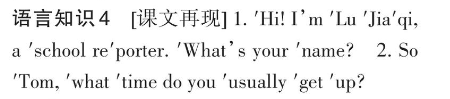
课文再现 1. Hi! I'm Lu Jiaqi, a school reporter. What's your name?(标记应重读的单词)
2. So Tom, what time do you usually get up?(标记应重读的单词)
2. So Tom, what time do you usually get up?(标记应重读的单词)
答案