

 登录
登录
B. 阅读短文,完成下列任务。
Last week, I held a birthday party for my British friend Lisa in China. We had some funny cultural differences that taught us both important lessons.
I invited her to eat long noodles, a Chinese birthday tradition, but she looked 1. (confuse) at first—she only knew birthday cakes for birthdays. I picked up noodles for her and told her to eat them without cutting, and she was 2. (surprise), not understanding the special meaning at all. Her puzzled look made me a bit 3. (embarrass), as I forgot to explain our customs first.
The most 4. (excite) part came when my mum gave her a red packet and smiled to wish her a happy birthday. Lisa was 5. (surprise) again, holding the red packet with 6. (confuse) eyes and not daring to take it. We then told her red packets are a warm Chinese birthday custom, a symbol of good luck. She laughed and accepted it happily, saying the once 7. (confuse) moments became the most 8. (interest) part of her birthday.
This experience showed us how important it is to respect cultural differences. What seems normal in one culture might be strange in another, but that doesn't mean it's wrong. By understanding and accepting these differences, we can become better friends and learn more about the world.
任务一:请在横线处用所给单词的适当形式填空。
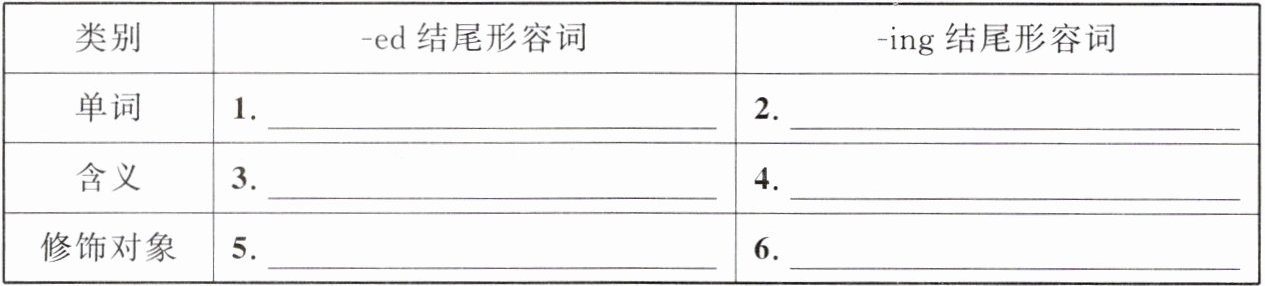
任务二:请找出短文中以-ed/-ing结尾的形容词,并总结该形容词的构成规则。
任务三:根据短文内容,选择最佳答案。
()1. What did the writer prepare for Lisa's birthday as a Chinese tradition first?
A. A red envelope. B. Long noodles. C. A birthday cake.
()2. The underlined word "puzzled" in Paragraph 2 most probably means .
A. confused B. excited C. embarrassed
Last week, I held a birthday party for my British friend Lisa in China. We had some funny cultural differences that taught us both important lessons.
I invited her to eat long noodles, a Chinese birthday tradition, but she looked 1. (confuse) at first—she only knew birthday cakes for birthdays. I picked up noodles for her and told her to eat them without cutting, and she was 2. (surprise), not understanding the special meaning at all. Her puzzled look made me a bit 3. (embarrass), as I forgot to explain our customs first.
The most 4. (excite) part came when my mum gave her a red packet and smiled to wish her a happy birthday. Lisa was 5. (surprise) again, holding the red packet with 6. (confuse) eyes and not daring to take it. We then told her red packets are a warm Chinese birthday custom, a symbol of good luck. She laughed and accepted it happily, saying the once 7. (confuse) moments became the most 8. (interest) part of her birthday.
This experience showed us how important it is to respect cultural differences. What seems normal in one culture might be strange in another, but that doesn't mean it's wrong. By understanding and accepting these differences, we can become better friends and learn more about the world.
任务一:请在横线处用所给单词的适当形式填空。
任务二:请找出短文中以-ed/-ing结尾的形容词,并总结该形容词的构成规则。
任务三:根据短文内容,选择最佳答案。
()1. What did the writer prepare for Lisa's birthday as a Chinese tradition first?
A. A red envelope. B. Long noodles. C. A birthday cake.
()2. The underlined word "puzzled" in Paragraph 2 most probably means .
A. confused B. excited C. embarrassed
答案
任务一:
1. confused
2. surprised
3. embarrassed
4. exciting
5. surprised
6. confused
7. confusing
8. interesting
任务二:
1. confused; surprised; puzzled; embarrassed
2. exciting; interesting
3. 感到……的
4. 令人……的
5. 描述人(或动物)的感受或状态
6. 描述事物或事情的特征
任务三:
1. B
2. A
1. confused
2. surprised
3. embarrassed
4. exciting
5. surprised
6. confused
7. confusing
8. interesting
任务二:
1. confused; surprised; puzzled; embarrassed
2. exciting; interesting
3. 感到……的
4. 令人……的
5. 描述人(或动物)的感受或状态
6. 描述事物或事情的特征
任务三:
1. B
2. A
