

 登录
登录
一、英汉互译。
1. 更为重要的是
2. 坐下
3. 胃痛
4. 从现在起
5. 给某人量体温
6. have the flu
7. on fire
8. be about to
9. heat some oil on the stove
10. be allergic to peanuts
1. 更为重要的是
2. 坐下
3. 胃痛
4. 从现在起
5. 给某人量体温
6. have the flu
7. on fire
8. be about to
9. heat some oil on the stove
10. be allergic to peanuts
答案
1. what's more / more importantly
2. sit down / take a seat
3. have a stomachache
4. from now on
5. take one's temperature / take the temperature of sb.
6. 患流感
7. 着火,起火
8. 即将/正要(做某事)
9. 在炉子上烧热一些油
10. 对花生过敏
2. sit down / take a seat
3. have a stomachache
4. from now on
5. take one's temperature / take the temperature of sb.
6. 患流感
7. 着火,起火
8. 即将/正要(做某事)
9. 在炉子上烧热一些油
10. 对花生过敏
解析
本题考查八年级阶段要求掌握的核心固定短语搭配,均为课内重点识记内容,结合所学的短语含义直接完成对应互译即可。
二、完成句子。
1. You should put some ice on your knee.(改为否定句)
You put ice on your knee.
2. Lucy should see the dentist and get an X-ray.(对画线部分提问)
Lucy do?
3. What's wrong with you?(同义句转换)
the with you?
4. 刚才汽车在人行横道前突然停了下来。(完成译句)
The car in front of the crossing walk just now.
5. 家长应该阻止他们的孩子花太多时间玩电子游戏。(完成译句)
The parents should stop their children too much time playing video games.
6. should, what, do, we, don't, when, we,
feel well(连词成句)
?
1. You should put some ice on your knee.(改为否定句)
You put ice on your knee.
2. Lucy should see the dentist and get an X-ray.(对画线部分提问)
Lucy do?
3. What's wrong with you?(同义句转换)
the with you?
4. 刚才汽车在人行横道前突然停了下来。(完成译句)
The car in front of the crossing walk just now.
5. 家长应该阻止他们的孩子花太多时间玩电子游戏。(完成译句)
The parents should stop their children too much time playing video games.
6. should, what, do, we, don't, when, we,
feel well(连词成句)
?
答案
1. shouldn't; any
2. What should
3. What's; matter/trouble
4. stopped suddenly
5. from spending
6. What should we do when we don't feel well
2. What should
3. What's; matter/trouble
4. stopped suddenly
5. from spending
6. What should we do when we don't feel well
解析
1. 含有情态动词should的句子变否定句,直接在should后加not,缩写为shouldn't;肯定句中的some在否定句中要变为any。
2. 画线部分是动作内容,对动作提问用特殊疑问词What,原句含情态动词should,将should提前到主语Lucy之前即可构成正确问句。
3. "What's wrong with you?" 是询问对方状况的常用句型,同义固定表达为"What's the matter/trouble with you?"。
4. 时间状语just now表示“刚才”,句子要用一般过去时,“突然停下”译为stop suddenly,stop的过去式为stopped。
5. 考查固定搭配stop sb. from doing sth.,意为“阻止某人做某事”,“花时间做某事”用spend time doing sth.,介词from后接spend的动名词形式spending。
6. 按照特殊疑问句结构,将特殊疑问词what放句首,后接情态动词should、主语we、谓语动词do,再接入when引导的时间状语从句when we don't feel well,即可组成正确句子。
2. 画线部分是动作内容,对动作提问用特殊疑问词What,原句含情态动词should,将should提前到主语Lucy之前即可构成正确问句。
3. "What's wrong with you?" 是询问对方状况的常用句型,同义固定表达为"What's the matter/trouble with you?"。
4. 时间状语just now表示“刚才”,句子要用一般过去时,“突然停下”译为stop suddenly,stop的过去式为stopped。
5. 考查固定搭配stop sb. from doing sth.,意为“阻止某人做某事”,“花时间做某事”用spend time doing sth.,介词from后接spend的动名词形式spending。
6. 按照特殊疑问句结构,将特殊疑问词what放句首,后接情态动词should、主语we、谓语动词do,再接入when引导的时间状语从句when we don't feel well,即可组成正确句子。
三、阅读理解。
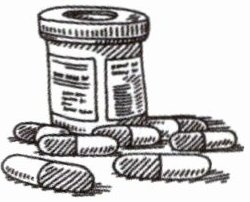
runny nose, watery eyes, headache, sneezing(打喷嚏)
How to use it:
• 12 years old and over
2 tablets (药片) every 6 hours
• Children from 2~12
1 tablet every 6 hours
()1. What is the medicine used for?
A. Stomachache.
B. Runny nose and headache.
C. Toothache.
D. Sore throat.
()2. How many tablets should a 10-year-old child take every 6 hours?
A. 1.
B. 2.
C. 3.
D. 4.
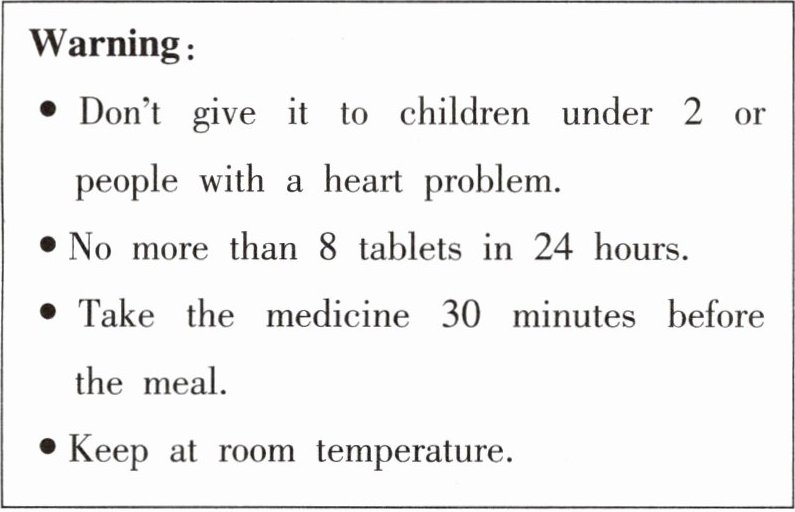
()3. Who should NOT take this medicine?
A. A 15-year-old boy.
B. A 30-year-old woman.
C. A 1-year-old baby.
D. A healthy adult.
()4. When should you take the medicine?
A. After the meal.
B. During the meal.
C. 30 minutes before the meal.
D. Before sleeping.
runny nose, watery eyes, headache, sneezing(打喷嚏)
How to use it:
• 12 years old and over
2 tablets (药片) every 6 hours
• Children from 2~12
1 tablet every 6 hours
()1. What is the medicine used for?
A. Stomachache.
B. Runny nose and headache.
C. Toothache.
D. Sore throat.
()2. How many tablets should a 10-year-old child take every 6 hours?
A. 1.
B. 2.
C. 3.
D. 4.
()3. Who should NOT take this medicine?
A. A 15-year-old boy.
B. A 30-year-old woman.
C. A 1-year-old baby.
D. A healthy adult.
()4. When should you take the medicine?
A. After the meal.
B. During the meal.
C. 30 minutes before the meal.
D. Before sleeping.
答案
1.B 2.A 3.C 4.C
解析
1. 细节理解题:根据文本开头标注的该药品对应症状runny nose, watery eyes, headache, sneezing,可知这款药是用于缓解流鼻涕、头疼等相关症状,对应选项B。
2. 细节理解题:根据How to use it部分的说明“Children from 2~12 1 tablet every 6 hours”,10岁儿童属于2到12岁的区间,每6小时需要服用1片,对应选项A。
3. 细节理解题:根据Warning部分的第一条“Don't give it to children under 2 or people with a heart problem”,1岁的婴儿属于2岁以下的人群,不能服用该药品,对应选项C。
4. 细节理解题:根据Warning部分的第三条“Take the medicine 30 minutes before the meal”,可知该药品需要在饭前30分钟服用,对应选项C。
2. 细节理解题:根据How to use it部分的说明“Children from 2~12 1 tablet every 6 hours”,10岁儿童属于2到12岁的区间,每6小时需要服用1片,对应选项A。
3. 细节理解题:根据Warning部分的第一条“Don't give it to children under 2 or people with a heart problem”,1岁的婴儿属于2岁以下的人群,不能服用该药品,对应选项C。
4. 细节理解题:根据Warning部分的第三条“Take the medicine 30 minutes before the meal”,可知该药品需要在饭前30分钟服用,对应选项C。
