

 登录
登录
Ⅲ. 补全对话
根据下面的对话情景, 在空白处填入一个适当的句子, 使对话的意思连贯、完整。
A: Hi, Mary. Can I ask you some questions about your school life?
B: Of course.
A: 1.
B: I usually get up at half past six, and then I have breakfast.
A: 2.
B: I usually have bread, eggs and apples for breakfast.
A: Sounds good. Then how do you go to school?
B: 3.
A: Mm... Walking more is good for our health. 4.
B: Our classes finish at five o'clock, and I get home at about half past five.
A: 5.
B: No, I don't. When I get home, I practice playing tennis for almost one hour first, and then I do my homework.
A: OK. Thanks a lot.
B: You're welcome.
根据下面的对话情景, 在空白处填入一个适当的句子, 使对话的意思连贯、完整。
A: Hi, Mary. Can I ask you some questions about your school life?
B: Of course.
A: 1.
What time/When do you usually get up?
B: I usually get up at half past six, and then I have breakfast.
A: 2.
What do you usually have for breakfast?
B: I usually have bread, eggs and apples for breakfast.
A: Sounds good. Then how do you go to school?
B: 3.
I walk to school./On foot.
A: Mm... Walking more is good for our health. 4.
What time/When do you get home?
B: Our classes finish at five o'clock, and I get home at about half past five.
A: 5.
Do you do your homework first after you get home? (答案不唯一,合理即可)
B: No, I don't. When I get home, I practice playing tennis for almost one hour first, and then I do my homework.
A: OK. Thanks a lot.
B: You're welcome.
答案
Ⅲ. 1. What time/When do you usually get up? 2. What do you usually have for breakfast? 3. I walk to school./On foot. 4. What time/When do you get home? 5. Do you do your homework first after you get home? (答案不唯一,合理即可)
解析
【分析】
本题为补全对话题型,需结合上下文的问答逻辑,根据答语内容反推问句或填写符合语境的答语。第1空根据答语的起床时间确定提问方向;第2空依据答语的早餐食物明确提问内容;第3空结合上学方式的问句及后文的walking确定答语;第4空由答语的到家时间推导提问;第5空根据答语的No判断为一般疑问句,结合后续做作业的内容确定提问。
【解析】
1. 答语为起床时间,故提问“你通常什么时候起床?”;
2. 答语为早餐食物,故提问“你早餐通常吃什么?”;
3. 问句询问上学方式,结合后文提到的walking,答语为“我步行去上学/步行”;
4. 答语为到家时间,故提问“你什么时候到家?”;
5. 答语以No开头,为一般疑问句,结合后续先练网球再做作业的内容,提问“你到家后先做作业吗?”
【答案】
1. What time/When do you usually get up? 2. What do you usually have for breakfast? 3. I walk to school./On foot. 4. What time/When do you get home? 5. Do you do your homework first after you get home?
【知识点】
补全对话、日常交际用语
【点评】
本题考查日常情景对话的运用,围绕校园生活的作息、饮食、上学方式、到家时间及课后安排展开,难度不大,学生只需结合上下文问答逻辑即可完成作答。
【难度系数】
0.7
本题为补全对话题型,需结合上下文的问答逻辑,根据答语内容反推问句或填写符合语境的答语。第1空根据答语的起床时间确定提问方向;第2空依据答语的早餐食物明确提问内容;第3空结合上学方式的问句及后文的walking确定答语;第4空由答语的到家时间推导提问;第5空根据答语的No判断为一般疑问句,结合后续做作业的内容确定提问。
【解析】
1. 答语为起床时间,故提问“你通常什么时候起床?”;
2. 答语为早餐食物,故提问“你早餐通常吃什么?”;
3. 问句询问上学方式,结合后文提到的walking,答语为“我步行去上学/步行”;
4. 答语为到家时间,故提问“你什么时候到家?”;
5. 答语以No开头,为一般疑问句,结合后续先练网球再做作业的内容,提问“你到家后先做作业吗?”
【答案】
1. What time/When do you usually get up? 2. What do you usually have for breakfast? 3. I walk to school./On foot. 4. What time/When do you get home? 5. Do you do your homework first after you get home?
【知识点】
补全对话、日常交际用语
【点评】
本题考查日常情景对话的运用,围绕校园生活的作息、饮食、上学方式、到家时间及课后安排展开,难度不大,学生只需结合上下文问答逻辑即可完成作答。
【难度系数】
0.7
Ⅳ. 阅读理解
We have made a survey about the food we have in a day in our class. Here are the results.
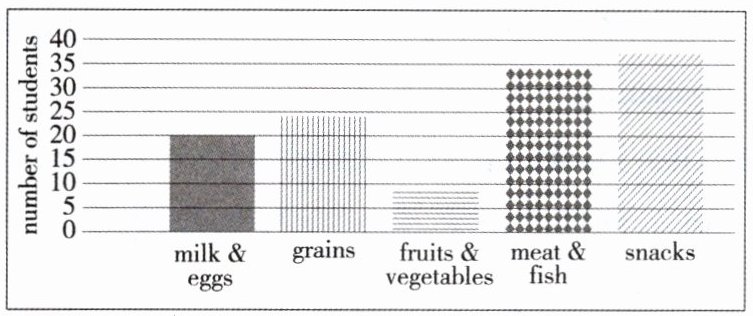
According to the results, the doctor gives us the following suggestions. We should have more fruit and vegetables, and fewer snacks. A healthy diet is important.
1. The favourite food in our class is
A. meat and fish
B. fruits and vegetables
C. grains
D. snacks
2. How many students have milk and eggs?
A. 20.
B. 10.
C. 35.
D. 38.
3. The doctor thinks we should have more
A. vegetables
B. meat
C. fish
D. snacks
We have made a survey about the food we have in a day in our class. Here are the results.
According to the results, the doctor gives us the following suggestions. We should have more fruit and vegetables, and fewer snacks. A healthy diet is important.
1. The favourite food in our class is
D
.A. meat and fish
B. fruits and vegetables
C. grains
D. snacks
2. How many students have milk and eggs?
A. 20.
B. 10.
C. 35.
D. 38.
3. The doctor thinks we should have more
A
.A. vegetables
B. meat
C. fish
D. snacks
答案
Ⅳ. 1~3 DAA
解析
【分析】
本题是结合柱状图的英语阅读理解题,需通过读取图表数据和原文信息逐一解答问题:
1. 第1题需对比图表中各类食物对应的学生数量,找出数值最大的类别,确定最受欢迎的食物;
2. 第2题直接读取图表中“milk & eggs”对应的学生数量即可;
3. 第3题定位原文中医生的建议内容,匹配对应选项。
【解析】
1. 观察柱状图数据:snacks对应的学生数为35,是所有类别中最高的,因此最受欢迎的食物是snacks,对应选项D;
2. 读取图表中“milk & eggs”的柱子高度,对应学生数为20,因此选A;
3. 原文明确提到“We should have more fruit and vegetables”,选项中A为vegetables,符合医生的建议,选A。
【答案】
1~3 DAA
【知识点】
图表信息读取、英语阅读理解、细节理解
【点评】
本题为基础的图表类英语阅读理解题,主要考查学生读取图表数据和定位原文信息的能力,难度较低,适合基础阶段学生练习。
【难度系数】
0.8
本题是结合柱状图的英语阅读理解题,需通过读取图表数据和原文信息逐一解答问题:
1. 第1题需对比图表中各类食物对应的学生数量,找出数值最大的类别,确定最受欢迎的食物;
2. 第2题直接读取图表中“milk & eggs”对应的学生数量即可;
3. 第3题定位原文中医生的建议内容,匹配对应选项。
【解析】
1. 观察柱状图数据:snacks对应的学生数为35,是所有类别中最高的,因此最受欢迎的食物是snacks,对应选项D;
2. 读取图表中“milk & eggs”的柱子高度,对应学生数为20,因此选A;
3. 原文明确提到“We should have more fruit and vegetables”,选项中A为vegetables,符合医生的建议,选A。
【答案】
1~3 DAA
【知识点】
图表信息读取、英语阅读理解、细节理解
【点评】
本题为基础的图表类英语阅读理解题,主要考查学生读取图表数据和定位原文信息的能力,难度较低,适合基础阶段学生练习。
【难度系数】
0.8
