

 登录
实践应用
根据课本第24~25页 “Reading time” 的内容,完成任务。
任务一:根据故事内容,判断句子正(T)误(F)。
(
(
(
(
任务二:根据故事内容,用所给动词的适当形式填空。
One night, an old man came to a village. He saw people running away. They said the monster Nian would come. The old man 1.
任务三:根据故事内容和所学知识,回答问题。
What do people usually do at the Spring Festival now?(至少写出两件事)
根据课本第24~25页 “Reading time” 的内容,完成任务。
任务一:根据故事内容,判断句子正(T)误(F)。
(
F
) 1. The old man came to the village and ran away with the villagers.(
T
) 2. Nian hated the colour red, bright lights and loud noises.(
T
) 3. The old man pasted red paper on the doors and windows and he also lit many candles to scare Nian.(
T
) 4. From then on, people get together on New Year's Eve to celebrate the coming new year.任务二:根据故事内容,用所给动词的适当形式填空。
One night, an old man came to a village. He saw people running away. They said the monster Nian would come. The old man 1.
had
(have) a good idea. He 2. pasted
(paste) red paper on the doors and windows and he also lit many candles. Finally, he set off fireworks. The monster was very afraid and he 3. ran
(run) away quickly. The next day, the villagers came back and 4. cheered
(cheer). From then on, on New Year's Eve, people 5. paste
(paste) fu and Spring Festival couplets on their doors and set off fireworks.任务三:根据故事内容和所学知识,回答问题。
What do people usually do at the Spring Festival now?(至少写出两件事)
答案
任务一
1. F
2. T
3. T
4. T
任务二
1. had
2. pasted
3. ran
4. cheered
5. paste
任务三
示例答案:
1. People usually paste Spring Festival couplets and red "Fu" characters on their doors.
2. They get together with family to have a big New Year's Eve dinner.
3. They also set off or watch fireworks to celebrate the festival.
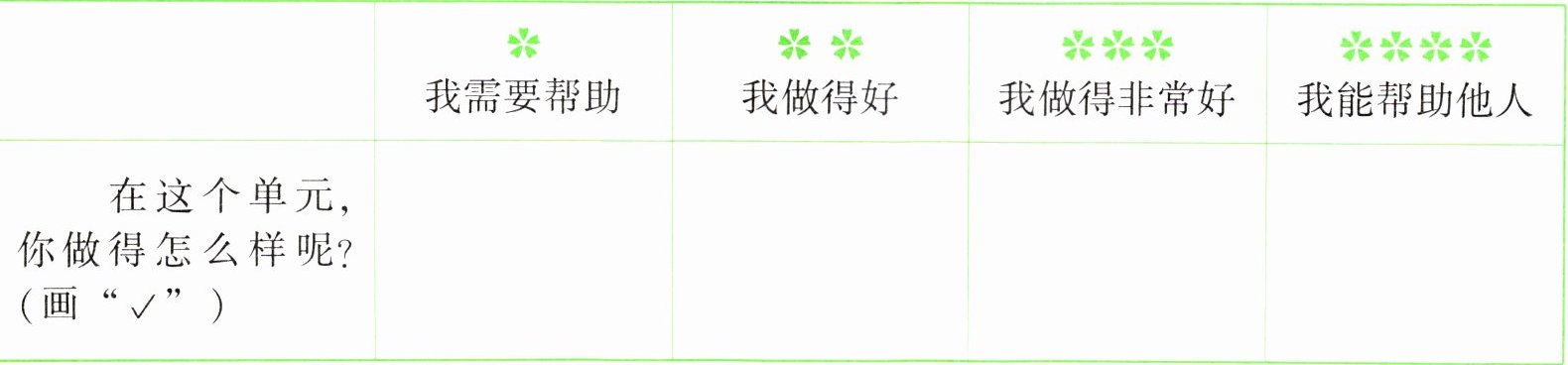
(最后评价栏可根据自身实际掌握情况在对应单元格画√即可)
解析
【分析】
本题围绕春节传说“年兽”展开,分为三个任务:任务一需根据故事细节判断句子正误,解题时要仔细核对每个句子与原文内容是否一致;任务二是动词适当形式填空,需根据时间状语判断时态(过去发生的事件用一般过去时,现在的习俗用一般现在时);任务三需结合故事内容和常识回答春节习俗,至少写出两件事。
【解析】
任务一:
1. 原文中老人是留下来对付年兽,并非和村民一起逃跑,故判断为F;
2. 故事明确提到年兽讨厌红色、亮光和噪音,故判断为T;
3. 老人确实贴了红纸在门窗、点了蜡烛来吓年兽,故判断为T;
4. 故事结尾说明从那以后人们在除夕庆祝新年,故判断为T。
任务二:
1. 描述过去的事件,用have的过去式had;
2. 描述过去的动作,用paste的过去式pasted;
3. 描述过去的动作,用run的过去式ran;
4. 描述过去的动作,用cheer的过去式cheered;
5. 描述现在的习俗,主语people是复数,用paste的原形。
任务三:
结合故事里的做法和实际春节习俗,可写出贴春联、吃年夜饭、放烟花等,至少两件即可。
【答案】
任务一:1. F 2. T 3. T 4. T
任务二:1. had 2. pasted 3. ran 4. cheered 5. paste
任务三:示例:1. People usually paste Spring Festival couplets and red "Fu" characters on their doors. 2. They get together with family to have a big New Year's Eve dinner. 3. They also set off or watch fireworks to celebrate the festival.
(最后评价栏根据自身实际掌握情况在对应单元格画“√”即可)
【知识点】
一般过去时、一般现在时、阅读理解判断正误
【点评】
本题结合传统文化故事考查英语基础知识点,题型贴近生活,难度适中,能帮助学生巩固阅读理解和时态运用的能力,同时了解春节相关的英语表达。
【难度系数】
0.6
