

 登录
C
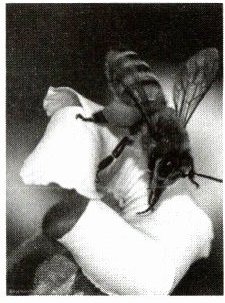
Can you say the meaning of “zero”? Can you do addition and subtraction(加减法)? Most people can. But do you know bees can do these things too? A study shows that bees have even greater maths abilities. After some training, they can understand the difference between even numbers(ending in 0,2,4,6 and 8) and odd numbers(ending in 1,3,5,7 and 9).
Some Australian scientists(科学家) put up different cards with an odd or even number of triangles(三角形). They used the numbers 1 to 10. Then they trained the first group of bees to choose odd numbers and the second group to choose even numbers. If a bee flew to the right card, it would get sugar water. If it chose the wrong card, it got bitter(苦的) water that bees always hated.
In a short time, all the bees knew what odd numbers or even numbers were. They could fly to the right numbers 80% of the time. After that, the scientists added new cards with the numbers 11 and 12. The bees never saw the numbers in their training before, but they could choose correctly 70% of the time. Surprisingly, the bees even learned odd numbers more
quickly than people.
How did the bees learn the numbers so fast? Scientists didn’t have a clear idea. But they believe if they find the answer, it will help them build better and faster computers. After all, a bee’s brain(大脑) is about 86,000 times smaller than ours!
7. How does the writer start the passage?
A. By using some pictures.
B. By telling a short story.
C. By asking a few questions.
D. By giving a famous saying(谚语).
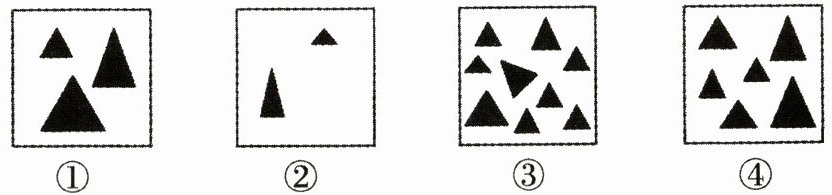
8. Which of the following cards should the second group of bees fly to?
A. ①③
B. ②④
C. ①②③
D. ②③④
9. Which of the following is TRUE according to(根据) the passage?
A. Bees have a great ability to learn numbers.
B. Our brain is much smaller than the bee's.
C. Humans learn odd numbers as quickly as bees.
D. The scientists knew exactly how bees learned numbers.
10. The purpose(目的) of the passage is to .
A. show readers the danger of bees
B. advise readers to protect bees
C. teach readers how to keep bees
D. tell readers some fun facts about bees
Can you say the meaning of “zero”? Can you do addition and subtraction(加减法)? Most people can. But do you know bees can do these things too? A study shows that bees have even greater maths abilities. After some training, they can understand the difference between even numbers(ending in 0,2,4,6 and 8) and odd numbers(ending in 1,3,5,7 and 9).
Some Australian scientists(科学家) put up different cards with an odd or even number of triangles(三角形). They used the numbers 1 to 10. Then they trained the first group of bees to choose odd numbers and the second group to choose even numbers. If a bee flew to the right card, it would get sugar water. If it chose the wrong card, it got bitter(苦的) water that bees always hated.
In a short time, all the bees knew what odd numbers or even numbers were. They could fly to the right numbers 80% of the time. After that, the scientists added new cards with the numbers 11 and 12. The bees never saw the numbers in their training before, but they could choose correctly 70% of the time. Surprisingly, the bees even learned odd numbers more
quickly than people.
How did the bees learn the numbers so fast? Scientists didn’t have a clear idea. But they believe if they find the answer, it will help them build better and faster computers. After all, a bee’s brain(大脑) is about 86,000 times smaller than ours!
7. How does the writer start the passage?
A. By using some pictures.
B. By telling a short story.
C. By asking a few questions.
D. By giving a famous saying(谚语).
8. Which of the following cards should the second group of bees fly to?
A. ①③
B. ②④
C. ①②③
D. ②③④
9. Which of the following is TRUE according to(根据) the passage?
A. Bees have a great ability to learn numbers.
B. Our brain is much smaller than the bee's.
C. Humans learn odd numbers as quickly as bees.
D. The scientists knew exactly how bees learned numbers.
10. The purpose(目的) of the passage is to .
A. show readers the danger of bees
B. advise readers to protect bees
C. teach readers how to keep bees
D. tell readers some fun facts about bees
答案
7. C 8. B 9. A 10. D
解析
【分析】
本题为英语阅读理解题,需结合原文内容逐一分析各题:
1. 第7题:定位文章开头,判断作者开篇方式;
2. 第8题:明确第二组蜜蜂的训练要求(选偶数),结合选项判断;
3. 第9题:逐一核对选项与原文表述,排除错误选项;
4. 第10题:梳理全文内容,提炼作者写作目的。
【解析】
7. 根据文章第一段开头“Can you say the meaning of “zero”? Can you do addition and subtraction(加减法)?”可知,作者通过提问的方式开启文章,对应选项C。
8. 根据第二段“trained the first group of bees to choose odd numbers and the second group to choose even numbers”,第二组蜜蜂需选择偶数(能被2整除的数),选项中②④为偶数,对应选项B。
9. 逐一分析选项:A选项:文章提到蜜蜂具备数学能力,训练后可区分奇偶,说明其有学习数字的能力,表述正确;B选项:原文“a bee’s brain(大脑) is about 86,000 times smaller than ours”,是蜜蜂大脑远小于人类,B错误;C选项:原文“the bees even learned odd numbers more quickly than people”,蜜蜂学奇数比人类快,C错误;D选项:原文“Scientists didn’t have a clear idea”,科学家未明确蜜蜂学习数字的原理,D错误,故选A。
10. 全文介绍蜜蜂具备数学能力、能区分奇偶等有趣事实,核心是向读者传递关于蜜蜂的趣味信息,对应选项D。
【答案】
7. C 8. B 9. A 10. D
【知识点】
英语阅读理解、细节理解题、主旨大意题
【点评】
本题为科普类英语阅读理解,侧重考查学生对原文细节的定位与主旨的把握,题目难度适中,需学生仔细核对原文信息,区分选项表述的正误。
【难度系数】
0.6
