

 登录
登录
Ⅳ.Complete the passage according to the context.语篇补全。
Greeting customs are different in every country. 19.
In Japan,people bow when they meet. The deeper the bow,the more respect they show. Young people bow deeply to older people to show politeness. Students bow to their teachers every morning.
In Thailand,people use a special greeting called the "wai". They put their palms together near their chest and bow slightly(稍微). 20.
In New Zealand,the Maori people have a unique(独特的) greeting called the "hongi". They press their noses and foreheads together when they meet. 21.
22.
When we visit other countries,learning their greeting customs is important. 23.
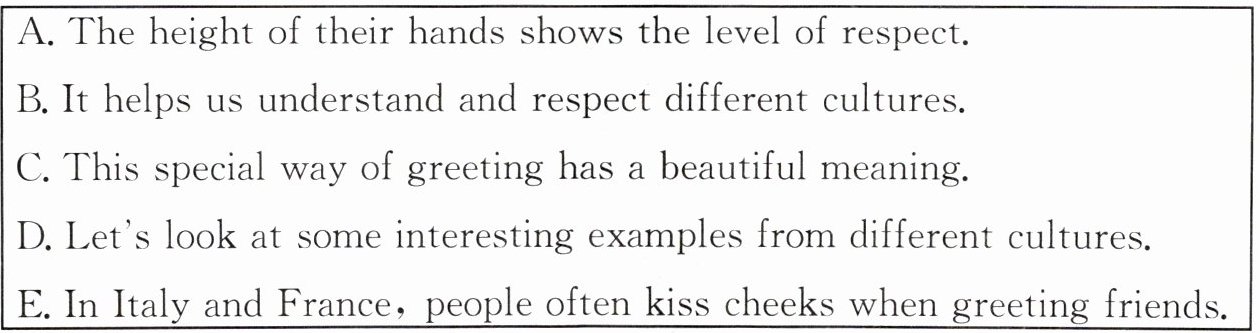
A. The height of their hands shows the level of respect.
B. It helps us understand and respect different cultures.
C. This special way of greeting has a beautiful meaning.
D. Let's look at some interesting examples from different cultures.
E. In Italy and France, people often kiss cheeks when greeting friends.
Greeting customs are different in every country. 19.
D
In Japan,people bow when they meet. The deeper the bow,the more respect they show. Young people bow deeply to older people to show politeness. Students bow to their teachers every morning.
In Thailand,people use a special greeting called the "wai". They put their palms together near their chest and bow slightly(稍微). 20.
A
For example,when they meet older people or teachers,they put their hands higher.In New Zealand,the Maori people have a unique(独特的) greeting called the "hongi". They press their noses and foreheads together when they meet. 21.
C
This means they are sharing the breath of life. It shows they accept each other as friends.22.
E
The number of kisses is different in each area. In some places,people give two kisses,one on each cheek. In other places,they give three or even four kisses.When we visit other countries,learning their greeting customs is important. 23.
B
Remembering to follow these customs can help us make friends and show respect to local people.A. The height of their hands shows the level of respect.
B. It helps us understand and respect different cultures.
C. This special way of greeting has a beautiful meaning.
D. Let's look at some interesting examples from different cultures.
E. In Italy and France, people often kiss cheeks when greeting friends.
答案
Ⅳ.19.D 20.A 21.C 22.E 23.B
解析
【分析】
这是一道英语语篇补全题,主题围绕不同国家的问候文化习俗展开。解题时首先通读全文,明确文章整体逻辑:先总述各国问候习俗不同,再逐一列举不同国家的特色问候方式,最后点明了解这些习俗的意义。接下来逐空结合前后文的关键词和逻辑关系匹配选项:
1. 第19空:前文总起点出各国问候习俗有差异,后文立刻开始介绍日本、泰国等多个国家的问候例子,因此需要一个引出下文举例的过渡句。
2. 第20空:前文介绍泰国的“wai”合十礼的动作,后文举例说明遇到长辈、老师时人们会把手举得更高,因此空缺处需要衔接“手的高度”和“尊重程度”的关联。
3. 第21空:前文介绍新西兰毛利人的碰鼻礼动作,后文紧接着解释这个动作的深层含义,因此空缺处需要过渡引出该问候方式的寓意。
4. 第22空:后文围绕“亲吻脸颊的次数各地不同”展开说明,因此空缺处需要引出贴面吻这类问候习俗。
5. 第23空:前文点明学习其他国家的问候习俗很重要,后文说明遵守习俗的好处,因此空缺处需要解释学习这些习俗的具体作用。
【解析】
19. 前文总述各国问候习俗不同,后文开始逐一列举不同国家的问候案例,D选项起到承上启下的过渡作用,符合语境。
20. 后文提到遇到长辈、老师时人们会把手举得更高,A选项正好对应后文的举例内容,逻辑连贯。
21. 后文解释碰鼻礼代表分享生命的气息、接纳对方为朋友,C选项自然引出后文的含义解释,衔接通顺。
22. 后文介绍不同地区亲吻脸颊的次数有差异,E选项引出贴面吻的问候主题,和后文内容完全对应。
23. 前文指出学习其他国家的问候习俗很重要,B选项点明学习这些习俗的作用,和后文“帮助我们交朋友、尊重当地人”的表述呼应。
【答案】
19.D 20.A 21.C 22.E 23.B
【知识点】
英语语篇补全,跨文化交际常识
【点评】
本题以世界各国问候礼仪为文化载体,重点考查学生对语篇上下文逻辑衔接的把握能力,解题时可以通过抓取前后文的关键词快速匹配对应选项,同时题目也能帮助学生了解不同国家的特色文化,提升文化意识。
【难度系数】
0.7
这是一道英语语篇补全题,主题围绕不同国家的问候文化习俗展开。解题时首先通读全文,明确文章整体逻辑:先总述各国问候习俗不同,再逐一列举不同国家的特色问候方式,最后点明了解这些习俗的意义。接下来逐空结合前后文的关键词和逻辑关系匹配选项:
1. 第19空:前文总起点出各国问候习俗有差异,后文立刻开始介绍日本、泰国等多个国家的问候例子,因此需要一个引出下文举例的过渡句。
2. 第20空:前文介绍泰国的“wai”合十礼的动作,后文举例说明遇到长辈、老师时人们会把手举得更高,因此空缺处需要衔接“手的高度”和“尊重程度”的关联。
3. 第21空:前文介绍新西兰毛利人的碰鼻礼动作,后文紧接着解释这个动作的深层含义,因此空缺处需要过渡引出该问候方式的寓意。
4. 第22空:后文围绕“亲吻脸颊的次数各地不同”展开说明,因此空缺处需要引出贴面吻这类问候习俗。
5. 第23空:前文点明学习其他国家的问候习俗很重要,后文说明遵守习俗的好处,因此空缺处需要解释学习这些习俗的具体作用。
【解析】
19. 前文总述各国问候习俗不同,后文开始逐一列举不同国家的问候案例,D选项起到承上启下的过渡作用,符合语境。
20. 后文提到遇到长辈、老师时人们会把手举得更高,A选项正好对应后文的举例内容,逻辑连贯。
21. 后文解释碰鼻礼代表分享生命的气息、接纳对方为朋友,C选项自然引出后文的含义解释,衔接通顺。
22. 后文介绍不同地区亲吻脸颊的次数有差异,E选项引出贴面吻的问候主题,和后文内容完全对应。
23. 前文指出学习其他国家的问候习俗很重要,B选项点明学习这些习俗的作用,和后文“帮助我们交朋友、尊重当地人”的表述呼应。
【答案】
19.D 20.A 21.C 22.E 23.B
【知识点】
英语语篇补全,跨文化交际常识
【点评】
本题以世界各国问候礼仪为文化载体,重点考查学生对语篇上下文逻辑衔接的把握能力,解题时可以通过抓取前后文的关键词快速匹配对应选项,同时题目也能帮助学生了解不同国家的特色文化,提升文化意识。
【难度系数】
0.7
