

 登录
Have you ever wondered why you can still ride a bike years after learning, even if you haven’t practiced? Or how you quickly recognize a friend’s face in a crowded photo? The answers lie in the amazing mechanism(机制)of human memory—something far more developed than any AI memory system we have today.
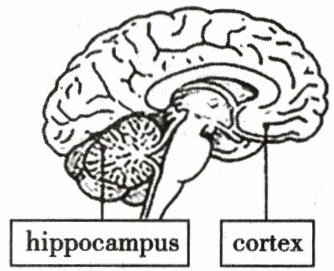
Our memory is mainly built in a brain part called the hippocampus. When we experience something new, like a new song or a family gathering, brain cells fire together(协同联动), creating a short-term pattern. Think of this as saving a note on your phone.
For this memory to last, it must be consolidated — moved from the “notes-folder”(记忆文件夹)to a longer-lasting memory storage in the brain. In this way, we can remember and never forget something. This process often happens during deep sleep, which is why a good night’s rest beats staying up late to study hard for exams.
But memory isn’t perfect. Every time we recall a memory, we might change it a little before storing it again, like changing a photo and saving the new version. This is why two people can remember the same event differently, even if they were both there.
So, how can we improve this system? Active review — connecting new information to things you already know—is more useful than simply repeating. Linking a new English word to a familiar scene, for example, makes it easier to remember. Regular review and healthy sleep are the basics of strong, long-lasting memories.
根据材料内容选择最佳答案。
(
A. By listing some numbers.
B. By telling a personal story.
C. By raising two questions.
D. By using a scientist’s opinion.
(
A. She consolidated the loose papers into a neat pile.
B. The teacher consolidated the students’ attention before class.
C. You need to consolidate your knowledge by doing more exercises.
D. We plan to consolidate the two departments to improve efficiency.
(
A. Problem→Analysis→Advice
B. Example→Argument→Summary
C. Topic→Cause→Solution
D. Comparison→Explanation→Conclusion
(
A. Paragraph 2.
B. Paragraph 3.
C. Paragraph 4.
D. Paragraph 5.
(
A. The bad habits that harm people’s memory.
B. The history of memory research by scientists.
C. Specific examples of regular review and healthy sleep.
D. The differences between human memory and AI memory.
Our memory is mainly built in a brain part called the hippocampus. When we experience something new, like a new song or a family gathering, brain cells fire together(协同联动), creating a short-term pattern. Think of this as saving a note on your phone.
For this memory to last, it must be consolidated — moved from the “notes-folder”(记忆文件夹)to a longer-lasting memory storage in the brain. In this way, we can remember and never forget something. This process often happens during deep sleep, which is why a good night’s rest beats staying up late to study hard for exams.
But memory isn’t perfect. Every time we recall a memory, we might change it a little before storing it again, like changing a photo and saving the new version. This is why two people can remember the same event differently, even if they were both there.
So, how can we improve this system? Active review — connecting new information to things you already know—is more useful than simply repeating. Linking a new English word to a familiar scene, for example, makes it easier to remember. Regular review and healthy sleep are the basics of strong, long-lasting memories.
根据材料内容选择最佳答案。
(
C
)31. How does the writer lead in the topic?A. By listing some numbers.
B. By telling a personal story.
C. By raising two questions.
D. By using a scientist’s opinion.
(
C
)32. Which of the following has the same meaning as “consolidated” in Paragraph 3?A. She consolidated the loose papers into a neat pile.
B. The teacher consolidated the students’ attention before class.
C. You need to consolidate your knowledge by doing more exercises.
D. We plan to consolidate the two departments to improve efficiency.
(
A
)33. Which of the following best describes the structure of the text?A. Problem→Analysis→Advice
B. Example→Argument→Summary
C. Topic→Cause→Solution
D. Comparison→Explanation→Conclusion
(
B
)34. Which paragraph talks about how long-term memory is formed?A. Paragraph 2.
B. Paragraph 3.
C. Paragraph 4.
D. Paragraph 5.
(
C
)35. What will the writer probably talk about next?A. The bad habits that harm people’s memory.
B. The history of memory research by scientists.
C. Specific examples of regular review and healthy sleep.
D. The differences between human memory and AI memory.
答案
31. C
32. C
33. A
34. B
35. C
