

 登录
登录
Ⅰ. Complete the passage with the proper form of the words in the box.
anybody hardly wealth prize species endless
Nature offers us 1.
anybody hardly wealth prize species endless
Nature offers us 1.
endless
wonders, and Professor Wang Wencai was one who explored them deeply. He spent over 70 years studying plants across the country, discovering and naming about 1,370 new 2.species
. Despite his achievements, he 3.hardly
longed for material things. For example, he was a man of little 4.wealth
and never looked for fame. He once won national science 5.prizes
, but he thought that the honour should belong to his team. Even when he lost his eyesight in his old age, he didn't tell 6.anybody
about his condition. At his funeral, Beethoven's *Pastoral Symphony* was played and it softly showed his lifelong love for nature.答案
1.endless 2.species 3.hardly 4.wealth 5.prizes 6.anybody
解析
【分析】
这是一篇介绍王文采教授的选词填空题,解题需先明确每个选项的词义,再结合上下文语境和语法规则逐一确定答案:
1. 第一空修饰名词“wonders”,需选形容词,结合“大自然提供的奇迹”这一语境,“endless(无尽的)”语义通顺,符合要求;
2. 第二空结合前文“studying plants”,应表示“新物种”,“species(物种)”单复数同形,匹配“1,370 new”的数量描述;
3. 第三空根据“Despite his achievements(尽管有成就)”的转折关系,可知他“几乎不渴望物质”,“hardly(几乎不)”契合这一否定语义;
4. 第四空被“little”修饰,需选不可数名词,“wealth(财富)”符合“没什么财富”的语境;
5. 第五空表示“国家科学奖项”,“prize”是可数名词,结合语境用复数形式“prizes”更合理;
6. 第六空所在句子是否定句,“anybody(任何人)”用于否定句中,符合“没告诉任何人他的状况”的语义。
【解析】
1. 句意:大自然给我们提供无尽的奇迹。此处需要形容词修饰名词“wonders”,endless意为“无尽的”,符合语境,故填endless。
2. 句意:他花了70多年研究全国的植物,发现并命名了约1370个新物种。species意为“物种”,单复数同形,符合“新物种”的语义,故填species。
3. 句意:尽管他取得了成就,但他几乎不渴望物质。hardly意为“几乎不”,结合前文转折关系,符合语境,故填hardly。
4. 句意:例如,他没什么财富,从不追求名声。wealth意为“财富”,是不可数名词,可被little修饰,符合语义,故填wealth。
5. 句意:他曾获得国家科学奖项,但他认为荣誉属于他的团队。prize意为“奖项”,此处表示不止一个奖项,用复数形式prizes,故填prizes。
6. 句意:甚至在晚年失明时,他也没告诉任何人他的情况。anybody用于否定句中,意为“任何人”,符合语境,故填anybody。
【答案】
1.endless 2.species 3.hardly 4.wealth 5.prizes 6.anybody
【知识点】
1. 形容词词义辨析
2. 名词单复数用法
3. 不定代词运用
【点评】
本题考查词汇在语境中的灵活运用,既要求学生掌握核心词汇的词义,也需要结合上下文逻辑判断词性和词形,同时涉及不可数名词、不定代词的基础语法知识,能有效考查学生的词汇储备和语境分析能力。
【难度系数】
0.6
这是一篇介绍王文采教授的选词填空题,解题需先明确每个选项的词义,再结合上下文语境和语法规则逐一确定答案:
1. 第一空修饰名词“wonders”,需选形容词,结合“大自然提供的奇迹”这一语境,“endless(无尽的)”语义通顺,符合要求;
2. 第二空结合前文“studying plants”,应表示“新物种”,“species(物种)”单复数同形,匹配“1,370 new”的数量描述;
3. 第三空根据“Despite his achievements(尽管有成就)”的转折关系,可知他“几乎不渴望物质”,“hardly(几乎不)”契合这一否定语义;
4. 第四空被“little”修饰,需选不可数名词,“wealth(财富)”符合“没什么财富”的语境;
5. 第五空表示“国家科学奖项”,“prize”是可数名词,结合语境用复数形式“prizes”更合理;
6. 第六空所在句子是否定句,“anybody(任何人)”用于否定句中,符合“没告诉任何人他的状况”的语义。
【解析】
1. 句意:大自然给我们提供无尽的奇迹。此处需要形容词修饰名词“wonders”,endless意为“无尽的”,符合语境,故填endless。
2. 句意:他花了70多年研究全国的植物,发现并命名了约1370个新物种。species意为“物种”,单复数同形,符合“新物种”的语义,故填species。
3. 句意:尽管他取得了成就,但他几乎不渴望物质。hardly意为“几乎不”,结合前文转折关系,符合语境,故填hardly。
4. 句意:例如,他没什么财富,从不追求名声。wealth意为“财富”,是不可数名词,可被little修饰,符合语义,故填wealth。
5. 句意:他曾获得国家科学奖项,但他认为荣誉属于他的团队。prize意为“奖项”,此处表示不止一个奖项,用复数形式prizes,故填prizes。
6. 句意:甚至在晚年失明时,他也没告诉任何人他的情况。anybody用于否定句中,意为“任何人”,符合语境,故填anybody。
【答案】
1.endless 2.species 3.hardly 4.wealth 5.prizes 6.anybody
【知识点】
1. 形容词词义辨析
2. 名词单复数用法
3. 不定代词运用
【点评】
本题考查词汇在语境中的灵活运用,既要求学生掌握核心词汇的词义,也需要结合上下文逻辑判断词性和词形,同时涉及不可数名词、不定代词的基础语法知识,能有效考查学生的词汇储备和语境分析能力。
【难度系数】
0.6
Ⅱ. Read and complete the tasks.
Every plant, from the smallest grass to the tallest redwood tree, is made up of several important parts. Each part has a special job that helps the plant live and grow.
Let's start with the roots. They are usually hidden underground. Roots have two main jobs: to hold the plant firmly in the soil, and to get water and minerals from the ground. Think of them as the plant's feet and mouths.
Above the ground, we have the stem. The stem acts like the plant's backbone and its traffic system. It holds the plant up, allowing leaves to reach sunlight. It also has small paths that carry water from the roots to the leaves, and food from the leaves to the rest of the plant.
Finally, we have the leaves. Leaves are the plant's food factories. Through a process called photosynthesis (光合作用), they use sunlight, carbon dioxide from the air, and water to create sugar (food) for the plant. Most leaves are flat and wide to catch as much sunlight as possible.
By working together, the roots, stem, and leaves keep the plant healthy and strong, and able to produce flowers and seeds for the next generation.
A. Answer the questions.
(
A. To produce food and get sunlight.
B. To help the plant stand up and carry food.
C. To help the plant breathe and grow flowers.
D. To hold the plant and get water and minerals.
(
A. The stem helps the plant reproduce.
B. Photosynthesis happens in the stem.
C. The most important part of the plant is the stem.
D. The stem supports the plant and carries water and food.
(
A. To catch as much sunlight as possible.
B. To make the plant look more beautiful.
C. To provide better support for the plant.
D. To get water from the soil more effectively.
(
A. The life of a redwood tree
B. How plants make food
C. Parts of a plant and their jobs
D. Why leaves are green
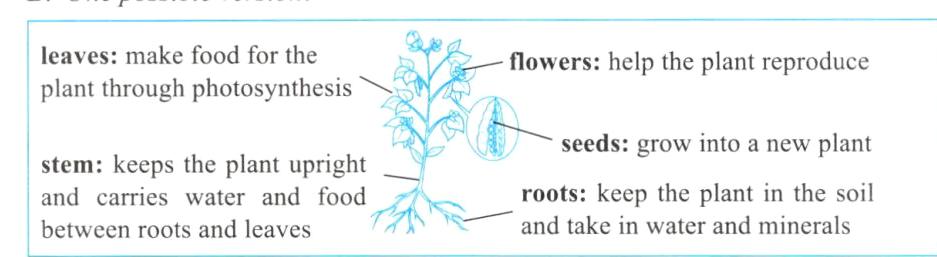
B. Draw a picture of a plant. Label (标注) its different parts and functions (功能).

Every plant, from the smallest grass to the tallest redwood tree, is made up of several important parts. Each part has a special job that helps the plant live and grow.
Let's start with the roots. They are usually hidden underground. Roots have two main jobs: to hold the plant firmly in the soil, and to get water and minerals from the ground. Think of them as the plant's feet and mouths.
Above the ground, we have the stem. The stem acts like the plant's backbone and its traffic system. It holds the plant up, allowing leaves to reach sunlight. It also has small paths that carry water from the roots to the leaves, and food from the leaves to the rest of the plant.
Finally, we have the leaves. Leaves are the plant's food factories. Through a process called photosynthesis (光合作用), they use sunlight, carbon dioxide from the air, and water to create sugar (food) for the plant. Most leaves are flat and wide to catch as much sunlight as possible.
By working together, the roots, stem, and leaves keep the plant healthy and strong, and able to produce flowers and seeds for the next generation.
A. Answer the questions.
(
D
)1. What are the two main jobs of the roots?A. To produce food and get sunlight.
B. To help the plant stand up and carry food.
C. To help the plant breathe and grow flowers.
D. To hold the plant and get water and minerals.
(
D
)2. What can we know about the stem in Paragraph 3?A. The stem helps the plant reproduce.
B. Photosynthesis happens in the stem.
C. The most important part of the plant is the stem.
D. The stem supports the plant and carries water and food.
(
A
)3. Why are most leaves flat and wide?A. To catch as much sunlight as possible.
B. To make the plant look more beautiful.
C. To provide better support for the plant.
D. To get water from the soil more effectively.
(
C
)4. Which of the following would be the best title for this passage?A. The life of a redwood tree
B. How plants make food
C. Parts of a plant and their jobs
D. Why leaves are green
B. Draw a picture of a plant. Label (标注) its different parts and functions (功能).
答案
A.1.D 2.D 3.A 4.C
B.One possible version:
解析
【分析】
对于A部分的四道选择题,解题思路为:先通读全文,明确各段落介绍的植物部位及功能,再针对每个问题定位对应段落的关键信息,对比选项选出与原文匹配的答案。
1. 第1题询问根的两大作用,需定位到第二段关于roots的描述,找到原文明确说明的根的功能,再匹配选项。
2. 第2题考查茎的相关信息,需阅读第三段,提取茎的支撑和运输作用的内容,排除不符合原文的选项。
3. 第3题问叶子扁平宽阔的原因,直接查找第四段最后一句的表述即可得出答案。
4. 第4题选最佳标题,需梳理全文主旨:文章围绕植物的根、茎、叶三个部位及各自功能展开,据此选择能概括全文的标题。
B部分需要先画出包含根、茎、叶的植物图,再结合文中介绍的各部位功能进行标注。
【解析】
A.
1. 定位文章第二段:“Roots have two main jobs: to hold the plant firmly in the soil, and to get water and minerals from the ground.”,选项D与原文描述完全一致;A是叶子的功能,B是茎的部分功能,C不符合原文内容,故选D。
2. 根据第三段:“The stem acts like the plant's backbone and its traffic system. It holds the plant up... It also has small paths that carry water from the roots to the leaves, and food from the leaves to the rest of the plant.”,可知茎的作用是支撑植物,同时运输水分和养分,选项D正确;A选项的繁殖功能是花和种子的作用,B光合作用发生在叶子中,C文中未提及茎是植物最重要的部分,均排除,故选D。
3. 第四段最后一句明确提到:“Most leaves are flat and wide to catch as much sunlight as possible.”,直接对应选项A,其他选项均不符合原文表述,故选A。
4. 全文围绕植物的根、茎、叶三个部位及其各自的功能展开介绍,选项C“Parts of a plant and their jobs”能完整概括主旨;A仅提及红杉,范围过窄;B只涉及叶子制造食物的内容,片面;D未提及叶子颜色相关内容,均排除,故选C。
B.
绘制包含根、茎、叶的植物示意图,标注各部分及功能:
根(Roots):固定植物于土壤中;吸收土壤中的水分和矿物质。
茎(Stem):支撑植物;将水分从根部运输到叶片,将养分从叶片运输到植物其他部位。
叶(Leaves):通过光合作用为植物制造养分;尽可能捕捉阳光。
【答案】
A. 1.D 2.D 3.A 4.C
B. 参考示例(如参考答案插图),标注如下:
根:固定植物,吸收土壤中的水分和矿物质
茎:支撑植物,运输水分和养分
叶:通过光合作用制造植物所需养分,尽可能捕捉阳光
【知识点】
阅读理解细节查找;主旨标题归纳;植物结构与功能认知
【点评】
本文将英语阅读与生物常识结合,既考查学生的英语细节提取、主旨归纳能力,也帮助学生了解植物各部位的功能,实现跨学科知识的融合学习,题目设置贴合文章内容,难度适中。
【难度系数】
0.7
对于A部分的四道选择题,解题思路为:先通读全文,明确各段落介绍的植物部位及功能,再针对每个问题定位对应段落的关键信息,对比选项选出与原文匹配的答案。
1. 第1题询问根的两大作用,需定位到第二段关于roots的描述,找到原文明确说明的根的功能,再匹配选项。
2. 第2题考查茎的相关信息,需阅读第三段,提取茎的支撑和运输作用的内容,排除不符合原文的选项。
3. 第3题问叶子扁平宽阔的原因,直接查找第四段最后一句的表述即可得出答案。
4. 第4题选最佳标题,需梳理全文主旨:文章围绕植物的根、茎、叶三个部位及各自功能展开,据此选择能概括全文的标题。
B部分需要先画出包含根、茎、叶的植物图,再结合文中介绍的各部位功能进行标注。
【解析】
A.
1. 定位文章第二段:“Roots have two main jobs: to hold the plant firmly in the soil, and to get water and minerals from the ground.”,选项D与原文描述完全一致;A是叶子的功能,B是茎的部分功能,C不符合原文内容,故选D。
2. 根据第三段:“The stem acts like the plant's backbone and its traffic system. It holds the plant up... It also has small paths that carry water from the roots to the leaves, and food from the leaves to the rest of the plant.”,可知茎的作用是支撑植物,同时运输水分和养分,选项D正确;A选项的繁殖功能是花和种子的作用,B光合作用发生在叶子中,C文中未提及茎是植物最重要的部分,均排除,故选D。
3. 第四段最后一句明确提到:“Most leaves are flat and wide to catch as much sunlight as possible.”,直接对应选项A,其他选项均不符合原文表述,故选A。
4. 全文围绕植物的根、茎、叶三个部位及其各自的功能展开介绍,选项C“Parts of a plant and their jobs”能完整概括主旨;A仅提及红杉,范围过窄;B只涉及叶子制造食物的内容,片面;D未提及叶子颜色相关内容,均排除,故选C。
B.
绘制包含根、茎、叶的植物示意图,标注各部分及功能:
根(Roots):固定植物于土壤中;吸收土壤中的水分和矿物质。
茎(Stem):支撑植物;将水分从根部运输到叶片,将养分从叶片运输到植物其他部位。
叶(Leaves):通过光合作用为植物制造养分;尽可能捕捉阳光。
【答案】
A. 1.D 2.D 3.A 4.C
B. 参考示例(如参考答案插图),标注如下:
根:固定植物,吸收土壤中的水分和矿物质
茎:支撑植物,运输水分和养分
叶:通过光合作用制造植物所需养分,尽可能捕捉阳光
【知识点】
阅读理解细节查找;主旨标题归纳;植物结构与功能认知
【点评】
本文将英语阅读与生物常识结合,既考查学生的英语细节提取、主旨归纳能力,也帮助学生了解植物各部位的功能,实现跨学科知识的融合学习,题目设置贴合文章内容,难度适中。
【难度系数】
0.7
