

 登录
登录
第二部分 听对话和短文答题
听一段对话,回答第11、12小题。
( )11. Where did Ben’s uncle get the idea?
A. From the radio.
B. On TV.
C. From his friend.
( )12. What’s the talk mainly about?
A. Teaching animals to work.
B. Teaching animals to watch house.
C. Teaching animals to buy food.
听第一篇短文,回答第13至15小题。请根据短文内容,选择正确答案,完成信息记录表。
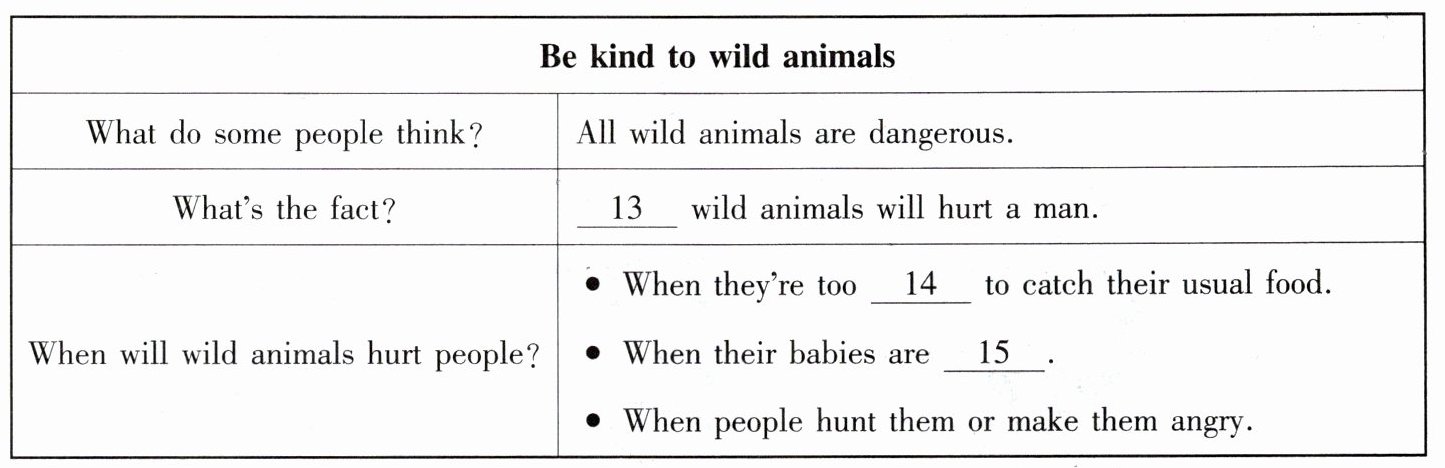
( )13. A. Most
B. Very few
C. Quite some
( )14. A. tired
B. old
C. lazy
( )15. A. angry
B. afraid
C. in danger
听第二篇短文,回答第16至20小题。
( )16. Where do wild pandas live?
A. In the south - west of China.
B. In the north - west of China.
C. In the south - east of China.
( )17. How many pandas do zoos and research centres look after?
A. About 1,700.
B. About 1,000.
C. About 700.
( )18. Where are more baby pandas born?
A. In the nature reserves.
B. In the zoos.
C. In the forest.
( )19. What’s the symbol for the World Wide Fund for Nature(世界自然基金会)?
A. The panda.
B. The whale.
C. The tiger.
( )20. What’s the text mainly about?
A. Protecting wild animals.
B. Saving pandas.
C. Learning about WWF.
听一段对话,回答第11、12小题。
( )11. Where did Ben’s uncle get the idea?
A. From the radio.
B. On TV.
C. From his friend.
( )12. What’s the talk mainly about?
A. Teaching animals to work.
B. Teaching animals to watch house.
C. Teaching animals to buy food.
听第一篇短文,回答第13至15小题。请根据短文内容,选择正确答案,完成信息记录表。
( )13. A. Most
B. Very few
C. Quite some
( )14. A. tired
B. old
C. lazy
( )15. A. angry
B. afraid
C. in danger
听第二篇短文,回答第16至20小题。
( )16. Where do wild pandas live?
A. In the south - west of China.
B. In the north - west of China.
C. In the south - east of China.
( )17. How many pandas do zoos and research centres look after?
A. About 1,700.
B. About 1,000.
C. About 700.
( )18. Where are more baby pandas born?
A. In the nature reserves.
B. In the zoos.
C. In the forest.
( )19. What’s the symbol for the World Wide Fund for Nature(世界自然基金会)?
A. The panda.
B. The whale.
C. The tiger.
( )20. What’s the text mainly about?
A. Protecting wild animals.
B. Saving pandas.
C. Learning about WWF.
答案
