

 登录
登录
C Ask and answer
1
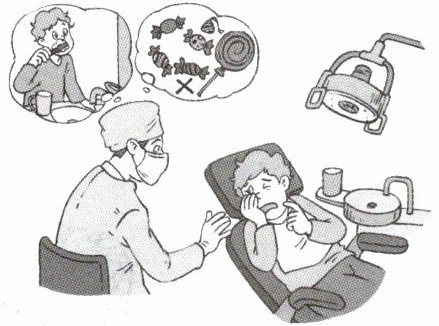
2
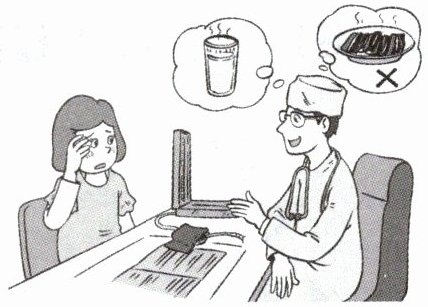
3
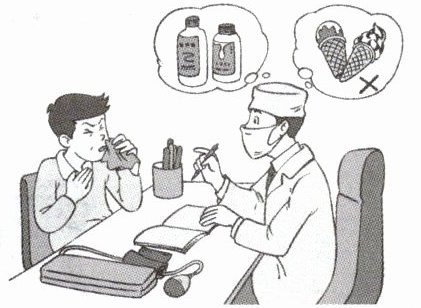
4
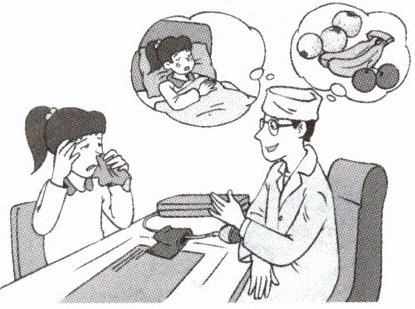
What's wrong with ...?

He/She has ...
What should/shouldn't
he/she do?
He/She should ...
He/She shouldn't ...
1
2
3
4
What's wrong with ...?
He/She has ...
What should/shouldn't
he/she do?
He/She should ...
He/She shouldn't ...
答案
1.
—What's wrong with him?
—He has a toothache.
—What should/shouldn't he do?
—He should brush his teeth carefully every day.
—He shouldn't eat too many sweets.
2.
—What's wrong with her?
—She has sore eyes.
—What should/shouldn't she do?
—She should drink warm water and have a good rest.
—She shouldn't eat barbecued food.
3.
—What's wrong with him?
—He has a cough.
—What should/shouldn't he do?
—He should take some medicine.
—He shouldn't eat ice cream.
4.
—What's wrong with her?
—She has a fever.
—What should/shouldn't she do?
—She should stay in bed and eat more fruit.
—She shouldn't do heavy exercise.
—What's wrong with him?
—He has a toothache.
—What should/shouldn't he do?
—He should brush his teeth carefully every day.
—He shouldn't eat too many sweets.
2.
—What's wrong with her?
—She has sore eyes.
—What should/shouldn't she do?
—She should drink warm water and have a good rest.
—She shouldn't eat barbecued food.
3.
—What's wrong with him?
—He has a cough.
—What should/shouldn't he do?
—He should take some medicine.
—He shouldn't eat ice cream.
4.
—What's wrong with her?
—She has a fever.
—What should/shouldn't she do?
—She should stay in bed and eat more fruit.
—She shouldn't do heavy exercise.
解析
本题需结合图片内容,运用本单元所学的就医相关句型完成问答,核心句型包含询问病情的“What's wrong with ...?”、描述病情的“He/She has ...”以及给出健康建议的“What should/shouldn't he/she do?”和“He/She should ... / He/She shouldn't ...”,需匹配图中病症与对应建议组织语言。
D Read and order
1 should, what, do, he, before, bedtime
2 should, drink, water, not, cold, you
3 now, hear, rabbit, cannot, the, well
4 points, at, long, giraffe, neck, his, the
5 headache, has, a, fever, she, and, a
1 should, what, do, he, before, bedtime
2 should, drink, water, not, cold, you
3 now, hear, rabbit, cannot, the, well
4 points, at, long, giraffe, neck, his, the
5 headache, has, a, fever, she, and, a
答案
1. What should he do before bedtime?
2. You should not drink cold water.
3. The rabbit cannot hear well now.
4. The giraffe points at his long neck.
5. She has a headache and a fever.
2. You should not drink cold water.
3. The rabbit cannot hear well now.
4. The giraffe points at his long neck.
5. She has a headache and a fever.
解析
1. 判定为特殊疑问句,按“疑问词What+情态动词should+主语he+动词do+时间状语before bedtime”的语序组合,句末加问号。
2. 判定为含should的否定陈述句,按“主语You+should not+动词短语drink cold water”的语序组合,句末加句号。
3. 判定为陈述句,按“主语The rabbit+谓语cannot hear well+时间状语now”的语序组合,句末加句号。
4. 判定为陈述句,按“主语The giraffe+动词短语points at+宾语his long neck”的语序组合,句末加句号。
5. 判定为陈述句,按“主语She+谓语has+a headache and a fever”的语序组合,句末加句号。
2. 判定为含should的否定陈述句,按“主语You+should not+动词短语drink cold water”的语序组合,句末加句号。
3. 判定为陈述句,按“主语The rabbit+谓语cannot hear well+时间状语now”的语序组合,句末加句号。
4. 判定为陈述句,按“主语The giraffe+动词短语points at+宾语his long neck”的语序组合,句末加句号。
5. 判定为陈述句,按“主语She+谓语has+a headache and a fever”的语序组合,句末加句号。
