

 登录
登录
Ⅰ. Circle the correct words in brackets to complete the sentences.
1. I (was watching / watched) TV at 7 o'clock last night.
2. They (were playing / played) basketball when the rain started.
3. We (weren't doing / didn't do) our homework at 9 a.m. yesterday. We were having a class.
4. While I (was walking / walked) to school, I saw an old friend.
5. What (were / did) you (doing / do) when the teacher came in?
6. At that moment, the boys (were running / ran) on the playground.
7. While she (was cooking / cooked) dinner, the phone rang.
1. I (was watching / watched) TV at 7 o'clock last night.
2. They (were playing / played) basketball when the rain started.
3. We (weren't doing / didn't do) our homework at 9 a.m. yesterday. We were having a class.
4. While I (was walking / walked) to school, I saw an old friend.
5. What (were / did) you (doing / do) when the teacher came in?
6. At that moment, the boys (were running / ran) on the playground.
7. While she (was cooking / cooked) dinner, the phone rang.
答案
Ⅰ. 1. was watching 2. were playing 3. weren't doing 4. was walking
5. were, doing 6. were running 7. was cooking
5. were, doing 6. were running 7. was cooking
解析
【解析】
本题考查过去进行时的用法,过去进行时结构为“was/were + 现在分词”,常用于两种情况:一是表示过去某个具体时刻或时间段内正在进行的动作;二是在when/while引导的时间状语从句中,描述短暂动作发生时另一个正在进行的动作。
1. 句中“at 7 o'clock last night”是过去具体时刻,强调当时正在看电视,用was watching。
2. “when the rain started”是短暂动作发生的时间点,此时打篮球的动作正在进行,用were playing。
3. “at 9 a.m. yesterday”是过去具体时刻,结合后句“正在上课”,说明当时没在做作业,用weren't doing。
4. While引导从句,强调走路的动作正在进行时看到朋友,用was walking。
5. “when the teacher came in”是短暂动作发生的时间点,询问此时正在做的事,用were和doing。
6. “At that moment”是过去具体时刻,强调当时男孩们正在跑步,用were running。
7. While引导从句,做饭的动作正在进行时电话响了,用was cooking。
【答案】
Ⅰ. 1. was watching 2. were playing 3. weren't doing 4. was walking
5. were, doing 6. were running 7. was cooking
【知识点】
1. 过去进行时用法
2. when/while与时态搭配
【点评】
本题聚焦过去进行时的语境运用,通过具体时间标志词和时间状语从句,考查学生对过去进行时与一般过去时的区分能力,帮助巩固时态的场景应用。
【难度系数】
0.7
本题考查过去进行时的用法,过去进行时结构为“was/were + 现在分词”,常用于两种情况:一是表示过去某个具体时刻或时间段内正在进行的动作;二是在when/while引导的时间状语从句中,描述短暂动作发生时另一个正在进行的动作。
1. 句中“at 7 o'clock last night”是过去具体时刻,强调当时正在看电视,用was watching。
2. “when the rain started”是短暂动作发生的时间点,此时打篮球的动作正在进行,用were playing。
3. “at 9 a.m. yesterday”是过去具体时刻,结合后句“正在上课”,说明当时没在做作业,用weren't doing。
4. While引导从句,强调走路的动作正在进行时看到朋友,用was walking。
5. “when the teacher came in”是短暂动作发生的时间点,询问此时正在做的事,用were和doing。
6. “At that moment”是过去具体时刻,强调当时男孩们正在跑步,用were running。
7. While引导从句,做饭的动作正在进行时电话响了,用was cooking。
【答案】
Ⅰ. 1. was watching 2. were playing 3. weren't doing 4. was walking
5. were, doing 6. were running 7. was cooking
【知识点】
1. 过去进行时用法
2. when/while与时态搭配
【点评】
本题聚焦过去进行时的语境运用,通过具体时间标志词和时间状语从句,考查学生对过去进行时与一般过去时的区分能力,帮助巩固时态的场景应用。
【难度系数】
0.7
Ⅱ. Combine each pair of sentences using when or while.
1. I was watching TV. The light went out suddenly.
2. He was riding his bike. He fell and hurt his knee.
3. We were walking in the park. We met our maths teacher.
4. She was making a phone call. Her computer received a new email.
5. It started to rain heavily. They were playing tennis on the court.
1. I was watching TV. The light went out suddenly.
While I was watching TV, the light went out suddenly. / I was watching TV when the light went out suddenly.
2. He was riding his bike. He fell and hurt his knee.
While he was riding his bike, he fell and hurt his knee. / He was riding his bike when he fell and hurt his knee.
3. We were walking in the park. We met our maths teacher.
While we were walking in the park, we met our maths teacher. / We were walking in the park when we met our maths teacher.
4. She was making a phone call. Her computer received a new email.
While she was making a phone call, her computer received a new email. / She was making a phone call when her computer received a new email.
5. It started to rain heavily. They were playing tennis on the court.
When it started to rain heavily, they were playing tennis on the court. / While they were playing tennis on the court, it started to rain heavily.
.答案
Ⅱ. 1. While I was watching TV, the light went out suddenly. /
I was watching TV when the light went out suddenly.
2. While he was riding his bike, he fell and hurt his knee. /
He was riding his bike when he fell and hurt his knee.
3. While we were walking in the park, we met our maths teacher. /
We were walking in the park when we met our maths teacher.
4. While she was making a phone call, her computer received a new email. /
She was making a phone call when her computer received a new email.
5. When it started to rain heavily, they were playing tennis on the court. /
While they were playing tennis on the court, it started to rain heavily.
I was watching TV when the light went out suddenly.
2. While he was riding his bike, he fell and hurt his knee. /
He was riding his bike when he fell and hurt his knee.
3. While we were walking in the park, we met our maths teacher. /
We were walking in the park when we met our maths teacher.
4. While she was making a phone call, her computer received a new email. /
She was making a phone call when her computer received a new email.
5. When it started to rain heavily, they were playing tennis on the court. /
While they were playing tennis on the court, it started to rain heavily.
解析
【解析】
本题要求用when或while合并句子,需掌握二者在连接过去时态句子时的用法:while常引导过去进行时的延续性动作从句,when既可以引导延续性动作也可以引导一般过去时的短暂性动作。当一个延续性长动作(过去进行时)和短暂性短动作(一般过去时)同时发生时,可将长动作置于while引导的从句中,短动作作主句;也可用when引导短动作从句,长动作作主句。
1. "was watching TV"是延续性长动作,"went out suddenly"是短暂性短动作,因此有两种合并方式。
2. "was riding his bike"是延续性长动作,"fell and hurt his knee"是短暂性短动作,同理有两种合并方式。
3. "were walking in the park"是延续性长动作,"met our maths teacher"是短暂性短动作,有两种合并方式。
4. "was making a phone call"是延续性长动作,"received a new email"是短暂性短动作,有两种合并方式。
5. "started to rain heavily"是短暂性短动作,"were playing tennis"是延续性长动作,可将短动作置于when引导的从句,或长动作置于while引导的从句。
【答案】
1. While I was watching TV, the light went out suddenly. / I was watching TV when the light went out suddenly.
2. While he was riding his bike, he fell and hurt his knee. / He was riding his bike when he fell and hurt his knee.
3. While we were walking in the park, we met our maths teacher. / We were walking in the park when we met our maths teacher.
4. While she was making a phone call, her computer received a new email. / She was making a phone call when her computer received a new email.
5. When it started to rain heavily, they were playing tennis on the court. / While they were playing tennis on the court, it started to rain heavily.
【知识点】
过去进行时用法、when/while引导时间状语从句
【点评】
本题聚焦when和while引导时间状语从句的区别及过去进行时的应用,需明确延续性动词与短暂性动词和二者的搭配,是英语基础时态与连词的核心考点,能帮助提升句子整合能力。
【难度系数】
0.6
本题要求用when或while合并句子,需掌握二者在连接过去时态句子时的用法:while常引导过去进行时的延续性动作从句,when既可以引导延续性动作也可以引导一般过去时的短暂性动作。当一个延续性长动作(过去进行时)和短暂性短动作(一般过去时)同时发生时,可将长动作置于while引导的从句中,短动作作主句;也可用when引导短动作从句,长动作作主句。
1. "was watching TV"是延续性长动作,"went out suddenly"是短暂性短动作,因此有两种合并方式。
2. "was riding his bike"是延续性长动作,"fell and hurt his knee"是短暂性短动作,同理有两种合并方式。
3. "were walking in the park"是延续性长动作,"met our maths teacher"是短暂性短动作,有两种合并方式。
4. "was making a phone call"是延续性长动作,"received a new email"是短暂性短动作,有两种合并方式。
5. "started to rain heavily"是短暂性短动作,"were playing tennis"是延续性长动作,可将短动作置于when引导的从句,或长动作置于while引导的从句。
【答案】
1. While I was watching TV, the light went out suddenly. / I was watching TV when the light went out suddenly.
2. While he was riding his bike, he fell and hurt his knee. / He was riding his bike when he fell and hurt his knee.
3. While we were walking in the park, we met our maths teacher. / We were walking in the park when we met our maths teacher.
4. While she was making a phone call, her computer received a new email. / She was making a phone call when her computer received a new email.
5. When it started to rain heavily, they were playing tennis on the court. / While they were playing tennis on the court, it started to rain heavily.
【知识点】
过去进行时用法、when/while引导时间状语从句
【点评】
本题聚焦when和while引导时间状语从句的区别及过去进行时的应用,需明确延续性动词与短暂性动词和二者的搭配,是英语基础时态与连词的核心考点,能帮助提升句子整合能力。
【难度系数】
0.6
Ⅲ. Read and complete the tasks.
A. Complete the passage with the correct forms of the words in the box.
power soundly wait beat hide make preparations
When Li Ming looked out of the window, thick grey clouds were gathering fast. The wind was blowing loudly, and the rain 1.
The family hurried to their safe place. While they 2.
Before long, the wind grew quiet. When they went outside, they saw the sun shining. But there was some damage—broken tree branches and fallen leaves were everywhere. Neighbours came out and asked if everyone was safe. Some people started to 5.
B. Complete the table.
C. Answer the questions.
(
A. To the street.
B. To the basement.
C. To a park.
D. To the roof.
(
A. The wind grew quiet.
B. Dad comforted her.
C. She saw the sun shining.
D. Neighbours helped her.
(
A. It was terrible and made people apart.
B. It was boring because nothing happened.
C. It was not a big deal and people didn't care.
D. It was scary but made people help each other.
4. What will you do if there is a storm in your neighbourhood?
A. Complete the passage with the correct forms of the words in the box.
power soundly wait beat hide make preparations
When Li Ming looked out of the window, thick grey clouds were gathering fast. The wind was blowing loudly, and the rain 1.
was beating
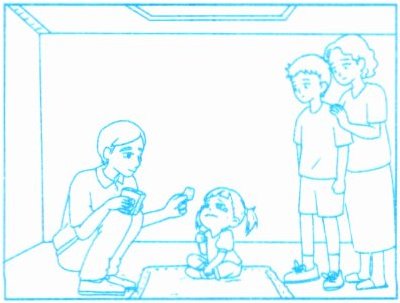
hard against the window. "Quick, to the basement!" Mum called out.The family hurried to their safe place. While they 2.
were waiting
, Li Ming's little sister, Xiao Li, started to cry. "Don't worry," Dad said softly. "We 3.are hiding
from the strong storm." He gave her a cookie, and soon, Xiao Li was sleeping 4.soundly
on a soft blanket.Before long, the wind grew quiet. When they went outside, they saw the sun shining. But there was some damage—broken tree branches and fallen leaves were everywhere. Neighbours came out and asked if everyone was safe. Some people started to 5.
make preparations
to clean the street together. Li Ming smiled. He saw the 6.power
of the storm, but he also felt the warmth of people helping each other. It wasn't so scary when everyone was together.B. Complete the table.
C. Answer the questions.
(
B
)1. Where did the family go to stay safe?A. To the street.
B. To the basement.
C. To a park.
D. To the roof.
(
B
)2. Why did Xiao Li stop crying?A. The wind grew quiet.
B. Dad comforted her.
C. She saw the sun shining.
D. Neighbours helped her.
(
D
)3. Which opinion about the storm is correct?A. It was terrible and made people apart.
B. It was boring because nothing happened.
C. It was not a big deal and people didn't care.
D. It was scary but made people help each other.
4. What will you do if there is a storm in your neighbourhood?
One possible version: I will first stay in a safe place like my house's basement. After the storm, I will check if my neighbours are safe and join them to clean up the street.
答案
Ⅲ. A. 1. was beating 2. were waiting 3. are hiding 4. soundly
5. make preparations 6. power
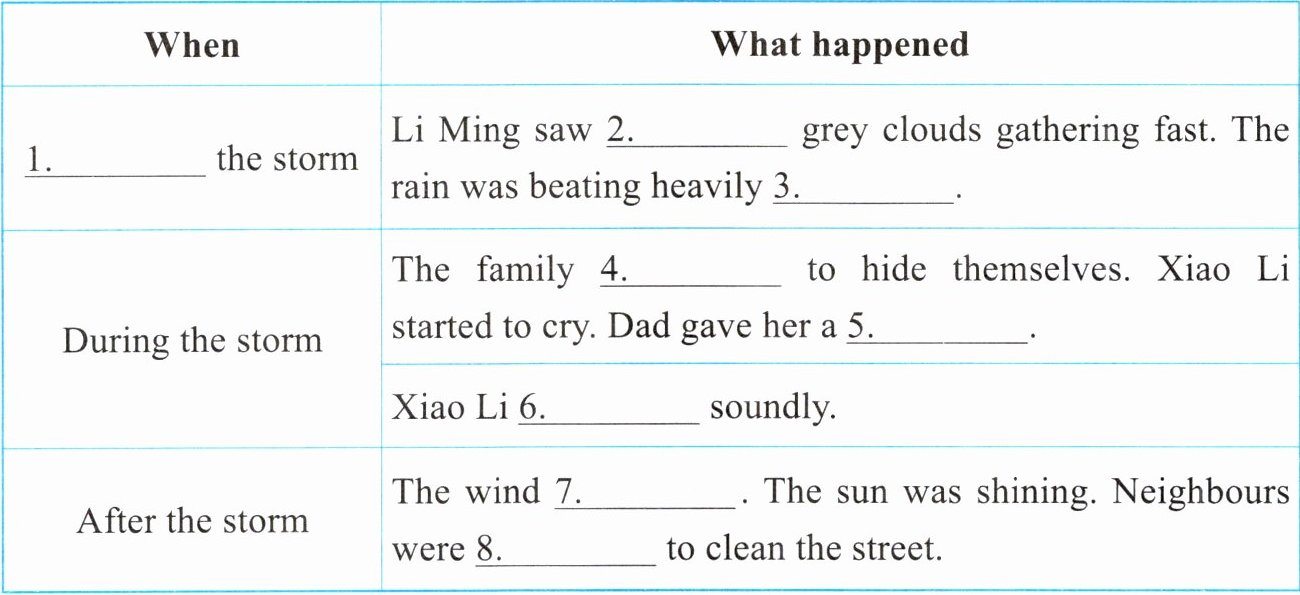
B. 1. Before 2. thick 3. against the window 4. hurried 5. cookie
6. was sleeping / slept 7. grew quiet 8. making preparations
C. 1. B 2. B 3. D
4. One possible version: I will first stay in a safe place like my house's basement. After
the storm, I will check if my neighbours are safe and join them to clean up the street.
5. make preparations 6. power
B. 1. Before 2. thick 3. against the window 4. hurried 5. cookie
6. was sleeping / slept 7. grew quiet 8. making preparations
C. 1. B 2. B 3. D
4. One possible version: I will first stay in a safe place like my house's basement. After
the storm, I will check if my neighbours are safe and join them to clean up the street.
解析
【解析】
A. 用方框内单词的正确形式填空:
1. 结合语境,雨正猛烈敲打着窗户,此处用过去进行时,主语为the rain,故填was beating。
2. while引导时间状语从句,强调动作正在进行,主语为they,时态用过去进行时,故填were waiting。
3. 此处是爸爸安慰妹妹时的直接引语,用现在进行时表示当时正在进行的动作,故填are hiding。
4. 需用副词修饰动词sleeping,soundly表示“酣然地”,符合语境,故填soundly。
5. start to do sth.表示“开始做某事”,结合语境人们开始准备一起打扫街道,故填make preparations。
6. 定冠词the后接名词,power表示“力量”,符合“看到暴风雨的力量”的语境,故填power。
B. 完成表格:
根据文章内容提取对应信息,依次填写表格内容。
C. 完成任务:
1. 由原文“‘Quick, to the basement!’ Mum called out.”可知家人去地下室避险,故选B。
2. 由原文“Dad said softly... He gave her a cookie, and soon, Xiao Li was sleeping...”可知爸爸的安慰让妹妹停止哭泣,故选B。
3. 由原文“He saw the power of the storm, but he also felt the warmth of people helping each other.”可知暴风雨虽可怕但让人们互相帮助,故选D。
4. 开放性试题,结合安全避险与互助理念作答即可。
【答案】
Ⅲ. A. 1. was beating 2. were waiting 3. are hiding 4. soundly
5. make preparations 6. power
B. 1. Before 2. thick 3. against the window 4. hurried 5. cookie
6. was sleeping / slept 7. grew quiet 8. making preparations
C. 1. B 2. B 3. D
4. One possible version: I will first stay in a safe place like my house's basement. After the storm, I will check if my neighbours are safe and join them to clean up the street.
【知识点】
1. 动词时态运用
2. 词性辨析运用
3. 细节信息提取
【点评】
本题围绕暴风雨场景,综合考查动词时态、词性运用及阅读理解能力,既夯实语法基础,又考查文本细节捕捉能力,开放性试题引导学生树立灾害应对意识与互助精神,贴近生活实际。
【难度系数】
0.6
A. 用方框内单词的正确形式填空:
1. 结合语境,雨正猛烈敲打着窗户,此处用过去进行时,主语为the rain,故填was beating。
2. while引导时间状语从句,强调动作正在进行,主语为they,时态用过去进行时,故填were waiting。
3. 此处是爸爸安慰妹妹时的直接引语,用现在进行时表示当时正在进行的动作,故填are hiding。
4. 需用副词修饰动词sleeping,soundly表示“酣然地”,符合语境,故填soundly。
5. start to do sth.表示“开始做某事”,结合语境人们开始准备一起打扫街道,故填make preparations。
6. 定冠词the后接名词,power表示“力量”,符合“看到暴风雨的力量”的语境,故填power。
B. 完成表格:
根据文章内容提取对应信息,依次填写表格内容。
C. 完成任务:
1. 由原文“‘Quick, to the basement!’ Mum called out.”可知家人去地下室避险,故选B。
2. 由原文“Dad said softly... He gave her a cookie, and soon, Xiao Li was sleeping...”可知爸爸的安慰让妹妹停止哭泣,故选B。
3. 由原文“He saw the power of the storm, but he also felt the warmth of people helping each other.”可知暴风雨虽可怕但让人们互相帮助,故选D。
4. 开放性试题,结合安全避险与互助理念作答即可。
【答案】
Ⅲ. A. 1. was beating 2. were waiting 3. are hiding 4. soundly
5. make preparations 6. power
B. 1. Before 2. thick 3. against the window 4. hurried 5. cookie
6. was sleeping / slept 7. grew quiet 8. making preparations
C. 1. B 2. B 3. D
4. One possible version: I will first stay in a safe place like my house's basement. After the storm, I will check if my neighbours are safe and join them to clean up the street.
【知识点】
1. 动词时态运用
2. 词性辨析运用
3. 细节信息提取
【点评】
本题围绕暴风雨场景,综合考查动词时态、词性运用及阅读理解能力,既夯实语法基础,又考查文本细节捕捉能力,开放性试题引导学生树立灾害应对意识与互助精神,贴近生活实际。
【难度系数】
0.6
