

 登录
登录
Ⅱ. 完形填空。
There are different kinds of
Many people like pandas very much. They are very
Pandas’ favourite food is
However, there are less pandas in the world today. Some people cut down too many bamboo trees and pandas cannot find enough(足够的)food.
I think we must
()1. A. animals
B. pets
C. dogs
D. animal
()2. A. live
B. kept
C. keep
D. see
()3. A. park
B. wild
C. zoo
D. sea
()4. A. need
B. number
C. dangerous
D. danger
()5. A. kill
B. protect
C. save
D. love
()6. A. cute
B. tall
C. ugly
D. lazy
()7. A. England
B. Australia
C. China
D. Africa
()8. A. are
B. like
C. has
D. have
()9. A. bamboo
B. meat
C. grass
D. fruit
()10. A. help
B. visit
C. like
D. see
There are different kinds of
A
in the world. Some of them can be B
at our home like dogs and cats. But some of them can be only seen in the C
. Some animals like elephants are in great D
because people A
them for their ivory. How about pandas?Many people like pandas very much. They are very
A
. Most of them live in Sichuan, C
. They D
white hair, but their shoulders, legs, ears and eyes are black. Pandas are usually heavy, but they can climb like other animals.Pandas’ favourite food is
A
. But long long ago, pandas liked to eat meat. It takes pandas a lot of time to have food every day. When pandas are full, they like relaxing. They relax for many hours every day.However, there are less pandas in the world today. Some people cut down too many bamboo trees and pandas cannot find enough(足够的)food.
I think we must
A
them.()1. A. animals
B. pets
C. dogs
D. animal
()2. A. live
B. kept
C. keep
D. see
()3. A. park
B. wild
C. zoo
D. sea
()4. A. need
B. number
C. dangerous
D. danger
()5. A. kill
B. protect
C. save
D. love
()6. A. cute
B. tall
C. ugly
D. lazy
()7. A. England
B. Australia
C. China
D. Africa
()8. A. are
B. like
C. has
D. have
()9. A. bamboo
B. meat
C. grass
D. fruit
()10. A. help
B. visit
C. like
D. see
答案
1. A 2. B 3. C 4. D 5. A 6. A 7. C 8. D 9. A 10. A
解析
【解析】
1. 第1题:根据后文提到的dogs, cats, elephants等各类生物,可知此处指世界上有不同种类的动物,different kinds of后接复数名词,故选A。
2. 第2题:此处为被动语态,be kept表示“被饲养”,符合“有些动物可以在家被饲养”的语境,故选B。
3. 第3题:结合前文“有些动物在家能见到”,此处指有些动物只能在动物园被看到,故选C。
4. 第4题:固定短语in great danger意为“处于极大危险中”,符合大象因象牙被猎杀的处境描述,故选D。
5. 第5题:人们为了获取象牙而杀死大象,kill符合语境,故选A。
6. 第6题:熊猫很可爱,这是很多人喜欢它们的原因,cute符合语境,故选A。
7. 第7题:熊猫大多生活在中国四川,China符合地理常识,故选C。
8. 第8题:主语They指代熊猫,谓语动词用have表示“有”,描述熊猫的外形特征,故选D。
9. 第9题:根据后文提到的bamboo trees可知,熊猫最喜欢的食物是竹子,故选A。
10. 第10题:由于熊猫数量减少,食物不足,我们必须帮助它们,help符合语境,故选A。
【答案】
1. A 2. B 3. C 4. D 5. A 6. A 7. C 8. D 9. A 10. A
【知识点】
1. 动物类词汇辨析
2. 固定短语搭配
3. 被动语态用法
【点评】
本文围绕动物及熊猫展开,考查词汇辨析、固定短语和语境理解,内容贴近生活,同时渗透了动物保护的意识,有助于学生在练习中树立保护动物的观念。
【难度系数】
0.6
1. 第1题:根据后文提到的dogs, cats, elephants等各类生物,可知此处指世界上有不同种类的动物,different kinds of后接复数名词,故选A。
2. 第2题:此处为被动语态,be kept表示“被饲养”,符合“有些动物可以在家被饲养”的语境,故选B。
3. 第3题:结合前文“有些动物在家能见到”,此处指有些动物只能在动物园被看到,故选C。
4. 第4题:固定短语in great danger意为“处于极大危险中”,符合大象因象牙被猎杀的处境描述,故选D。
5. 第5题:人们为了获取象牙而杀死大象,kill符合语境,故选A。
6. 第6题:熊猫很可爱,这是很多人喜欢它们的原因,cute符合语境,故选A。
7. 第7题:熊猫大多生活在中国四川,China符合地理常识,故选C。
8. 第8题:主语They指代熊猫,谓语动词用have表示“有”,描述熊猫的外形特征,故选D。
9. 第9题:根据后文提到的bamboo trees可知,熊猫最喜欢的食物是竹子,故选A。
10. 第10题:由于熊猫数量减少,食物不足,我们必须帮助它们,help符合语境,故选A。
【答案】
1. A 2. B 3. C 4. D 5. A 6. A 7. C 8. D 9. A 10. A
【知识点】
1. 动物类词汇辨析
2. 固定短语搭配
3. 被动语态用法
【点评】
本文围绕动物及熊猫展开,考查词汇辨析、固定短语和语境理解,内容贴近生活,同时渗透了动物保护的意识,有助于学生在练习中树立保护动物的观念。
【难度系数】
0.6
Ⅲ. 阅读理解。
A
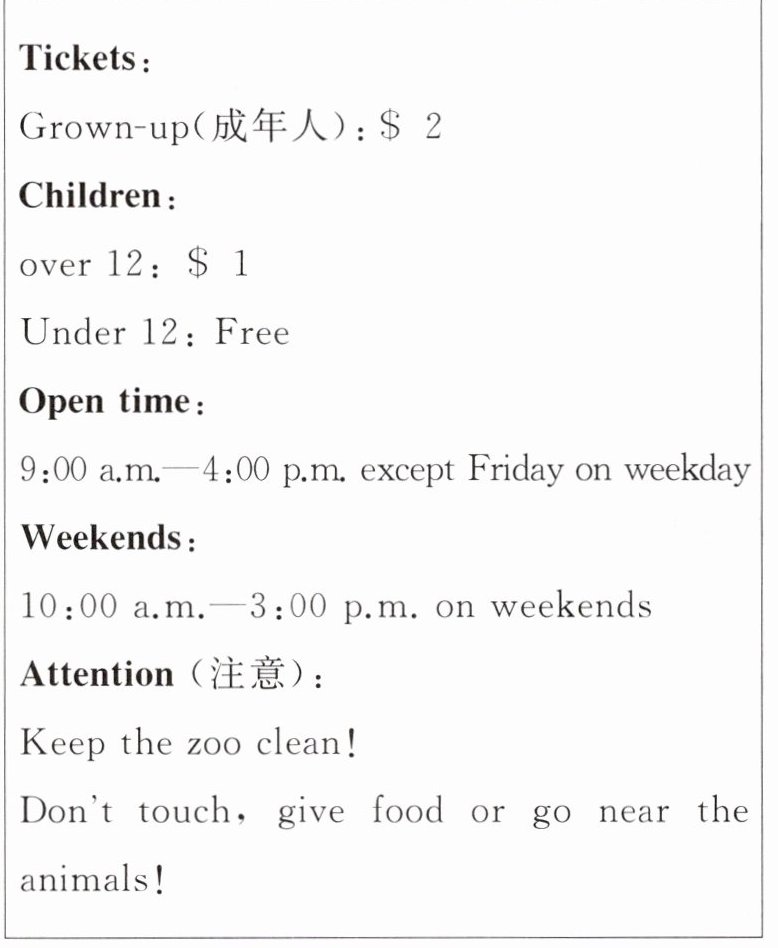
Come and see the elephants and the new tigers. The bears are waiting to meet you, and the monkeys are waiting to throw things to you. The lovely dogs are waiting to laugh at you. The giraffes are waiting to look down on you.
(
A. 4.
B. 5.
C. 6.
D. 7.
(
A. $4.B. $2.
C. $3.D. $10.
(
A. 8:30 a.m. on Monday.
B. 9:30 a.m. on Friday.
C. 2:00 p.m. on Sunday.
D. 5:00 p.m. on Tuesday.
(
A. To give some food to the fish.
B. To touch the monkey on the head.
C. To throw things everywhere.
D. To keep the zoo clean.
A
Come and see the elephants and the new tigers. The bears are waiting to meet you, and the monkeys are waiting to throw things to you. The lovely dogs are waiting to laugh at you. The giraffes are waiting to look down on you.
(
C
)1. How many kinds of animals are talked about in the passage?A. 4.
B. 5.
C. 6.
D. 7.
(
C
)2. Now Mr Smith is in the zoo with his two sons, one is 14 and the other is 10. How much are the tickets together?A. $4.B. $2.
C. $3.D. $10.
(
C
)3. Which of the following is the visiting time?A. 8:30 a.m. on Monday.
B. 9:30 a.m. on Friday.
C. 2:00 p.m. on Sunday.
D. 5:00 p.m. on Tuesday.
(
D
)4. Which of the following can we do in the zoo?A. To give some food to the fish.
B. To touch the monkey on the head.
C. To throw things everywhere.
D. To keep the zoo clean.
答案
1. C 2. C 3. C 4. D
解析
【解析】
1. 第1题:通读短文,文中提到的动物有elephants(大象)、tigers(老虎)、bears(熊)、monkeys(猴子)、dogs(狗)、giraffes(长颈鹿),共6种,故选C。
2. 第2题:根据票价信息,成年人票价2,14岁的孩子超过12岁票价1,10岁的孩子不满12岁免费,总票价为2+1=3,故选C。
3. 第3题:根据开放时间:工作日(除周五)9:00 a.m.—4:00 p.m.,周末10:00 a.m.—3:00 p.m.。A选项周一8:30未到开放时间;B选项周五不在工作日开放时段内;C选项周日下午2点在周末开放时段内,符合要求;D选项周二下午5点已过工作日关门时间,故选C。
4. 第4题:根据注意事项,“Keep the zoo clean!”是需要遵守的规则,所以D选项是可以做的;A选项给动物喂食、B选项触摸动物、C选项乱扔垃圾均违反注意事项中的规定,故选D。
【答案】
1. C
2. C
3. C
4. D
【知识点】
细节信息提取、告示类阅读、英语阅读理解
【点评】
本题是一篇动物园参观告示类阅读理解,题目均围绕文本细节设置,主要考查学生从文本中精准提取关键信息的能力,解题时需仔细对照原文内容进行判断。
【难度系数】
0.8
1. 第1题:通读短文,文中提到的动物有elephants(大象)、tigers(老虎)、bears(熊)、monkeys(猴子)、dogs(狗)、giraffes(长颈鹿),共6种,故选C。
2. 第2题:根据票价信息,成年人票价2,14岁的孩子超过12岁票价1,10岁的孩子不满12岁免费,总票价为2+1=3,故选C。
3. 第3题:根据开放时间:工作日(除周五)9:00 a.m.—4:00 p.m.,周末10:00 a.m.—3:00 p.m.。A选项周一8:30未到开放时间;B选项周五不在工作日开放时段内;C选项周日下午2点在周末开放时段内,符合要求;D选项周二下午5点已过工作日关门时间,故选C。
4. 第4题:根据注意事项,“Keep the zoo clean!”是需要遵守的规则,所以D选项是可以做的;A选项给动物喂食、B选项触摸动物、C选项乱扔垃圾均违反注意事项中的规定,故选D。
【答案】
1. C
2. C
3. C
4. D
【知识点】
细节信息提取、告示类阅读、英语阅读理解
【点评】
本题是一篇动物园参观告示类阅读理解,题目均围绕文本细节设置,主要考查学生从文本中精准提取关键信息的能力,解题时需仔细对照原文内容进行判断。
【难度系数】
0.8
