

 登录
登录
2. Put the words in the correct order. (连词成句)
1) played / football / he / yesterday / (. )
2) to / children's / we / last / theatre / week / went / a / (. )
3) last / what / they / did / week / do / (? )
4) we / a / borrowed / for / book / you / (. )
5) have / I / a / got / from / UK / the / letter / (. )
1) played / football / he / yesterday / (. )
2) to / children's / we / last / theatre / week / went / a / (. )
3) last / what / they / did / week / do / (? )
4) we / a / borrowed / for / book / you / (. )
5) have / I / a / got / from / UK / the / letter / (. )
答案
1) He played football yesterday.
2) We went to a children's theatre last week.
3) What did they do last week?
4) We borrowed a book for you.
5) I have got a letter from the UK.
2) We went to a children's theatre last week.
3) What did they do last week?
4) We borrowed a book for you.
5) I have got a letter from the UK.
3. Look, read and write. (看一看, 读一读, 写一写)
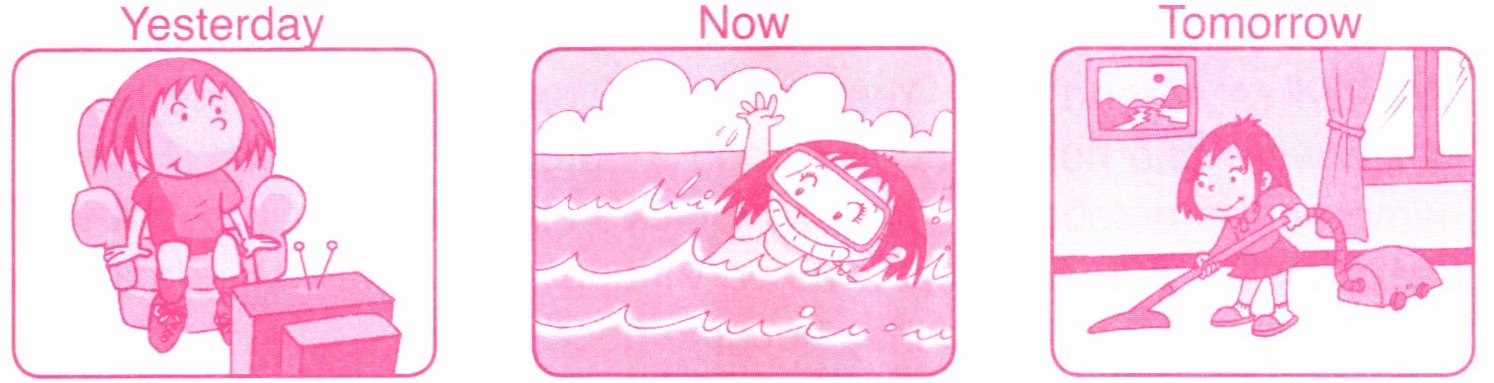
1) Yesterday, she watched TV. Now, she's swimming in the sea. Tomor-row, she is going to clean the room.
2)
学习小秘诀
在英语里, man 表示 “人” 或者 “男人”。这个单词可以和别的单词合起来组成新的单词, 用来表示 “……人” “从事……活动的人”。比如: snowman 雪人,postman 邮递员, policeman 警察, salesman 售货员。
1) Yesterday, she watched TV. Now, she's swimming in the sea. Tomor-row, she is going to clean the room.
2)
学习小秘诀
在英语里, man 表示 “人” 或者 “男人”。这个单词可以和别的单词合起来组成新的单词, 用来表示 “……人” “从事……活动的人”。比如: snowman 雪人,postman 邮递员, policeman 警察, salesman 售货员。
答案
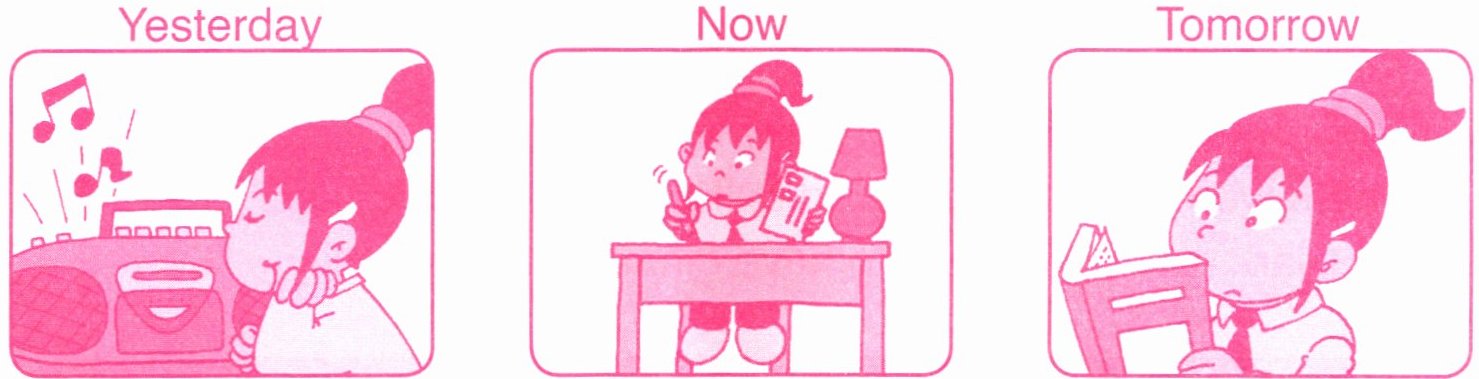
2) Yesterday, she listened to music. Now, she's doing her homework. Tomorrow, she is going to read a book.
