

 登录
登录
B
Water is important and everyone should learn to save water. Here are some ways of saving water wisely.
Save water in the bathroom. Try your best to take a short shower. A short shower can save 10 to 20 liters(升) of water a minute(分钟). In this way, you'll save thousands of liters of water a year.
Save water in the kitchen. When you wash your dishes, don't let the water run.
Save water when you wash clothes. Only wash clothes when you have a lot to wash. If your washing machine isn't full, you're wasting water!
Try using your water meter(水表) to check leaks(漏水) in your home. Just turn off the taps and wait for 30 minutes. If the meter still works, your pipe(水管) may have a leak. Repair(修理) it as soon as possible.
Try using rainwater to water flowers. You can save much water in this way.
根据材料内容选择最佳答案。
(
A. Four.
B. Five.
C. Six.
D. Seven.
(
A. 10 to 20 liters.
B. 30 to 60 liters.
C. 100 to 200 liters.
D. 300 to 600 liters.
(
A. The water pipe.
B. The leak.
C. The water meter.
D. The tap.
(
A. We have to use running water to wash dishes.
B. We need to repair the water meter often.
C. Wash as many clothes as possible at a time.
D. Using rainwater is good for flowers.
(
A. Turn off the Shower
B. Check Your Water Meter
C. The Importance of Water
D. The Ways to Save Water
Water is important and everyone should learn to save water. Here are some ways of saving water wisely.
Save water in the bathroom. Try your best to take a short shower. A short shower can save 10 to 20 liters(升) of water a minute(分钟). In this way, you'll save thousands of liters of water a year.
Save water in the kitchen. When you wash your dishes, don't let the water run.
Save water when you wash clothes. Only wash clothes when you have a lot to wash. If your washing machine isn't full, you're wasting water!
Try using your water meter(水表) to check leaks(漏水) in your home. Just turn off the taps and wait for 30 minutes. If the meter still works, your pipe(水管) may have a leak. Repair(修理) it as soon as possible.
Try using rainwater to water flowers. You can save much water in this way.
根据材料内容选择最佳答案。
(
B
)6. How many tips about saving water does the writer give us?A. Four.
B. Five.
C. Six.
D. Seven.
(
D
)7. How much water does a person use if he takes a shower for 30 minutes?A. 10 to 20 liters.
B. 30 to 60 liters.
C. 100 to 200 liters.
D. 300 to 600 liters.
(
A
)8. What does the underlined word "it" refer to?A. The water pipe.
B. The leak.
C. The water meter.
D. The tap.
(
C
)9. What can we learn from the text?A. We have to use running water to wash dishes.
B. We need to repair the water meter often.
C. Wash as many clothes as possible at a time.
D. Using rainwater is good for flowers.
(
D
)10. What's the best title for the text?A. Turn off the Shower
B. Check Your Water Meter
C. The Importance of Water
D. The Ways to Save Water
答案
6. B 由文章第二段、第三段、第四段、第五段、第六段首句可知,作者给出了五条节约用水的建议。
7. D 由第二段第三句可知,洗淋浴1分钟需要用水10~20升,那么洗30分钟需要用水300~600升。
8. A 结合上文可知,水龙头关闭30分钟后,水表依然在工作,说明水管有漏水,要尽快修理它,故it指代的是pipe。
9. C 由第四段可知,当要洗的衣服很多时才使用洗衣机,这样有助于节约用水。其他选项均不符合文章表述。
10. D 通读全文可知,本文主要介绍节约用水的方法。故D选项The Ways to Save Water可作为短文最佳标题。
7. D 由第二段第三句可知,洗淋浴1分钟需要用水10~20升,那么洗30分钟需要用水300~600升。
8. A 结合上文可知,水龙头关闭30分钟后,水表依然在工作,说明水管有漏水,要尽快修理它,故it指代的是pipe。
9. C 由第四段可知,当要洗的衣服很多时才使用洗衣机,这样有助于节约用水。其他选项均不符合文章表述。
10. D 通读全文可知,本文主要介绍节约用水的方法。故D选项The Ways to Save Water可作为短文最佳标题。
解析
【分析】
这是一篇关于节约用水方法的阅读理解题,解题思路如下:
1. 第6题:需逐一梳理文中给出的节水建议,通过查找各段落首句统计建议数量,确定正确选项。
2. 第7题:根据文中给出的每分钟淋浴用水量,通过乘法计算出30分钟的用水量范围,得出答案。
3. 第8题:判断代词“it”的指代内容,要结合前文语境,找到前文提到的需要修理的对象。
4. 第9题:将每个选项与原文内容逐一比对,排除不符合原文表述的选项,选出符合文意的正确选项。
5. 第10题:归纳文章主旨,通读全文明确文章核心是介绍节水方法,据此选择最合适的标题。
【解析】
6. 答案:B
由文章第二段“Save water in the bathroom.”、第三段“Save water in the kitchen.”、第四段“Save water when you wash clothes.”、第五段“Try using your water meter(水表) to check leaks(漏水) in your home.”、第六段“Try using rainwater to water flowers.”的首句可知,作者给出了五条节约用水的建议。
7. 答案:D
由第二段第三句“A short shower can save 10 to 20 liters(升) of water a minute(分钟).”可知,洗淋浴1分钟需用水10~20升,那么洗30分钟的用水量为10×30=300升,20×30=600升,即300~600升。
8. 答案:A
结合上文“If the meter still works, your pipe(水管) may have a leak. Repair(修理) it as soon as possible.”可知,水龙头关闭30分钟后水表仍工作,说明水管漏水,要尽快修理的是水管,故“it”指代the water pipe。
9. 答案:C
由第四段“Only wash clothes when you have a lot to wash. If your washing machine isn't full, you're wasting water!”可知,一次尽量多洗些衣服有助于节约用水。A选项与第三段“When you wash your dishes, don't let the water run.”不符;B选项文中未提及要经常修理水表;D选项文中仅说用雨水浇花能节水,未提及对花有好处,其他选项均不符合文章表述。
10. 答案:D
通读全文可知,文章开头点明要节约用水,随后分点介绍多种节水方法,核心内容是节约用水的方法,故D选项“The Ways to Save Water”是最佳标题。
【答案】
6. B;7. D;8. A;9. C;10. D
【知识点】
阅读理解细节查找;代词指代判断;阅读理解主旨归纳
【点评】
本文围绕节水方法展开,题目涵盖细节查找、代词指代、主旨归纳等常见阅读理解题型,考查学生定位原文信息、分析语境及归纳主旨的能力。解题时需仔细研读原文,逐一比对选项与原文内容,避免主观臆断。
【难度系数】
0.7
这是一篇关于节约用水方法的阅读理解题,解题思路如下:
1. 第6题:需逐一梳理文中给出的节水建议,通过查找各段落首句统计建议数量,确定正确选项。
2. 第7题:根据文中给出的每分钟淋浴用水量,通过乘法计算出30分钟的用水量范围,得出答案。
3. 第8题:判断代词“it”的指代内容,要结合前文语境,找到前文提到的需要修理的对象。
4. 第9题:将每个选项与原文内容逐一比对,排除不符合原文表述的选项,选出符合文意的正确选项。
5. 第10题:归纳文章主旨,通读全文明确文章核心是介绍节水方法,据此选择最合适的标题。
【解析】
6. 答案:B
由文章第二段“Save water in the bathroom.”、第三段“Save water in the kitchen.”、第四段“Save water when you wash clothes.”、第五段“Try using your water meter(水表) to check leaks(漏水) in your home.”、第六段“Try using rainwater to water flowers.”的首句可知,作者给出了五条节约用水的建议。
7. 答案:D
由第二段第三句“A short shower can save 10 to 20 liters(升) of water a minute(分钟).”可知,洗淋浴1分钟需用水10~20升,那么洗30分钟的用水量为10×30=300升,20×30=600升,即300~600升。
8. 答案:A
结合上文“If the meter still works, your pipe(水管) may have a leak. Repair(修理) it as soon as possible.”可知,水龙头关闭30分钟后水表仍工作,说明水管漏水,要尽快修理的是水管,故“it”指代the water pipe。
9. 答案:C
由第四段“Only wash clothes when you have a lot to wash. If your washing machine isn't full, you're wasting water!”可知,一次尽量多洗些衣服有助于节约用水。A选项与第三段“When you wash your dishes, don't let the water run.”不符;B选项文中未提及要经常修理水表;D选项文中仅说用雨水浇花能节水,未提及对花有好处,其他选项均不符合文章表述。
10. 答案:D
通读全文可知,文章开头点明要节约用水,随后分点介绍多种节水方法,核心内容是节约用水的方法,故D选项“The Ways to Save Water”是最佳标题。
【答案】
6. B;7. D;8. A;9. C;10. D
【知识点】
阅读理解细节查找;代词指代判断;阅读理解主旨归纳
【点评】
本文围绕节水方法展开,题目涵盖细节查找、代词指代、主旨归纳等常见阅读理解题型,考查学生定位原文信息、分析语境及归纳主旨的能力。解题时需仔细研读原文,逐一比对选项与原文内容,避免主观臆断。
【难度系数】
0.7
二、语篇填空。
阅读短文,从方框中选择适当的词并用其正确形式填空,使短文通顺、意思完整。每空限填一词,每词限用一次。
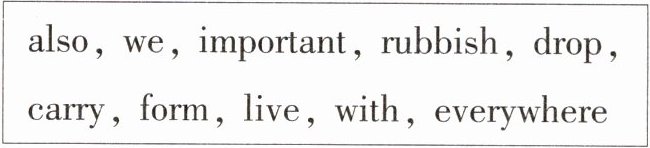
As we all know, water is one of the most important things in our life. 11.
Water is 12.
We use water to do many things. We use water to 15.
Water is so important to all of 17.
阅读短文,从方框中选择适当的词并用其正确形式填空,使短文通顺、意思完整。每空限填一词,每词限用一次。
As we all know, water is one of the most important things in our life. 11.
With
no water, man can't live.Water is 12.
everywhere
. It's in the air. It's under the ground. It 13. forms
lakes, rivers and seas. It's in all 14. living
things.We use water to do many things. We use water to 15.
carry
goods(货物) and travel around the world. We can 16. also
use water to swim, take a shower, wash the food and clothes.Water is so important to all of 17.
us
. But many people don't value it. They throw 18. rubbish
and waste into lakes, rivers and seas. We must tell these people the 19. importance
of protecting water and stop them from polluting(污染) it. If not, the last 20. drop
of water on the earth will be our tear(眼泪).答案
11. With 12. everywhere 13. forms 14. living 15. carry 16. also 17. us 18. rubbish 19. importance 20. drop
解析
【分析】
这是一篇关于水资源重要性的语篇填空题,解题思路如下:
1. 先通读全文,把握文章主旨:文章讲述了水的分布、用途以及水污染的问题,强调保护水资源的重要性。
2. 逐个分析空格,结合上下文语境和方框内词汇,考虑词性、词形变化:
对于介词类空格,需结合句意判断介词搭配,如第11空,"with no+名词"是常见的表达“没有……”的结构;
动词类空格要注意主语的人称和数,判断是否需要用第三人称单数形式,如第13空主语是It,谓语动词要用三单形式;
代词类空格要注意人称代词的格,介词后需用宾格,如第17空;
名词类空格要结合固定搭配,如第19空"the importance of..."是固定表达;
3. 注意每词限用一次,填完后检查已使用的词汇,避免重复。
【解析】
11. 句意:没有水,人类无法生存。"with no+名词"表示“没有……”,句首单词首字母大写,故填With。
12. 句意:水无处不在。根据后文"It's in the air. It's under the ground."的描述,可知水的分布范围广,everywhere符合语境,故填everywhere。
13. 句意:它形成湖泊、河流和海洋。主语It是第三人称单数,谓语动词需用第三人称单数形式,form的第三人称单数是forms,故填forms。
14. 句意:它存在于所有生物中。"living things"是固定搭配,意为“生物”,故填living。
15. 句意:我们用水运输货物和环游世界。"use sth to do sth"是固定结构,carry表示“运输”,符合语境,故填carry。
16. 句意:我们也可以用水游泳、洗澡、洗食物和衣服。前文提到了水的一些用途,此处补充其他用途,also表示“也”,故填also。
17. 句意:水对我们所有人都如此重要。of是介词,后面需接人称代词宾格,we的宾格是us,故填us。
18. 句意:他们把垃圾和废物扔进湖泊、河流和海洋。rubbish表示“垃圾”,和waste并列,符合语境,故填rubbish。
19. 句意:我们必须告诉这些人保护水资源的重要性,阻止他们污染水资源。"the importance of..."是固定搭配,意为“……的重要性”,故填importance。
20. 句意:否则,地球上最后一滴水将是我们的眼泪。drop表示“滴”,"the last drop of water"表示“最后一滴水”,符合语境,故填drop。
【答案】
11. With 12. everywhere 13. forms 14. living 15. carry 16. also 17. us 18. rubbish 19. importance 20. drop
【知识点】
1. 介词固定搭配
2. 动词形式变化
3. 名词短语运用
【点评】
本题围绕“水资源”这一贴近生活的主题展开,考查了词汇的语境运用、词性转换和固定搭配,既检验了学生的基础词汇掌握情况,又传递了保护水资源的环保意识,题目难度适中,有助于提升学生的语篇理解和词汇运用能力。
【难度系数】
0.6
这是一篇关于水资源重要性的语篇填空题,解题思路如下:
1. 先通读全文,把握文章主旨:文章讲述了水的分布、用途以及水污染的问题,强调保护水资源的重要性。
2. 逐个分析空格,结合上下文语境和方框内词汇,考虑词性、词形变化:
对于介词类空格,需结合句意判断介词搭配,如第11空,"with no+名词"是常见的表达“没有……”的结构;
动词类空格要注意主语的人称和数,判断是否需要用第三人称单数形式,如第13空主语是It,谓语动词要用三单形式;
代词类空格要注意人称代词的格,介词后需用宾格,如第17空;
名词类空格要结合固定搭配,如第19空"the importance of..."是固定表达;
3. 注意每词限用一次,填完后检查已使用的词汇,避免重复。
【解析】
11. 句意:没有水,人类无法生存。"with no+名词"表示“没有……”,句首单词首字母大写,故填With。
12. 句意:水无处不在。根据后文"It's in the air. It's under the ground."的描述,可知水的分布范围广,everywhere符合语境,故填everywhere。
13. 句意:它形成湖泊、河流和海洋。主语It是第三人称单数,谓语动词需用第三人称单数形式,form的第三人称单数是forms,故填forms。
14. 句意:它存在于所有生物中。"living things"是固定搭配,意为“生物”,故填living。
15. 句意:我们用水运输货物和环游世界。"use sth to do sth"是固定结构,carry表示“运输”,符合语境,故填carry。
16. 句意:我们也可以用水游泳、洗澡、洗食物和衣服。前文提到了水的一些用途,此处补充其他用途,also表示“也”,故填also。
17. 句意:水对我们所有人都如此重要。of是介词,后面需接人称代词宾格,we的宾格是us,故填us。
18. 句意:他们把垃圾和废物扔进湖泊、河流和海洋。rubbish表示“垃圾”,和waste并列,符合语境,故填rubbish。
19. 句意:我们必须告诉这些人保护水资源的重要性,阻止他们污染水资源。"the importance of..."是固定搭配,意为“……的重要性”,故填importance。
20. 句意:否则,地球上最后一滴水将是我们的眼泪。drop表示“滴”,"the last drop of water"表示“最后一滴水”,符合语境,故填drop。
【答案】
11. With 12. everywhere 13. forms 14. living 15. carry 16. also 17. us 18. rubbish 19. importance 20. drop
【知识点】
1. 介词固定搭配
2. 动词形式变化
3. 名词短语运用
【点评】
本题围绕“水资源”这一贴近生活的主题展开,考查了词汇的语境运用、词性转换和固定搭配,既检验了学生的基础词汇掌握情况,又传递了保护水资源的环保意识,题目难度适中,有助于提升学生的语篇理解和词汇运用能力。
【难度系数】
0.6
