

 登录
登录
一、用方框中所给单词的适当形式填空。
Japan, patient, high, state,
leave, honest
1. Mike is a
2. As we all know, sushi is an important part of the
3. (2025·无锡市锡山区一模)According to the timetable, the last train G1973 to Shanghai
4. Among all the mountains in the Himalayas, Mount Everest is recognized as
5. Gina became
6. Boys and girls, do you know how many
Japan, patient, high, state,
leave, honest
1. Mike is a
dishonest
boy, because he always tells lies to his parents.2. As we all know, sushi is an important part of the
Japanese
diet.3. (2025·无锡市锡山区一模)According to the timetable, the last train G1973 to Shanghai
leaves
at 9 p.m.4. Among all the mountains in the Himalayas, Mount Everest is recognized as
the highest
peak on the Earth, drawing climbers from around the globe.5. Gina became
impatient
after waiting for the bus for half an hour, so she stopped a taxi.6. Boys and girls, do you know how many
states
there are in America?答案
1. dishonest 2. Japanese 3. leaves
4. the highest 5. impatient 6. states
4. the highest 5. impatient 6. states
1. (2025·南通市海安一模)Look at the gesture on the right.
What does it mean in Japan?
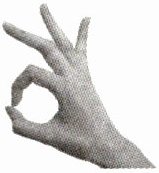
A.OK.
B.Three.
C.Money.
D.Insult.
What does it mean in Japan?
A.OK.
B.Three.
C.Money.
D.Insult.
答案
1. C
2. —Tina, did you buy
—Of course. I bought some Dengying Beef for my parents.
A.anything special
B.special anything
C.something special
D.special something
anything special
when you went to Dazhou last month?—Of course. I bought some Dengying Beef for my parents.
A.anything special
B.special anything
C.something special
D.special something
答案
2. A
3. The woman teacher stayed in England
A.for; at
B.for; during
C.during; during
D.during; for
for
a month, and during
the month she visited many places.A.for; at
B.for; during
C.during; during
D.during; for
答案
3. B
4. (2025·扬州)
A.Either; or
B.Neither; nor
C.Not only; but also
D.Both; and
Neither
the whole of this article nor
any part of it will be published unless the writer agrees.A.Either; or
B.Neither; nor
C.Not only; but also
D.Both; and
答案
4. B 【解析】句意:除非作者同意,否则本文的全部或任何一部分均不得发表。either... or...侧重二者择其一;neither... nor...表示否定两者;not only... but also...表示递进;both... and...意为"两者都",常用于肯定句中。此处表示全盘否定,用neither... nor...。
三、根据中文提示完成句子。
1. 格林先生想要知道这个城市有多少人。
Mr Green wants to know
2. 他们打算参观东京国立博物馆,看一些日本艺术品。
They are going to visit Tokyo National Museum
3. 我们都知道新加坡是东南亚的一个城市国家。
It's known to us all that Singapore
4. 那就是它被誉为“天下第一村”的原因。
5. 南京是中国的一座文化古城。
Nanjing is
1. 格林先生想要知道这个城市有多少人。
Mr Green wants to know
how many people there are
in this city.2. 他们打算参观东京国立博物馆,看一些日本艺术品。
They are going to visit Tokyo National Museum
to see some Japanese works of art
.3. 我们都知道新加坡是东南亚的一个城市国家。
It's known to us all that Singapore
is a city state in South East Asia
.4. 那就是它被誉为“天下第一村”的原因。
That's why it is praised as
"the top one of all the villages in the world".5. 南京是中国的一座文化古城。
Nanjing is
an ancient city of culture
in China.答案
1. how many people there are 2. to see some Japanese works of art 3. is a city state in South East Asia 4. That's why it is praised as
5. an ancient city of culture
5. an ancient city of culture
四、阅读理解。
新素养 文化意识 ① In the world, what people in different places are supposed to do isn't always the same. Something that seems common to you may seem strange to others. Here are some surprising examples.
② People in Malaysia use their thumb(拇指) to point. In many cultures, people probably think that pointing with a finger isn't very nice. However, in some countries like Indonesia and Malaysia, it is considered much more polite to point with the thumb.
③ Nigerians kneel(跪下) when greeting others. A group of people in Nigeria takes greeting manners seriously, especially with their elders. When an adult comes, it is common for young people to greet him or her by dropping to their knees. Women kneel, and men prostrate(拜倒) themselves. This traditional custom is a sign of respect for the elders.
④ The Japanese enjoy slurping. Most cultures have rules about table manners. In western countries, making noise while eating food is usually considered impolite. However, in Japan, making slurping sounds while eating noodles can be accepted. This probably has something to do with the way noodles are eaten. The Japanese slurp up their noodles without winding them around an eating tool. This way of noodle eating is naturally noisier. Making slurping sounds when eating noodles in Japan shows that you're enjoying them.
⑤ Using your left hand might be impolite. In some countries, the use of the left hand for eating or other activities is considered impolite. People in these countries use their left hands for cleaning themselves after using the toilet, so the left hand is considered dirty. This custom is known in much of the Middle East, Sri Lanka, and parts of Africa.
1. In which country or countries is it more polite to point with the thumb?
A. Only Malaysia.
B. Indonesia and Malaysia.
C. All Asian countries.
D. Western countries.
2. What does the underlined word "slurping" mean in English?
A. Keeping quiet.
B. Talking loudly.
C. Being on time.
D. Eating or drinking noisily.
3. Why is the left hand considered dirty in some countries?
A. Because it is used less frequently than the right hand.
B. Because it is used for handling unclean objects in daily life.
C. Because it is used for cleaning oneself after using the toilet.
D. Because it is believed to have more bacteria naturally.
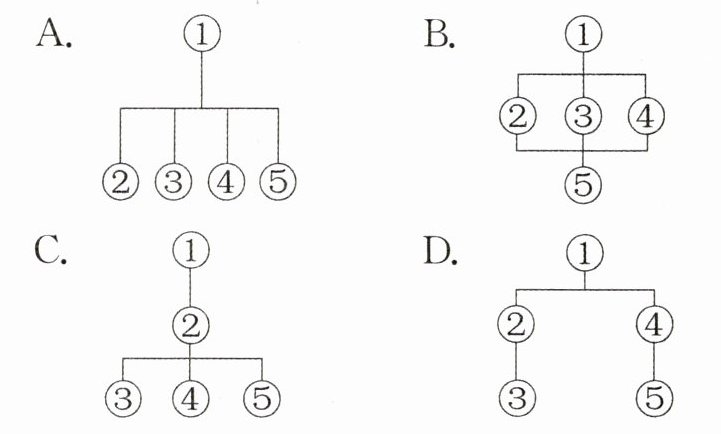
4. 新考法 篇章结构 Which of the following can show the structure of the passage?
5. What's the purpose of the passage?
A. To show how to learn about cultural customs.
B. To introduce some surprising customs to readers.
C. To explain the importance of greeting manners.
D. To teach readers how to eat with proper table manners.
新素养 文化意识 ① In the world, what people in different places are supposed to do isn't always the same. Something that seems common to you may seem strange to others. Here are some surprising examples.
② People in Malaysia use their thumb(拇指) to point. In many cultures, people probably think that pointing with a finger isn't very nice. However, in some countries like Indonesia and Malaysia, it is considered much more polite to point with the thumb.
③ Nigerians kneel(跪下) when greeting others. A group of people in Nigeria takes greeting manners seriously, especially with their elders. When an adult comes, it is common for young people to greet him or her by dropping to their knees. Women kneel, and men prostrate(拜倒) themselves. This traditional custom is a sign of respect for the elders.
④ The Japanese enjoy slurping. Most cultures have rules about table manners. In western countries, making noise while eating food is usually considered impolite. However, in Japan, making slurping sounds while eating noodles can be accepted. This probably has something to do with the way noodles are eaten. The Japanese slurp up their noodles without winding them around an eating tool. This way of noodle eating is naturally noisier. Making slurping sounds when eating noodles in Japan shows that you're enjoying them.
⑤ Using your left hand might be impolite. In some countries, the use of the left hand for eating or other activities is considered impolite. People in these countries use their left hands for cleaning themselves after using the toilet, so the left hand is considered dirty. This custom is known in much of the Middle East, Sri Lanka, and parts of Africa.
1. In which country or countries is it more polite to point with the thumb?
A. Only Malaysia.
B. Indonesia and Malaysia.
C. All Asian countries.
D. Western countries.
2. What does the underlined word "slurping" mean in English?
A. Keeping quiet.
B. Talking loudly.
C. Being on time.
D. Eating or drinking noisily.
3. Why is the left hand considered dirty in some countries?
A. Because it is used less frequently than the right hand.
B. Because it is used for handling unclean objects in daily life.
C. Because it is used for cleaning oneself after using the toilet.
D. Because it is believed to have more bacteria naturally.
4. 新考法 篇章结构 Which of the following can show the structure of the passage?
5. What's the purpose of the passage?
A. To show how to learn about cultural customs.
B. To introduce some surprising customs to readers.
C. To explain the importance of greeting manners.
D. To teach readers how to eat with proper table manners.
答案
1. B 2. D 3. C
4. A 【解析】通读全文可知,第一段引入主题,第二至五段分别介绍不同国家的习俗,所以A项符合本文结构。
5. B 【解析】通读全文尤其是第一段可知,本文主要介绍了不同国家和地区的文化习俗,因此,其目的是向读者介绍一些令人惊奇的文化习俗。
4. A 【解析】通读全文可知,第一段引入主题,第二至五段分别介绍不同国家的习俗,所以A项符合本文结构。
5. B 【解析】通读全文尤其是第一段可知,本文主要介绍了不同国家和地区的文化习俗,因此,其目的是向读者介绍一些令人惊奇的文化习俗。
