

 登录
登录
三、补全对话。
A)请阅读下面对话,根据对话内容从方框内的七个选项中选择五个填入空白处,使对话通顺、合理,意思完整。一空一句。
(Tom and Cindy are in the classroom. Cindy = C, Tom = T)
C: Tom, I read a story called The Emperor (皇帝)'s New Clothes. 1. ____
T: Yes, I did. I read it last week.
C: 2. ____
T: It's quite interesting. When I read it, I couldn't stop laughing.
C: Yeah, but actually I don't like the emperor at all. 3. ____
T: I agree with you. But I also feel sorry for the emperor.
C: 4. ____
T: All the people lie to him except (除了……之外) the little child. To tell the truth, he doesn't have true friends.
C: Maybe people are afraid of him. 5. ____
T: I think we should be brave enough to tell the truth like the little boy.
A. He is too silly.
B. I really like it!
C. How do you like it?
D. When did you read it?
E. Did you read it before?
F. What can you learn from this story?
G. Why do you have such a feeling?
B)根据对话内容回答下列问题。
6. What does Tom think of the story?
______
7. Why does Tom feel sorry for the emperor?
______
8. What can you learn from this story?
______
A)请阅读下面对话,根据对话内容从方框内的七个选项中选择五个填入空白处,使对话通顺、合理,意思完整。一空一句。
(Tom and Cindy are in the classroom. Cindy = C, Tom = T)
C: Tom, I read a story called The Emperor (皇帝)'s New Clothes. 1. ____
T: Yes, I did. I read it last week.
C: 2. ____
T: It's quite interesting. When I read it, I couldn't stop laughing.
C: Yeah, but actually I don't like the emperor at all. 3. ____
T: I agree with you. But I also feel sorry for the emperor.
C: 4. ____
T: All the people lie to him except (除了……之外) the little child. To tell the truth, he doesn't have true friends.
C: Maybe people are afraid of him. 5. ____
T: I think we should be brave enough to tell the truth like the little boy.
A. He is too silly.
B. I really like it!
C. How do you like it?
D. When did you read it?
E. Did you read it before?
F. What can you learn from this story?
G. Why do you have such a feeling?
B)根据对话内容回答下列问题。
6. What does Tom think of the story?
______
7. Why does Tom feel sorry for the emperor?
______
8. What can you learn from this story?
______
答案
1. E
2. C
3. A
4. G
5. F
6. It's quite interesting.
7. All the people lie to him except the little child. He doesn't have true friends.
8. We should be brave enough to tell the truth like the little boy.
2. C
3. A
4. G
5. F
6. It's quite interesting.
7. All the people lie to him except the little child. He doesn't have true friends.
8. We should be brave enough to tell the truth like the little boy.
四、任务型阅读。
Long ago, there was a man traveling from the State of Wei (魏国) to the State of Chu (楚国). After taking a lot of money and food, he found a good coachman (马车夫) and a horse, and then he began his trip.
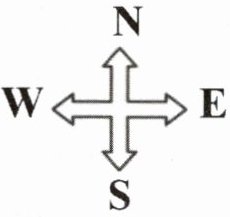
Chu was to the south of Wei, but this man couldn't tell the difference when the coachman rode away to the north. On the way, he met a traveler. When the traveler knew that he was going to Chu, the traveler said, "Chu is in the south. When can you arrive there if you go north?" The man didn't care because he thought his horse was the best and could run quickly. The traveler said, "Your horse is fast, but it will be farther and farther away from Chu in this direction (方向). You will never reach Chu."
The man still didn't worry about that, because he took enough money and food. Then the traveler said, "But you're still going the wrong way." The man said, "It doesn't matter. My coachman is very skilled!" After hearing that, the traveler didn't say anything and watched helplessly as the man went away.
任务一:根据短文内容选择正确答案。
()1. Which direction did the man choose?
A. Wei
B. Chu
C. Wei→Chu
D. Chu←Wei
()2. Why didn't the man care about the traveler's words?
A. Because he thought he could run quickly.
B. Because he thought he could ride his horse well.
C. Because he thought he knew the best way to Chu very well.
D. Because he thought he had the best horse that ran quickly.
()3. How did the traveler feel after the man refused to change his way?
A. Helpless.
B. Hopeful.
C. Cheerful.
D. Excited.
()4. What's the writer's purpose of writing the passage?
A. To tell us not to believe in strangers.
B. To teach us to travel with a true friend.
C. To tell us to accept others' correct advice.
D. To tell us to follow our own ideas without help.
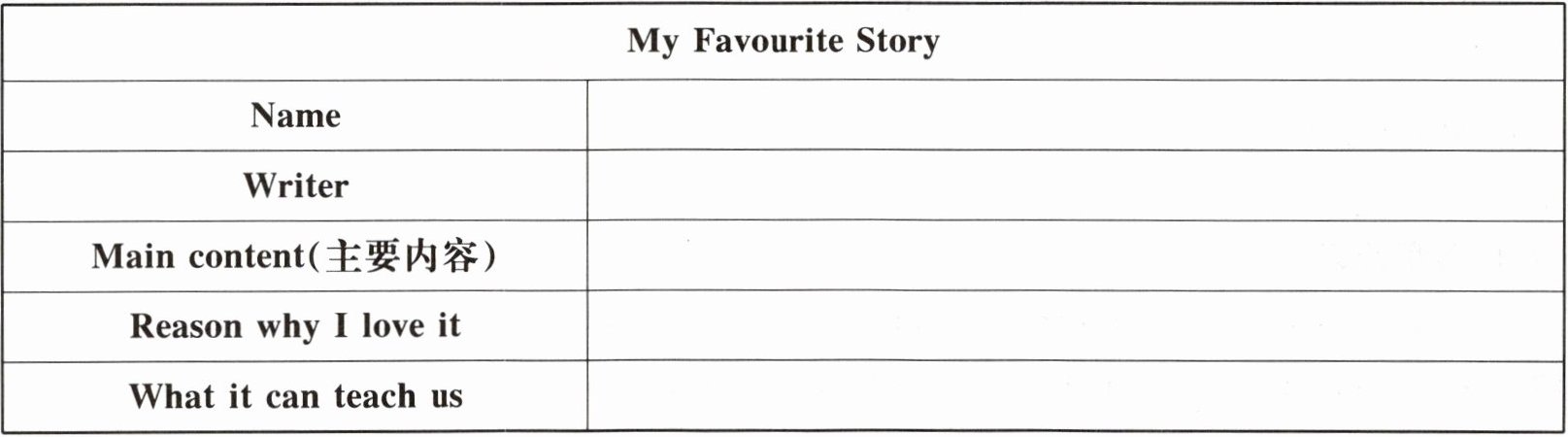
任务二:制作一张关于“My Favourite Story”的故事卡。
Long ago, there was a man traveling from the State of Wei (魏国) to the State of Chu (楚国). After taking a lot of money and food, he found a good coachman (马车夫) and a horse, and then he began his trip.
Chu was to the south of Wei, but this man couldn't tell the difference when the coachman rode away to the north. On the way, he met a traveler. When the traveler knew that he was going to Chu, the traveler said, "Chu is in the south. When can you arrive there if you go north?" The man didn't care because he thought his horse was the best and could run quickly. The traveler said, "Your horse is fast, but it will be farther and farther away from Chu in this direction (方向). You will never reach Chu."
The man still didn't worry about that, because he took enough money and food. Then the traveler said, "But you're still going the wrong way." The man said, "It doesn't matter. My coachman is very skilled!" After hearing that, the traveler didn't say anything and watched helplessly as the man went away.
任务一:根据短文内容选择正确答案。
()1. Which direction did the man choose?
A. Wei
B. Chu
C. Wei→Chu
D. Chu←Wei
()2. Why didn't the man care about the traveler's words?
A. Because he thought he could run quickly.
B. Because he thought he could ride his horse well.
C. Because he thought he knew the best way to Chu very well.
D. Because he thought he had the best horse that ran quickly.
()3. How did the traveler feel after the man refused to change his way?
A. Helpless.
B. Hopeful.
C. Cheerful.
D. Excited.
()4. What's the writer's purpose of writing the passage?
A. To tell us not to believe in strangers.
B. To teach us to travel with a true friend.
C. To tell us to accept others' correct advice.
D. To tell us to follow our own ideas without help.
任务二:制作一张关于“My Favourite Story”的故事卡。
答案
任务一:
1. D
2. D
3. A
4. C
任务二:
Name: *The Man Going to Chu*
Writer: Unknown (It is an ancient Chinese fable, and the specific writer is not clearly recorded in this context)
Main content: A man travels from the State of Wei to the State of Chu. Although he is told that he is going in the wrong direction (north instead of south as Chu is south of Wei), he doesn't change his way because he thinks his horse is good, he has enough money and food and his coachman is skilled.
Reason why I love it: It is an interesting and thought - provoking fable.
What it can teach us: We should accept others' correct advice. If we are going in the wrong direction, even with good conditions (like a good horse, enough supplies, a skilled coachman in the story), we won't reach our goal.
1. D
2. D
3. A
4. C
任务二:
Name: *The Man Going to Chu*
Writer: Unknown (It is an ancient Chinese fable, and the specific writer is not clearly recorded in this context)
Main content: A man travels from the State of Wei to the State of Chu. Although he is told that he is going in the wrong direction (north instead of south as Chu is south of Wei), he doesn't change his way because he thinks his horse is good, he has enough money and food and his coachman is skilled.
Reason why I love it: It is an interesting and thought - provoking fable.
What it can teach us: We should accept others' correct advice. If we are going in the wrong direction, even with good conditions (like a good horse, enough supplies, a skilled coachman in the story), we won't reach our goal.
