

 登录
B
The sun sets in a field in southern England. When it rises again the following morning, that field has been changed into a huge work of art. A large part of the crops has been pressed into a pattern of circles, squares and other shapes.
Farmers have reported finding strange circles in their fields for centuries. The earliest mention of a crop circle dates back to the
1500s. Crop circles, however, didn’t get attention until 1980. When a farmer in England discovered three circles in his field, the world first began to learn about crop circles.
By the 1990s, crop circles had become something of a tourist attraction. In 1990 alone, more than 500 circles appeared in Europe. Within the next few years, there were thousands.
Crop circles can come in many different shapes, changing in size. Most early crop circles were simple. But after 1990, the circles have changed. Crops can be made to look like just about anything—smiling faces, flowers or even words.
People have long been wondering who or what is creating these crop circles. Possibly the most widely known idea is that crop circles are the work of visitors from other planets.
Probably the most scientific opinion says that crop circles are created by vortices(旋涡). They force the air down to the ground, which presses the crops down. Dr Terence Meaden, an expert, says when the dust(尘土) gets caught up in a vortex, it can appear to glow(发光), which may explain the UFO-like glowing lights many people have seen.
(
A. By telling a story.
B. By asking a question.
C. By giving a comparison.
D. By describing a scene.
(
A. Early crop circles were very small in size.
B. Large crop circles are usually round in shape.
C. All kinds of crop circles began to appear after 1990.
D. Flower-shaped crop circles were first found in the 1500s.
(
A. Crop circles may be man-made.
B. Crop circles could be marks left by aliens.
C. The UFO-like light could be caused by dust.
D. Vortices are sure to create perfectly shaped crop circles.
(
The sun sets in a field in southern England. When it rises again the following morning, that field has been changed into a huge work of art. A large part of the crops has been pressed into a pattern of circles, squares and other shapes.
Farmers have reported finding strange circles in their fields for centuries. The earliest mention of a crop circle dates back to the
1500s. Crop circles, however, didn’t get attention until 1980. When a farmer in England discovered three circles in his field, the world first began to learn about crop circles.
By the 1990s, crop circles had become something of a tourist attraction. In 1990 alone, more than 500 circles appeared in Europe. Within the next few years, there were thousands.
Crop circles can come in many different shapes, changing in size. Most early crop circles were simple. But after 1990, the circles have changed. Crops can be made to look like just about anything—smiling faces, flowers or even words.
People have long been wondering who or what is creating these crop circles. Possibly the most widely known idea is that crop circles are the work of visitors from other planets.
Probably the most scientific opinion says that crop circles are created by vortices(旋涡). They force the air down to the ground, which presses the crops down. Dr Terence Meaden, an expert, says when the dust(尘土) gets caught up in a vortex, it can appear to glow(发光), which may explain the UFO-like glowing lights many people have seen.
(
D
) 6. How does the writer introduce the topic of the passage?A. By telling a story.
B. By asking a question.
C. By giving a comparison.
D. By describing a scene.
(
C
) 7. Which of the following is TRUE about crop circles in paragraph 4?A. Early crop circles were very small in size.
B. Large crop circles are usually round in shape.
C. All kinds of crop circles began to appear after 1990.
D. Flower-shaped crop circles were first found in the 1500s.
(
C
) 8. Which point do you think Dr Terence Meaden would agree with?A. Crop circles may be man-made.
B. Crop circles could be marks left by aliens.
C. The UFO-like light could be caused by dust.
D. Vortices are sure to create perfectly shaped crop circles.
(
A
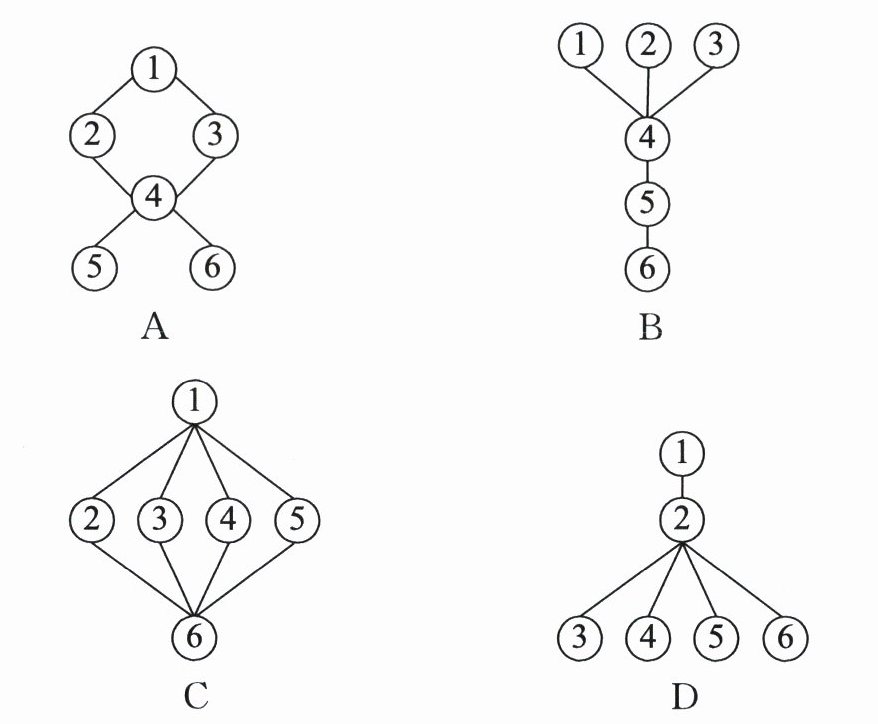
) 9. Which of the following would be the best structure of the passage?答案
6. D 7. C 8. C 9. A
解析
【分析】
第6题:解题思路是定位文章开头,作者通过描述英国田野日落之后变为巨大艺术作品(作物圈)的场景引入话题,对应选项D。
第7题:解题思路是回到第4段逐一核对选项:A选项原文未提及早期作物圈尺寸小;B选项作物圈形状多样,并非通常为圆形;C选项根据“after 1990, the circles have changed... look like just about anything”可知1990年后出现各种形状,正确;D选项1500s是最早提及作物圈,并非花形最早出现于此时,故选C。
第8题:解题思路是定位Dr Terence Meaden的观点,原文提到“dust gets caught up in a vortex, it can appear to glow, which may explain the UFO-like glowing lights”,对应选项C。
第9题:解题思路是梳理文章结构,先引入作物圈,再讲其历史、数量、形状变化,接着讲相关猜测和科学解释,对应选项A。
【解析】
6题:文章开篇描述田野变为作物圈的场景,以此引入话题,故答案为D。
7题:第4段指出1990年后作物圈形状多样,可呈现各种图案,C项符合;A无依据,B错误,D与原文不符,故选C。
8题:Dr Terence Meaden认为旋涡带动灰尘发光,可解释类似UFO的光,C项正确;A、B是其他观点,D“sure”表述绝对,故选C。
9题:文章结构为引入话题→历史发展→数量变化→形状演变→相关猜测→科学解释,对应选项A。
【答案】
6.D 7.C 8.C 9.A
【知识点】
阅读理解细节理解、语篇结构分析、写作手法
【点评】
本文是关于作物圈的说明文,主要考察学生对文章细节的把握、语篇结构的梳理以及写作手法的理解,题目难度适中。
【难度系数】
0.6
