

 登录
登录
Ⅲ. Pair work. 画一画,说一说。
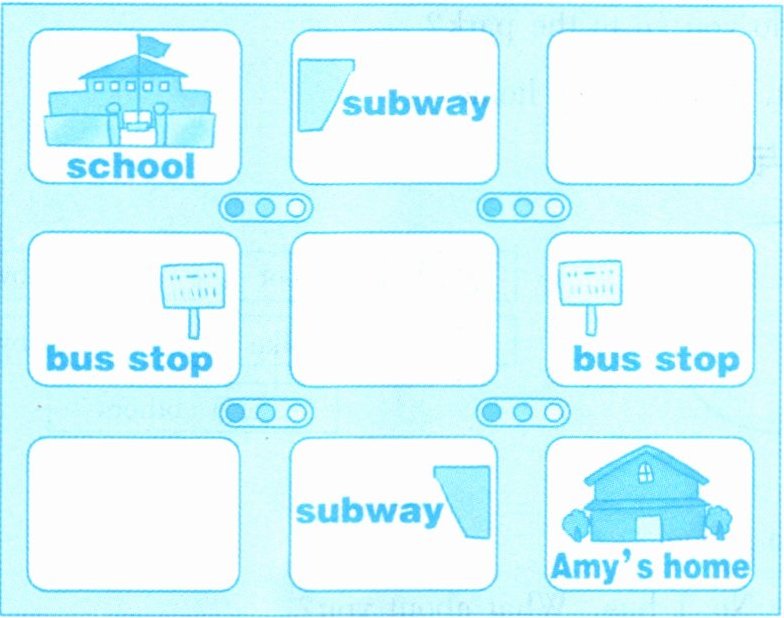
1. First - row empty box: Draw a student taking the subway, write "by subway"
2. Second - row empty box: Draw a bus, write "by bus"
3. Third - row empty box: Draw a person walking, write "walk"
Speaking examples:
For the first row: I go to school by subway.
For the second row: I go to school by bus.
For the third row: Amy goes home by subway and walks.
1. First - row empty box: Draw a student taking the subway, write "by subway"
2. Second - row empty box: Draw a bus, write "by bus"
3. Third - row empty box: Draw a person walking, write "walk"
Speaking examples:
For the first row: I go to school by subway.
For the second row: I go to school by bus.
For the third row: Amy goes home by subway and walks.
答案
This is a pair work activity from the textbook. Since it requires drawing and speaking, and there is no specific question to solve mathematically, here is how to approach it based on the content of Unit 2 "Ways to go to school":
Step 1: Understand the pictures
The first row shows: school, subway, and an empty box (which can be filled with a way to go to school).
The second row shows: bus stop, an empty box, and bus stop.
The third row shows: an empty box, subway, and Amy’s home.
Step 2: Fill in the empty boxes logically
For the first - row empty box, since the theme is "Ways to go to school", and the first picture is school, the second is subway, we can draw a picture of a student taking the subway to school and write "by subway" below it.
For the second - row empty box, as there are bus stops on both sides, we can draw a bus and write "by bus" below it.
For the third - row empty box, considering the subway and Amy's home, we can draw a picture of Amy getting off the subway and walking home, and write "walk" below it.
Step 3: Speak about the pictures
For the first row: I go to school by subway.
For the second row: I go to school by bus.
For the third row: Amy goes home by subway and then walks.
Since this is a pair - work drawing and speaking activity rather than a traditional mathematical or written - answer - type question, it doesn't fit the standard format of providing a single written answer. But if we have to summarize in a simple way for the "answer" part:
1. First - row empty box: Draw a student taking the subway, write "by subway"
2. Second - row empty box: Draw a bus, write "by bus"
3. Third - row empty box: Draw a person walking, write "walk"
Speaking examples:
For the first row: I go to school by subway.
For the second row: I go to school by bus.
For the third row: Amy goes home by subway and walks.
Step 1: Understand the pictures
The first row shows: school, subway, and an empty box (which can be filled with a way to go to school).
The second row shows: bus stop, an empty box, and bus stop.
The third row shows: an empty box, subway, and Amy’s home.
Step 2: Fill in the empty boxes logically
For the first - row empty box, since the theme is "Ways to go to school", and the first picture is school, the second is subway, we can draw a picture of a student taking the subway to school and write "by subway" below it.
For the second - row empty box, as there are bus stops on both sides, we can draw a bus and write "by bus" below it.
For the third - row empty box, considering the subway and Amy's home, we can draw a picture of Amy getting off the subway and walking home, and write "walk" below it.
Step 3: Speak about the pictures
For the first row: I go to school by subway.
For the second row: I go to school by bus.
For the third row: Amy goes home by subway and then walks.
Since this is a pair - work drawing and speaking activity rather than a traditional mathematical or written - answer - type question, it doesn't fit the standard format of providing a single written answer. But if we have to summarize in a simple way for the "answer" part:
1. First - row empty box: Draw a student taking the subway, write "by subway"
2. Second - row empty box: Draw a bus, write "by bus"
3. Third - row empty box: Draw a person walking, write "walk"
Speaking examples:
For the first row: I go to school by subway.
For the second row: I go to school by bus.
For the third row: Amy goes home by subway and walks.
解析
翻译:
Ⅲ. 结对活动。画一画,说一说。
Ⅳ. Read and judge. 读短文,判断正(√)误(×)。
When you are in England, you must be very careful in the street because the drivers drive on the left side of the road. Before you cross a street, you must look at the right side first and then the left side.
When you go by bus in England, you have to be careful, too. Always remember the traffic moves on the left. So you must be careful. Have a look first or you will go the wrong way.
In many English cities, there are big buses with two floors. You can sit on the second floor. From there you can see the city very well. It’s very interesting.
(
(
(
(
(
When you are in England, you must be very careful in the street because the drivers drive on the left side of the road. Before you cross a street, you must look at the right side first and then the left side.
When you go by bus in England, you have to be careful, too. Always remember the traffic moves on the left. So you must be careful. Have a look first or you will go the wrong way.
In many English cities, there are big buses with two floors. You can sit on the second floor. From there you can see the city very well. It’s very interesting.
(
×
) 1. In England and China, drivers drive on the right side of the road.(
×
) 2. Before crossing a street, you must look at the left side first and then the right side.(
√
) 3. We must be careful when we walk or drive on the road.(
×
) 4. You can’t see the city when you sit on the big buses.(
√
) 5. In England, the traffic moves on the left.答案
1. ×
2. ×
3. √
4. ×
5. √
2. ×
3. √
4. ×
5. √
解析
1. 根据“When you are in England, you must be very careful in the street because the drivers drive on the left side of the road.”可知英国司机在左边行驶,中国在右边,题干描述错误。
2. 根据“Before you cross a street, you must look at the right side first and then the left side.”可知在英国过马路先看右边再看左边,题干描述错误。
3. 根据全文描述,在英国的交通规则下,行人和司机都要小心,题干描述正确。
4. 根据“You can sit on the second floor. From there you can see the city very well.”可知可以很好地看到城市,题干描述错误。
5. 根据“Always remember the traffic moves on the left.”可知英国交通在左边行驶,题干描述正确。
翻译:
Ⅳ. 阅读并判断。读短文,判断正(√)误(×)。
当你在英国时,你在街上必须非常小心,因为司机在道路的左侧驾驶。在你过马路之前,你必须先看右边,然后看左边。
当你在英国乘公交车出行时,你也必须小心。永远记住车辆靠左行驶。所以你必须小心。先看一看,否则你会走错路。
在许多英国城市,有两层的大公交车。你可以坐在第二层。从那里你可以很好地观赏这座城市。这非常有趣。
( )1. 在英国和中国,司机都在道路的右侧驾驶。
( )2. 在过马路之前,你必须先看左边,然后看右边。
( )3. 当我们在路上行走或驾驶时,我们必须小心。
( )4. 当你坐在大公交车上时,你看不到这座城市。
( )5. 在英国,车辆靠左行驶。
2. 根据“Before you cross a street, you must look at the right side first and then the left side.”可知在英国过马路先看右边再看左边,题干描述错误。
3. 根据全文描述,在英国的交通规则下,行人和司机都要小心,题干描述正确。
4. 根据“You can sit on the second floor. From there you can see the city very well.”可知可以很好地看到城市,题干描述错误。
5. 根据“Always remember the traffic moves on the left.”可知英国交通在左边行驶,题干描述正确。
翻译:
Ⅳ. 阅读并判断。读短文,判断正(√)误(×)。
当你在英国时,你在街上必须非常小心,因为司机在道路的左侧驾驶。在你过马路之前,你必须先看右边,然后看左边。
当你在英国乘公交车出行时,你也必须小心。永远记住车辆靠左行驶。所以你必须小心。先看一看,否则你会走错路。
在许多英国城市,有两层的大公交车。你可以坐在第二层。从那里你可以很好地观赏这座城市。这非常有趣。
( )1. 在英国和中国,司机都在道路的右侧驾驶。
( )2. 在过马路之前,你必须先看左边,然后看右边。
( )3. 当我们在路上行走或驾驶时,我们必须小心。
( )4. 当你坐在大公交车上时,你看不到这座城市。
( )5. 在英国,车辆靠左行驶。
Ⅴ. Read and answer. 阅读对话,回答问题。
Sarah: Tom, let’s go to the park this afternoon.
Tom: Great! But how do we go to the park?
Sarah: It’s easy. You can come to my home by bike. Then we can take a No. 1 bus to the park. The bus stop is near my home.
Tom: Do you live on the fifth floor?
Sarah: No, I don’t. John lives on the fifth floor, I live on the third floor.
Tom: OK! See you at 3 o’clock.
1. When is Sarah going to the park?
2. How does Tom go to Sarah’s home?
3. How do they go to the park?
4. Is the bus stop far from Sarah’s home?
5. Does John live on the third floor?
Sarah: Tom, let’s go to the park this afternoon.
Tom: Great! But how do we go to the park?
Sarah: It’s easy. You can come to my home by bike. Then we can take a No. 1 bus to the park. The bus stop is near my home.
Tom: Do you live on the fifth floor?
Sarah: No, I don’t. John lives on the fifth floor, I live on the third floor.
Tom: OK! See you at 3 o’clock.
1. When is Sarah going to the park?
This afternoon.
2. How does Tom go to Sarah’s home?
By bike.
3. How do they go to the park?
They take a No. 1 bus to the park.
4. Is the bus stop far from Sarah’s home?
No, it isn't.
5. Does John live on the third floor?
No, he doesn't.
答案
1. This afternoon.
2. By bike.
3. They take a No. 1 bus to the park.
4. No, it isn't.
5. No, he doesn't.
2. By bike.
3. They take a No. 1 bus to the park.
4. No, it isn't.
5. No, he doesn't.
解析
翻译:
### Ⅴ. 阅读并回答。
萨拉:汤姆,我们今天下午去公园吧。
汤姆:太棒了!但是我们怎么去公园呢?
萨拉:很简单。你可以骑自行车来我家。然后我们可以乘坐1路公交车去公园。公交车站在我家附近。
汤姆:你住在五楼吗?
萨拉:不,我不住在五楼。约翰住在五楼,我住在三楼。
汤姆:好的!三点钟见。
1. 萨拉打算什么时候去公园?______
2. 汤姆怎么去萨拉家?______
3. 他们怎么去公园?______
4. 公交车站离萨拉家远吗?______
5. 约翰住在三楼吗?______
