

 登录
登录
同学们,你们喜欢小猪Billy的故事吗?试着讲给你们的好友听一听并写下来吧!对自己完成情况的评价是:😊。

Billy always ______ ______ at weekends. He ______ eats ______ ______. He doesn't like ______ ______ or ______. But he likes ______. He is ______ ______ and he can't ______ ______.
Billy always ______ ______ at weekends. He ______ eats ______ ______. He doesn't like ______ ______ or ______. But he likes ______. He is ______ ______ and he can't ______ ______.
答案
watches
TV
always
a
lot
playing
basketball
swimming
picnics
too
fat
get
out
TV
always
a
lot
playing
basketball
swimming
picnics
too
fat
get
out
1. 标记出本单元中你不会读的单词或不理解的句子。试着和同学们探讨一下,你完成了吗?😊

2. 这个单元我们学习了如何表述自己的周末生活。你能描述一下自己的精彩周末吗?先与同桌交流讨论一下,然后试着写下来吧!______
2. 这个单元我们学习了如何表述自己的周末生活。你能描述一下自己的精彩周末吗?先与同桌交流讨论一下,然后试着写下来吧!______
答案
1. 我标记出的不会读的单词或不理解的句子:(此处可具体写出自己实际标记的内容,比如假设单词“weekend”发音不确定,句子“I often play football at weekends.”不理解等,因没有具体教材内容,暂无法给出确切内容)
2. My wonderful weekend: On Saturday morning, I usually do my homework. In the afternoon, I often go to the park with my friends. We play games and have a great time. On Sunday, I sometimes visit my grandparents. They tell me interesting stories. I really enjoy my weekends.
2. My wonderful weekend: On Saturday morning, I usually do my homework. In the afternoon, I often go to the park with my friends. We play games and have a great time. On Sunday, I sometimes visit my grandparents. They tell me interesting stories. I really enjoy my weekends.
1. 调查之后,你知道自己的小伙伴周末喜欢做什么了吗?试着写一写吧!
At weekends, ______ always ______. ______(He/She)usually ______. ______ often ______. ______ sometimes ______.
At weekends, ______ always ______. ______(He/She)usually ______. ______ often ______. ______ sometimes ______.
答案
Mike
plays football
He
plays basketball
He
goes to the park
He
goes to the cinema
plays football
He
plays basketball
He
goes to the park
He
goes to the cinema
解析
这是一道写作题,需要根据调查结果,用所给提示词描述小伙伴周末的活动。解题关键在于按照频率副词“always(总是)”“usually(通常)”“often(经常)”“sometimes(有时)”的顺序,结合第三人称单数形式(He/She)来描述小伙伴的周末活动。
2. 仔细观察图片,补全句子。
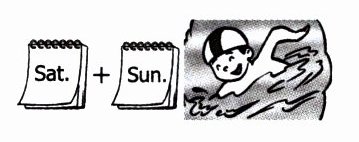
(1)The boy often ______ swimming at ______. He ______ sports very much.
(2)— What does Jack ______ on Sundays?
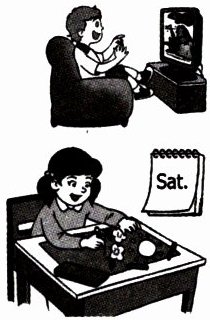
— He often ______ ______.
(3)— Does the girl often draw ______ on ______?
— Yes. She ______ very well.
(1)The boy often ______ swimming at ______. He ______ sports very much.
(2)— What does Jack ______ on Sundays?
— He often ______ ______.
(3)— Does the girl often draw ______ on ______?
— Yes. She ______ very well.
答案
goes
weekends
likes
do
watches
TV
pictures
Saturday
draws
weekends
likes
do
watches
TV
pictures
Saturday
draws
解析
(1) 从图片可知男孩周末经常去游泳,“经常做某事”用“often do sth.”,主语是第三人称单数,动词用第三人称单数形式“goes”;“在周末”是“at weekends”;“喜欢做某事”用“like doing sth.”,主语是第三人称单数,动词用第三人称单数形式“likes”。
(2) 从图片可知杰克周日经常看电视,“做某事”用“do sth.”,助动词后动词用原形;“看电视”是“watch TV”,主语是第三人称单数,动词用第三人称单数形式“watches”。
(3) 从图片可知女孩周六经常画画,“画画”是“draw pictures”;“在周六”是“on Saturday”;“画得好”用“draw very well”,主语是第三人称单数,动词用第三人称单数形式“draws”。
(2) 从图片可知杰克周日经常看电视,“做某事”用“do sth.”,助动词后动词用原形;“看电视”是“watch TV”,主语是第三人称单数,动词用第三人称单数形式“watches”。
(3) 从图片可知女孩周六经常画画,“画画”是“draw pictures”;“在周六”是“on Saturday”;“画得好”用“draw very well”,主语是第三人称单数,动词用第三人称单数形式“draws”。
