

 登录
登录
三、根据实际情况或图片提示写出答语。
1. —When did the Spring Festival start?
—
2. —What do people eat on the Spring Festival?
—
3. —What do people eat on the Dragon Boat Festival?
—
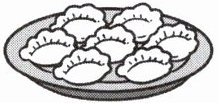
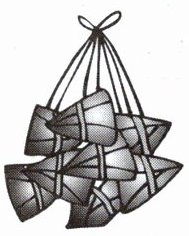
1. —When did the Spring Festival start?
—
It started very long ago.
2. —What do people eat on the Spring Festival?
—
People eat jiaozi.
3. —What do people eat on the Dragon Boat Festival?
—
People eat zongzi.
答案
1. It started very long ago.
2. People eat jiaozi.
3. People eat zongzi.
2. People eat jiaozi.
3. People eat zongzi.
解析
【分析】首先明确每个问题的核心:第1题询问春节的起始时间,结合常识可知春节起源于很久之前;第2题询问春节人们的传统食物,对应饺子;第3题询问端午节人们的传统食物,对应粽子,按照英语问答的规范要求作答即可。
【解析】1. 问题询问春节的起始时间,根据实际情况,春节起源于很久之前,因此答语为It started very long ago.;2. 问题询问春节人们吃的食物,传统食物是饺子,因此答语为People eat jiaozi.;3. 问题询问端午节人们吃的食物,传统食物是粽子,因此答语为People eat zongzi.
【答案】1. It started very long ago.
2. People eat jiaozi.
3. People eat zongzi.
【知识点】英语交际用语、中国传统节日习俗
【点评】本题考查对中国传统节日相关的英语问答掌握,结合生活常识即可完成作答,属于基础题型。
【难度系数】0.8
【解析】1. 问题询问春节的起始时间,根据实际情况,春节起源于很久之前,因此答语为It started very long ago.;2. 问题询问春节人们吃的食物,传统食物是饺子,因此答语为People eat jiaozi.;3. 问题询问端午节人们吃的食物,传统食物是粽子,因此答语为People eat zongzi.
【答案】1. It started very long ago.
2. People eat jiaozi.
3. People eat zongzi.
【知识点】英语交际用语、中国传统节日习俗
【点评】本题考查对中国传统节日相关的英语问答掌握,结合生活常识即可完成作答,属于基础题型。
【难度系数】0.8
四、你还知道哪些中国的传统节日?想一想,填一填,并选择其中一个节日简单介绍一下。
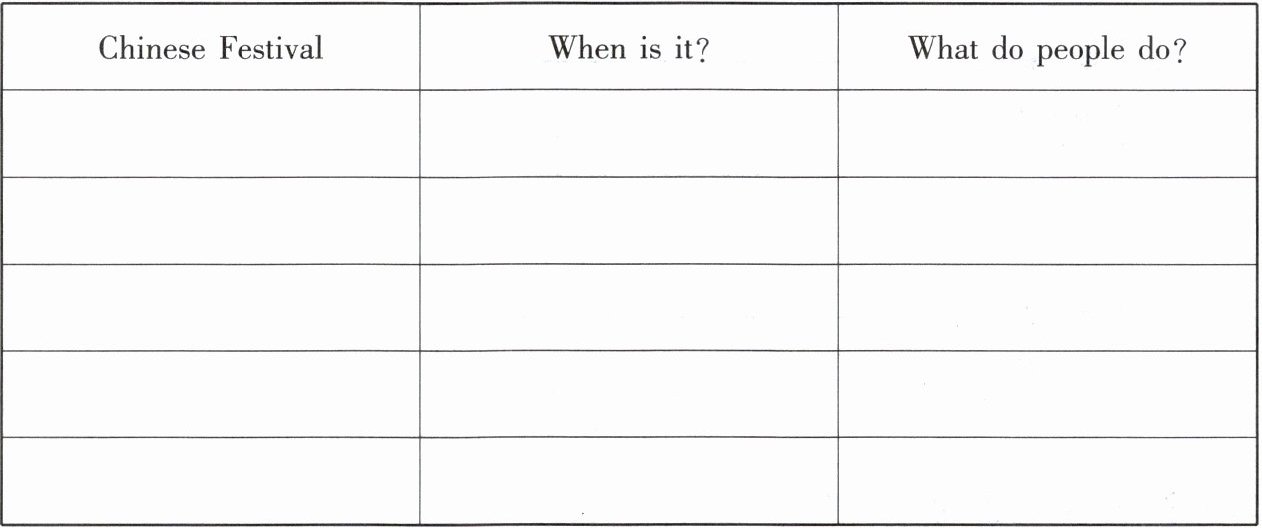
答案
1. 第一行:
Chinese Festival: The Spring Festival
When is it?: It's in January or February of the lunar calendar.
What do people do?: People get together with family, have a big dinner and set off fireworks.
2. 第二行:
Chinese Festival: The Lantern Festival
When is it?: It's on the 15th day of the first lunar month.
What do people do?: People eat sweet rice dumplings and watch lantern shows.
3. 第三行:
Chinese Festival: The Dragon Boat Festival
When is it?: It's on the 5th day of the fifth lunar month.
What do people do?: People eat zongzi and have dragon boat races.
4. 第四行:
Chinese Festival: The Mid-Autumn Festival
When is it?: It's on the 15th day of the eighth lunar month.
What do people do?: People eat mooncakes and enjoy the full moon with family.
5. 第五行:
Chinese Festival: The Double Ninth Festival
When is it?: It's on the 9th day of the ninth lunar month.
What do people do?: People climb mountains and visit the old.
Chinese Festival: The Spring Festival
When is it?: It's in January or February of the lunar calendar.
What do people do?: People get together with family, have a big dinner and set off fireworks.
2. 第二行:
Chinese Festival: The Lantern Festival
When is it?: It's on the 15th day of the first lunar month.
What do people do?: People eat sweet rice dumplings and watch lantern shows.
3. 第三行:
Chinese Festival: The Dragon Boat Festival
When is it?: It's on the 5th day of the fifth lunar month.
What do people do?: People eat zongzi and have dragon boat races.
4. 第四行:
Chinese Festival: The Mid-Autumn Festival
When is it?: It's on the 15th day of the eighth lunar month.
What do people do?: People eat mooncakes and enjoy the full moon with family.
5. 第五行:
Chinese Festival: The Double Ninth Festival
When is it?: It's on the 9th day of the ninth lunar month.
What do people do?: People climb mountains and visit the old.
English Introduction to the Dragon Boat Festival
The Dragon Boat Festival is held in memory of Qu Yuan, a patriotic ancient poet.On this day, people eat zongzi (sticky rice dumplings) and hold dragon boat races. Besides, many families hang mugwort and calamus by their doorways to ward off evil spirits and pray for good fortune.This festival carries people’s remembrance of the virtuous ancient sage and passes down folk customs that have lasted for thousands of years.
