

 登录
登录
探究点 1 compare 的用法
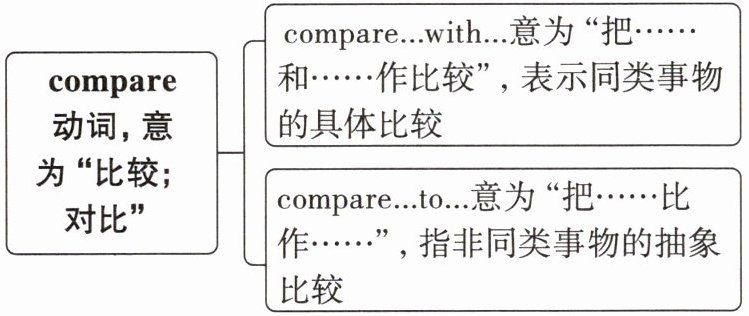
Let’s compare this book with that one.
让我们把这本书和那本书比较一下。
Writers often compare life to a journey.
作家们经常把生活比作一场旅行。
情境应用
1. People often
2.
Let’s compare this book with that one.
让我们把这本书和那本书比较一下。
Writers often compare life to a journey.
作家们经常把生活比作一场旅行。
情境应用
1. People often
compare
a mother’s love to
sunshine. (把……比作……)2.
Compare
this picture with
that one, and you will see the differences. (把……和……比较)答案
1. compare; to 2. Compare; with
解析
1. "把……比作……"对应"compare...to...",主语people为复数,动词用原形compare。2. "把……和……比较"对应"compare...with...",此句为祈使句,以动词原形开头。
探究点 2 loud 的用法
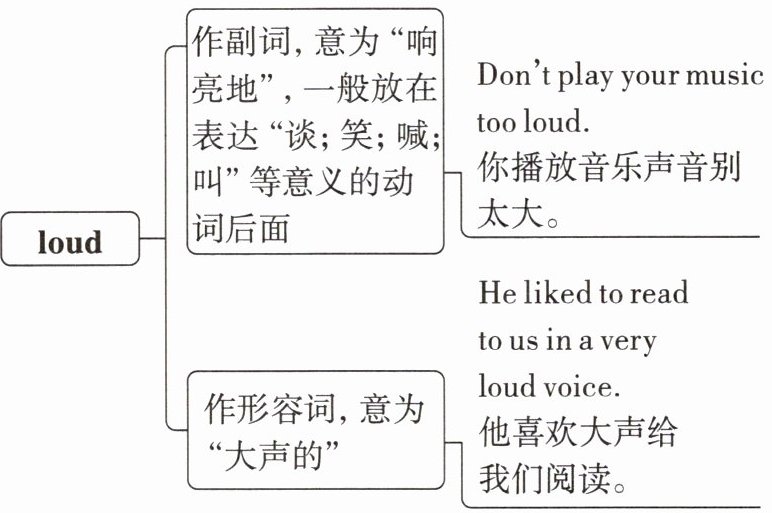
| loud | 作副词,意为“响亮地”,一般放在表达“谈;笑;喊;叫”等意义的动词后面 | Don’t play your music too loud. 你播放音乐声音别太大。 |
| | 作形容词,意为“大声的” | He liked to read to us in a very loud voice. 他喜欢大声给我们阅读。 |
情境应用
1. The rain made
2. Please speak
| loud | 作副词,意为“响亮地”,一般放在表达“谈;笑;喊;叫”等意义的动词后面 | Don’t play your music too loud. 你播放音乐声音别太大。 |
| | 作形容词,意为“大声的” | He liked to read to us in a very loud voice. 他喜欢大声给我们阅读。 |
情境应用
1. The rain made
a loud noise
on the window. (很大的噪音)2. Please speak
loud
. I can’t hear you. (大声地)答案
1. a loud noise
2. loud
2. loud
解析
1. 句子意思是“雨在窗户上制造了很大的噪音”。“很大的噪音”用“a loud noise”表示,因此空白处应填“a loud noise”。
2. 句子意思是“请大声说话,我听不见”。“大声地”用副词“loud”表示,因此空白处应填“loud”。
2. 句子意思是“请大声说话,我听不见”。“大声地”用副词“loud”表示,因此空白处应填“loud”。
Ⅰ. 找出画线部分与其他单词发音不同的选项
(
(
(
(
(
(
D
) 1. A. away B. about C. agree D. lazy(
D
) 2. A. hers B. term C. person D. number(
C
) 3. A. together B. compare C. solve D. tomorrow(
B
) 4. A. moment B. flute C. quiet D. open(
A
) 5. A. hard-working B. perform C. forty D. horse答案
1.D 2.D 3.C 4.B 5.A
解析
1. A. away /əˈweɪ/,B. about /əˈbaʊt/,C. agree /əˈɡriː/ 中"a"均发/ə/;D. lazy /ˈleɪzi/中"a"发/eɪ/。
2. A. hers /hɜːz/,B. term /tɜːm/,C. person /ˈpɜːsn/ 中"er"均发/ɜː/;D. number /ˈnʌmbə(r)/中"er"发/ə(r)/。
3. A. together /təˈɡeðə(r)/,B. compare /kəmˈpeə(r)/,D. tomorrow /təˈmɒrəʊ/ 中"o"均发/ə/;C. solve /sɒlv/中"o"发/ɒ/。
4. A. moment /ˈməʊmənt/,C. quiet /ˈkwaɪət/,D. open /ˈəʊpən/ 中"e"均发/ə/;B. flute /fluːt/中"e"不发音。
5. B. perform /pəˈfɔːm/,C. forty /ˈfɔːti/,D. horse /hɔːs/ 中"or"均发/ɔː/;A. hard-working /ˌhɑːd ˈwɜːkɪŋ/中"or"发/ɜː/。
2. A. hers /hɜːz/,B. term /tɜːm/,C. person /ˈpɜːsn/ 中"er"均发/ɜː/;D. number /ˈnʌmbə(r)/中"er"发/ə(r)/。
3. A. together /təˈɡeðə(r)/,B. compare /kəmˈpeə(r)/,D. tomorrow /təˈmɒrəʊ/ 中"o"均发/ə/;C. solve /sɒlv/中"o"发/ɒ/。
4. A. moment /ˈməʊmənt/,C. quiet /ˈkwaɪət/,D. open /ˈəʊpən/ 中"e"均发/ə/;B. flute /fluːt/中"e"不发音。
5. B. perform /pəˈfɔːm/,C. forty /ˈfɔːti/,D. horse /hɔːs/ 中"or"均发/ɔː/;A. hard-working /ˌhɑːd ˈwɜːkɪŋ/中"or"发/ɜː/。
Ⅱ. 用斜线(/)标注出适当的停顿
1. I get up at six o’clock every morning.
2. They are going to the park to fly a kite.
3. My sister likes dancing and singing very much.
4. The teacher is telling us an interesting story.
5. We need to buy some food for the picnic.
1. I get up at six o’clock every morning.
2. They are going to the park to fly a kite.
3. My sister likes dancing and singing very much.
4. The teacher is telling us an interesting story.
5. We need to buy some food for the picnic.
答案
1. I get up / at six o’clock / every morning.
2. They are going to the park / to fly a kite.
3. My sister likes dancing and singing / very much.
4. The teacher is telling us / an interesting story.
5. We need to buy some food / for the picnic.
2. They are going to the park / to fly a kite.
3. My sister likes dancing and singing / very much.
4. The teacher is telling us / an interesting story.
5. We need to buy some food / for the picnic.
