

 登录
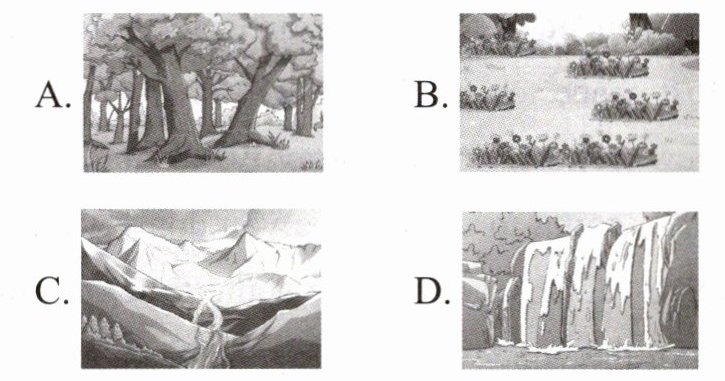
The largest wildflower grassland in the UK is being planted in North Devon, England, by the National Trust, a charity that looks after old buildings and natural spaces.
Grassland is a large open area covered with grass and sometimes flowers. The char-ity tries to plant wildflowers on the grassland in order to increase the kinds of the wildlife. The National Trust says that over the past 100 years, the UK has lost most of its grassland — only 1% of it is left.
On the one hand, the charity has planted 1.3 tons of seeds across an area the size of 120 football fields. By 2030, it hopes to have planted enough seeds to fill an area the size of 1,786 football fields. Before planting the seeds, the team checked the soil carefully to find out whether it was nice for the wildflowers. The team will wait for the first seeds to grow — until
about 2025 — before going further with the project. The areas that have been planted will become “donation sites (捐赠点)”, meaning that the flowers there will provide seeds for more wild-flowers to be planted elsewhere. Each area of the grassland will be able to provide the seeds for an area double its size.
On the other hand, wildlife increases be-cause of the wildflowers. Insects such as but-terflies and bees like flying around the flowers. The north Devon coast is home to some special kinds of bees.
Ben McCarthy from the National Trust says, “These colourful habitats are important to protect many of our plants as well as the wild-life that depend on them.”
62. Which of the following might be planted by the National Trust in the UK?
63. What does the underlined word “it” refer to in Paragraph 3?
A. The grassland.
B. The seed.
C. The football field.
D. The charity.
64. What can we know from the passage?
A. There is more grassland in the UK now than 100 years ago.
B. The team will plant more trees on the grassland in the UK.
C. The grassland can protect not only the plants but also the wildlife.
D. There will be less wildlife because of the grass and wildflowers.
65. What is the writer’s purpose in writing this passage?
A. To attract more people to visit the grass-land in Britain.
B. To call on people to plant grass in the neighbourhood.
C. To introduce the grassland protection in the UK.
D. To show the beauty of grassland in the nature.
Grassland is a large open area covered with grass and sometimes flowers. The char-ity tries to plant wildflowers on the grassland in order to increase the kinds of the wildlife. The National Trust says that over the past 100 years, the UK has lost most of its grassland — only 1% of it is left.
On the one hand, the charity has planted 1.3 tons of seeds across an area the size of 120 football fields. By 2030, it hopes to have planted enough seeds to fill an area the size of 1,786 football fields. Before planting the seeds, the team checked the soil carefully to find out whether it was nice for the wildflowers. The team will wait for the first seeds to grow — until
about 2025 — before going further with the project. The areas that have been planted will become “donation sites (捐赠点)”, meaning that the flowers there will provide seeds for more wild-flowers to be planted elsewhere. Each area of the grassland will be able to provide the seeds for an area double its size.
On the other hand, wildlife increases be-cause of the wildflowers. Insects such as but-terflies and bees like flying around the flowers. The north Devon coast is home to some special kinds of bees.
Ben McCarthy from the National Trust says, “These colourful habitats are important to protect many of our plants as well as the wild-life that depend on them.”
62. Which of the following might be planted by the National Trust in the UK?
63. What does the underlined word “it” refer to in Paragraph 3?
A. The grassland.
B. The seed.
C. The football field.
D. The charity.
64. What can we know from the passage?
A. There is more grassland in the UK now than 100 years ago.
B. The team will plant more trees on the grassland in the UK.
C. The grassland can protect not only the plants but also the wildlife.
D. There will be less wildlife because of the grass and wildflowers.
65. What is the writer’s purpose in writing this passage?
A. To attract more people to visit the grass-land in Britain.
B. To call on people to plant grass in the neighbourhood.
C. To introduce the grassland protection in the UK.
D. To show the beauty of grassland in the nature.
答案
62. B 63. D 64. C 65. C
解析
【分析】
逐个问题梳理解题思路:
1. 62题:题目问National Trust在英国种植的内容,原文明确提到是“wildflower grassland(有野花的草地)”,观察插图,A是树林、B是带花的草地、C是山脉、D是瀑布,匹配B选项。
2. 63题:代词指代题,定位到第三段“By 2030, it hopes...”,前文主语是“the charity(National Trust慈善机构)”,因此it指代该慈善机构,对应D选项。
3. 64题:细节理解题,逐一核对选项:A项与“过去100年英国失去大部分草地”矛盾;B项与“种植野花”不符;C项和最后一段“保护植物及依赖它们的野生动物”一致;D项与“野生动物数量增加”矛盾,选C。
4. 65题:主旨大意题,全文围绕英国National Trust的草地保护项目展开,目的是介绍该保护行动,对应C选项。
【解析】
62题:根据原文第一段“the largest wildflower grassland”可知,种植的是有野花的草地,匹配插图B,故选B。
63题:第三段中“it”指代前文的“the charity(National Trust)”,故选D。
64题:A项与原文“lost most of its grassland”矛盾;B项与“plant wildflowers”不符;C项符合最后一段“protect many of our plants as well as the wildlife”;D项与“wildlife increases”矛盾,故选C。
65题:文章主要介绍英国National Trust的草地保护项目,目的是介绍该保护行动,故选C。
【答案】
62. B 63. D 64. C 65. C
【知识点】
阅读理解细节理解、代词指代、主旨大意
【点评】
本题为英语阅读理解题,围绕环保主题展开,需结合原文细节定位、分析信息,考查学生对文章的理解和推理能力,是初中英语常见题型。
【难度系数】
0.6
