

 登录
B Read and tick or cross(读短文,对比生物与非生物的特点,用“✓”和“×”填空完成表格)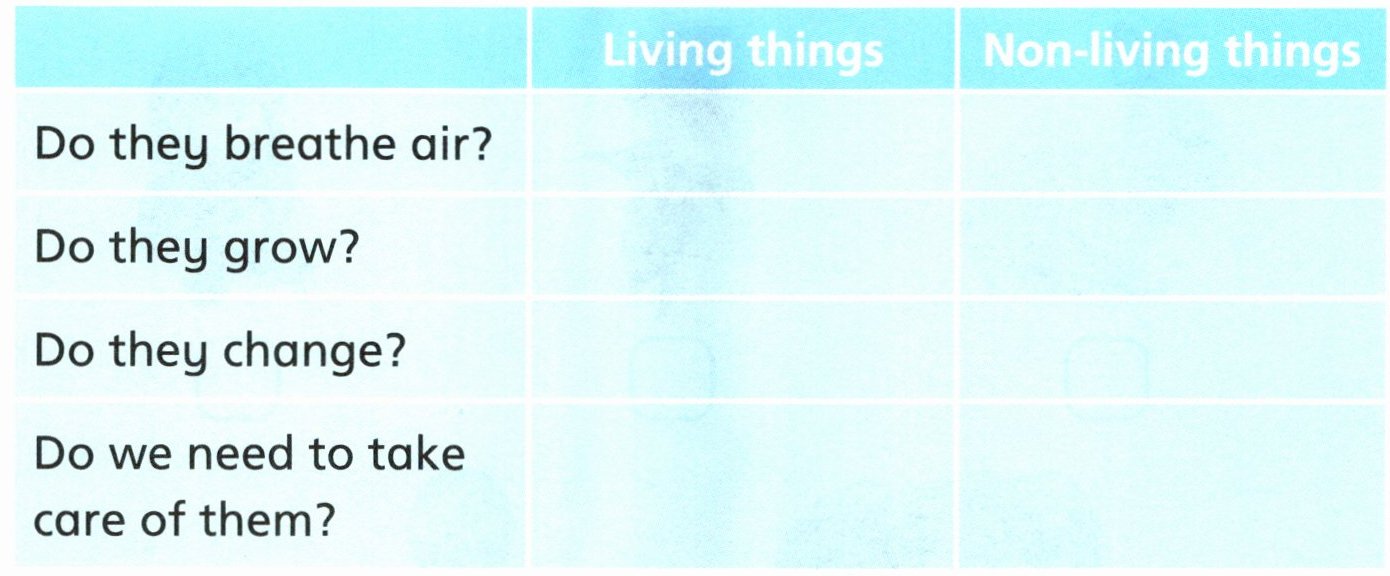
答案
Living things: ✓ ✓ ✓ ✓
Non-living things: × × ✓ ✓
解析
【分析】要完成这道题,需先明确生物与非生物的核心特征:生物具备呼吸、生长、会发生生命相关变化、需要照顾的特点;非生物不具备生命特征,仅可能存在物理或化学变化。据此逐一判断表格中的问题,对应填写“✓”或“×”。
【解析】1. 针对“Do they breathe air?”:生物需要呼吸空气,填“✓”;非生物不需要呼吸空气,填“×”。2. 针对“Do they grow?”:生物会生长发育,填“✓”;非生物不会生长,填“×”。3. 针对“Do they change?”:生物会发生生命相关变化,非生物也会有物理/化学变化,填“✓”。4. 针对“Do we need to take care of them?”:生物需要照顾,填“✓”;非生物不需要照顾,填“✓”。
【答案】Living things: ✓ ✓ ✓ ✓;Non-living things: × × ✓ ✓
【知识点】生物的特征,生物与非生物的区别
【点评】本题是基础生物概念题,考查学生对生物和非生物核心特点的掌握,帮助学生区分两者的差异,难度较低。
【难度系数】0.2
C Read, underline and write(读一读,划出错误的单词,并写出正确的句子)
1 Non-living things can breathe air.
Living things can breathe air.
2 All living things need food and juice.
3 We can water plants to help them talk.
4 We don’t need to take care of non-living things.
1 Non-living things can breathe air.
Living things can breathe air.
2 All living things need food and juice.
All living things need food and water.
3 We can water plants to help them talk.
We can water plants to help them grow.
4 We don’t need to take care of non-living things.
We need to take care of non-living things.
答案
2. All living things need food and water.
3. We can water plants to help them grow.
4. We need to take care of non-living things.
解析
【分析】
先通读每个句子,结合生物学科中生物的基本特征(如生物的生存需求、植物的生长特点等),找出句子中不符合逻辑或常识的错误内容,再替换为正确的表达,使句子准确合理。
【解析】
1. 第2句:原句中“juice”不符合生物生存的需求,生物需要食物和水,因此将“juice”改为“water”,得到正确句子。
2. 第3句:原句中“talk”不符合植物的生长规律,浇水是为了帮助植物生长,因此将“talk”改为“grow”,得到正确句子。
3. 第4句:原句中“don’t”表达的意思与实际不符,非生物也需要被照顾,因此去掉“don’t”,得到正确句子。
【答案】
2. All living things need food and water.
3. We can water plants to help them grow.
4. We need to take care of non-living things.
【知识点】
英语句子纠错,生物基本常识
【点评】
本题结合英语语言知识与生物常识,考察学生对句子逻辑和学科知识的掌握,需要学生结合常识修正错误,难度适中。
【难度系数】
0.5
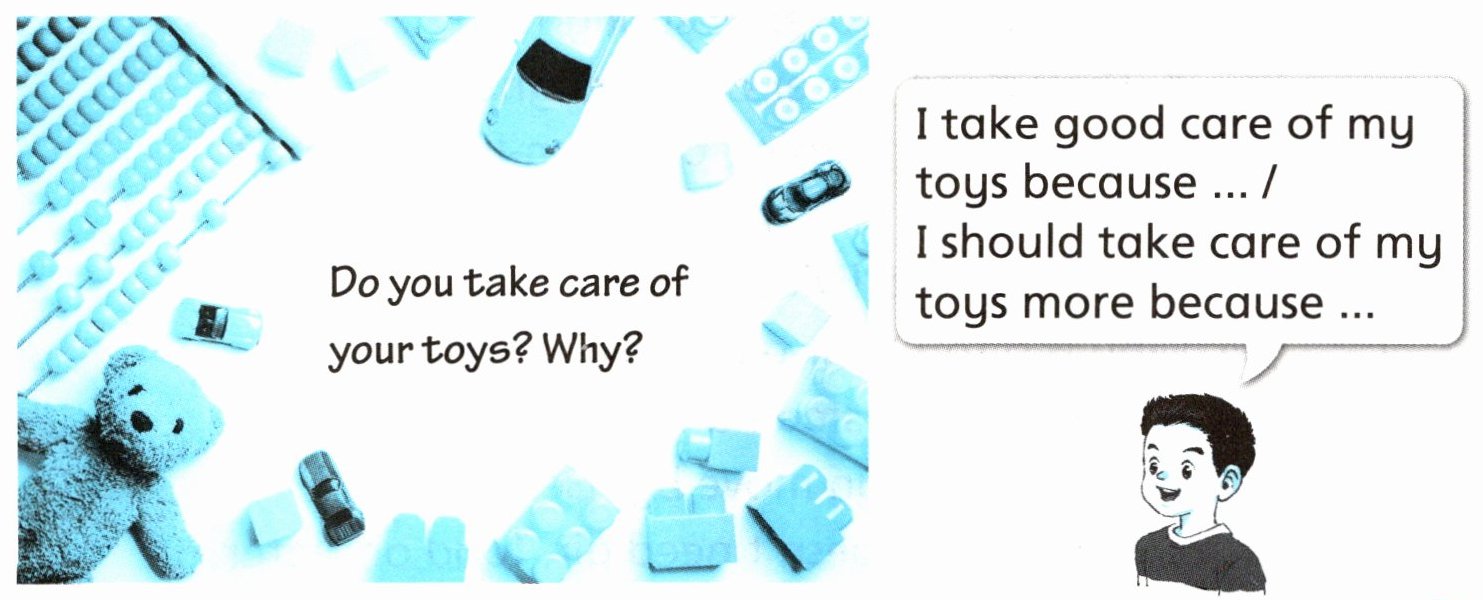
D Think and say(想一想,说一说)
答案
示例:I take good care of my toys because they bring me lots of joy, and my parents spent much money buying them for me.
解析
【分析】这是一道英语口语表达题,需围绕“是否爱护玩具及原因”作答,解题思路是:先确定要表达爱护玩具的核心,再结合生活实际,从玩具带来的快乐、父母的付出等角度,用题目给出的句式(“I take good care of my toys because...”)组织英语句子,确保表达合理通顺。
【解析】根据题目要求,需用英语说明爱护玩具的原因,可结合日常体验,比如玩具能带来快乐,或父母为购买玩具花费了精力与金钱,按照指定句式构建句子,示例答案符合要求。
【答案】I take good care of my toys because they bring me lots of joy, and my parents spent much money buying them for me.
【知识点】英语口语表达、原因状语从句
【点评】本题考查学生的英语口语组织能力,结合生活实际即可作答,贴近日常场景,难度较低。
【难度系数】0.8
