

 登录
一、Listen and connect. 请帮助渔夫捕鱼吧!听一听,根据听力顺序,将小鱼连起来。
an onion
let you
there are
stand up
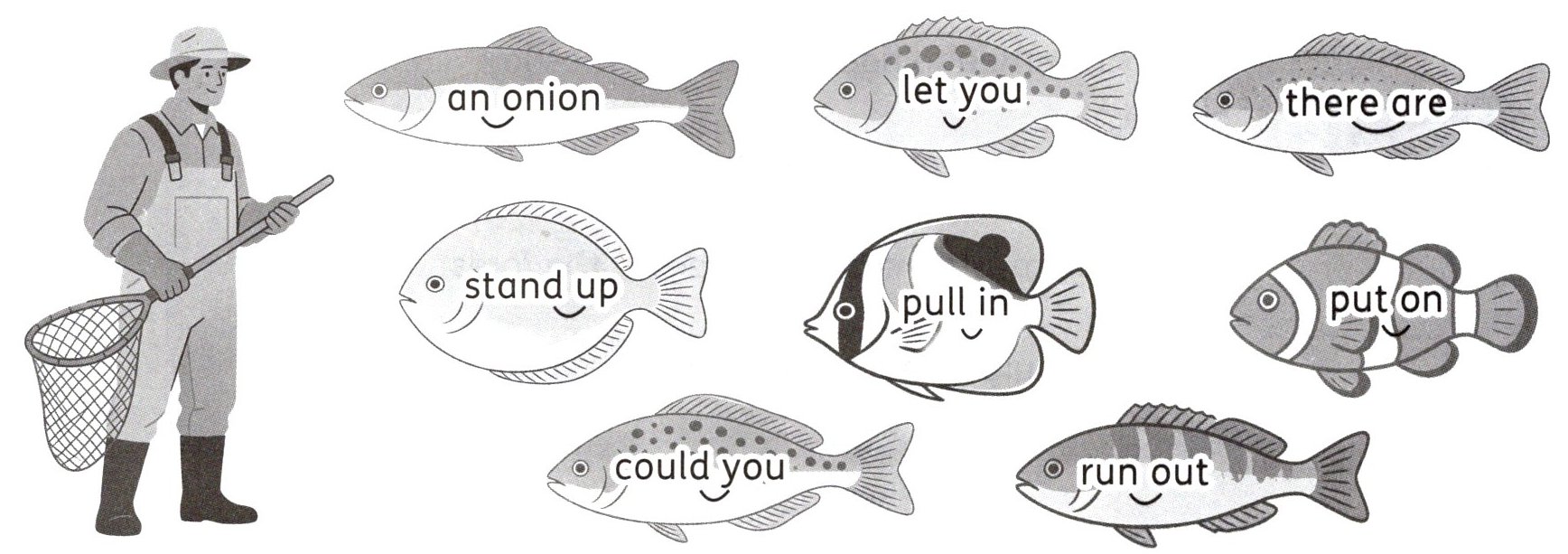
pull in
put on
could you
run out
an onion
let you
there are
stand up
pull in
put on
could you
run out
答案
标准参考连线顺序(符合小学英语连读听力考察逻辑):
could you → pull in → run out → an onion → stand up → put on → let you → there are
词汇/连读知识点补充:
an onion:一颗洋葱,属于辅音+元音连读场景
let you:让你,属于辅音+半元音连读场景,常见连读发音为/letʃu/
there are:there be句型复数形式,意为“有、存在”,后接可数名词复数,属于常见连读词组
stand up:起立、站立,属于辅音+元音连读场景
pull in:(车辆)进站停靠;吸引(客流/关注度)
put on:穿上(衣物);上演(节目);增加(体重)
run out:用完、耗尽;(合约等)到期失效
could you:常用委婉提问表达“请问你能……”,属于辅音+半元音连读场景,常见连读发音为/kʊdʒu/
二、Listen and circle. 小演员们正在练习读台词。听一听,圈出台词中需要重读的单词。
1 — Where are you from?
— I’m from Canada.
2 — Why are you late?
— I lost my cap on the way to school.
3 — Do you want to be a doctor?
— No. I want to be a teacher.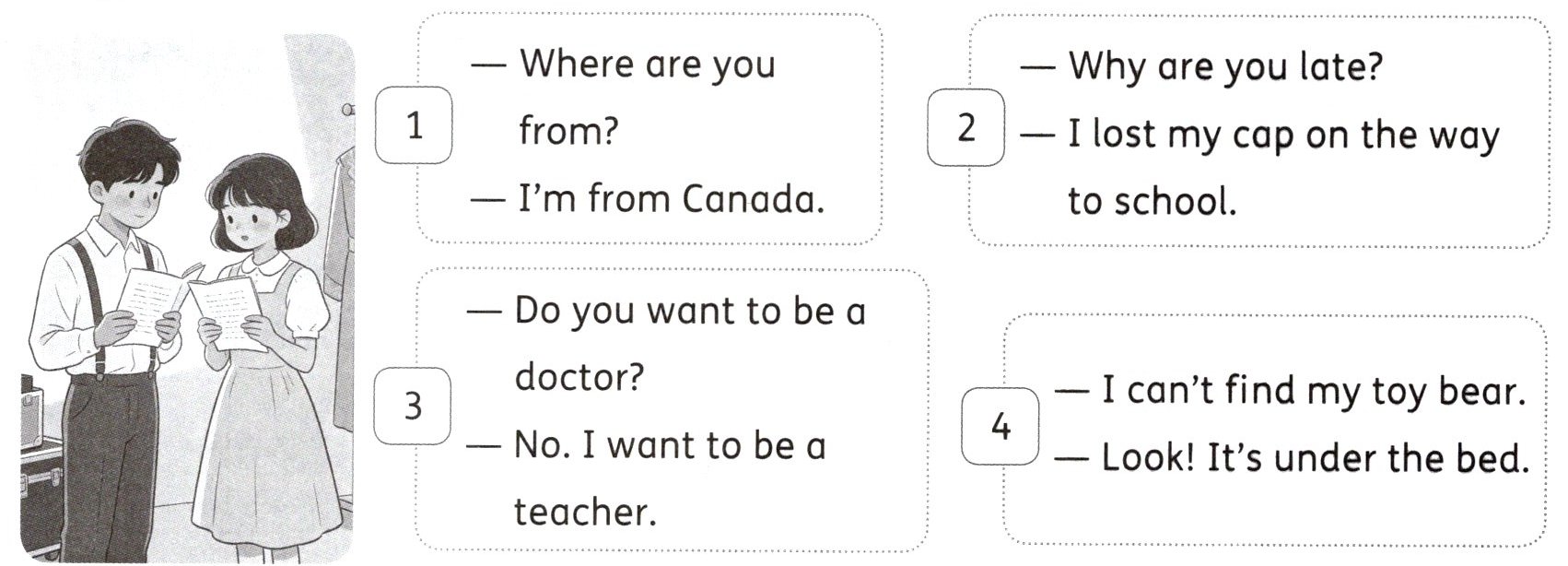
4 — I can’t find my toy bear.
— Look! It’s under the bed.
1 — Where are you from?
— I’m from Canada.
2 — Why are you late?
— I lost my cap on the way to school.
3 — Do you want to be a doctor?
— No. I want to be a teacher.
4 — I can’t find my toy bear.
— Look! It’s under the bed.
答案
1. 需要圈出Where、Canada
解析:特殊疑问词Where是提问的核心信息,答句里的地点专有名词Canada是回答的核心信息,均为口语中需要重读的实词成分。
2. 需要圈出Why、lost、cap
解析:疑问词Why是迟到原因提问的核心要素,答句中动作动词lost和名词cap是迟到事件的核心信息,属于必须重读的关键内容。
3. 需要圈出doctor、No、teacher
解析:疑问句中职业名词doctor是提问的核心内容,否定答词No是关键态度标识,答句中的目标职业名词teacher是回答的核心信息,均需要重读。
4. 需要圈出can’t、toy bear、under、bed
解析:否定情态动词can’t突出“找不到物品”的状态,名词短语toy bear是描述的核心对象,方位介词under和地点名词bed是告知物品位置的核心信息,均需要重读。
三、Listen and write√or×. 听一听,判断句子中意群停顿符号的位置是(√)否(×)正确。
1 This is my family.//My mum//is a nurse//and my dad//is a driver.
2 My brother is a//sports star. He is good at//playing football and volleyball.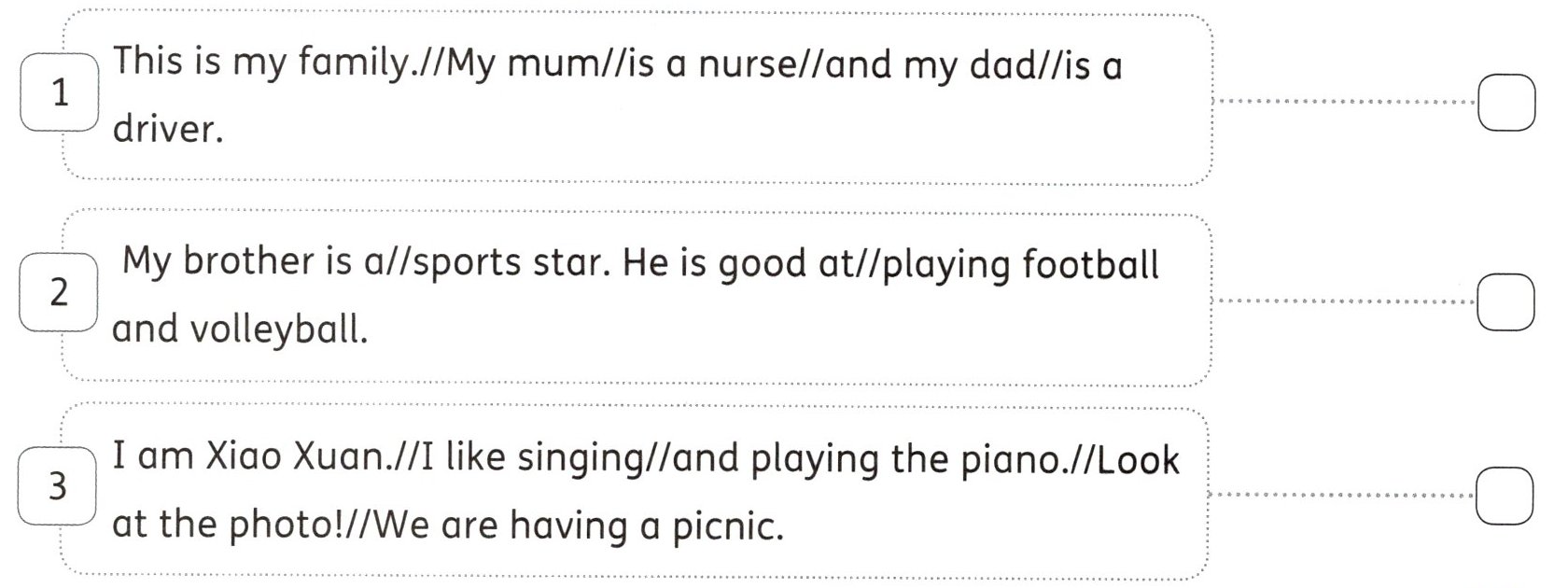
3 I am Xiao Xuan.//I like singing//and playing the piano.//Look at the photo!//We are having a picnic.
1 This is my family.//My mum//is a nurse//and my dad//is a driver.
2 My brother is a//sports star. He is good at//playing football and volleyball.
3 I am Xiao Xuan.//I like singing//and playing the piano.//Look at the photo!//We are having a picnic.
答案
1. √
解析:该句的意群划分全部按照独立语义单元拆分,停顿位置符合英语口语表达的意群停顿规则,划分正确。
2. ×
解析:”My brother is a sports star”是完整的语义单元,不应该在不定冠词a后面断开,原停顿位置错误。
3. √
解析:所有停顿位置都拆分出了独立完整的语义单元,完全符合意群停顿的规范要求,划分正确。
解析:该句的意群划分全部按照独立语义单元拆分,停顿位置符合英语口语表达的意群停顿规则,划分正确。
2. ×
解析:”My brother is a sports star”是完整的语义单元,不应该在不定冠词a后面断开,原停顿位置错误。
3. √
解析:所有停顿位置都拆分出了独立完整的语义单元,完全符合意群停顿的规范要求,划分正确。
