

 登录
Ⅷ.选词填空
阅读短文,从方框内选择适当的单词,并用其适当形式填空。(每词限用一次)
habit, a, buy, saving, take, into, or, without, confidence, because
Not too long ago, saving money meant putting coins into 1.
To help teenagers form good spending 3.
Talking about money at home is also important. Whether using cash 7.
Living in a cashless (不用现金的) world isn’t a bad thing, 9.
Sell fruits to their neighbours.
阅读短文,从方框内选择适当的单词,并用其适当形式填空。(每词限用一次)
habit, a, buy, saving, take, into, or, without, confidence, because
Not too long ago, saving money meant putting coins into 1.
a
moneybox or hiding notes in a secret place. Buying snacks meant handing over real cash and feeling every cent you spent. But now digital payments are becoming part of everyday life. With smartphones or cards, it’s common 2. to buy
things without cash.To help teenagers form good spending 3.
habits
, many parents use tools to manage their children’s money. These tools help teenagers divide their money 4. into
“spending”, “saving” and “giving”, and let parents keep an eye on how the money is used. Some apps also teach lessons about 5. saving
and investing (投资). Schools are also 6. taking
part, offering lessons on money management.Talking about money at home is also important. Whether using cash 7.
or
smartphones, learning how to plan for spending and save for future goals helps kids feel 8. confident
about money.Living in a cashless (不用现金的) world isn’t a bad thing, 9.
because
teenagers have the chance to learn new skills. With the right support from parents, teachers and technology, they can grow up to be financially (财务上) smart — even 10. without
ever carrying a coin.Sell fruits to their neighbours.
答案
1. a 2. to buy 3. habits 4. into 5. saving 6. taking 7. or 8. confident 9. because 10. without
解析
【分析】首先通读短文,理解文章大意:短文围绕存钱、支付方式的变化,以及帮助青少年形成良好消费习惯的方法展开。解题时需结合每个空格的语法结构、上下文语境,从方框单词中选择并调整适当形式:1. 空格后是单数可数名词,需填不定冠词;2. 考查固定句型的动词形式;3. 表示“习惯”需用复数;4. 对应固定短语的介词;5. 结合语境选动名词;6. 对应现在进行时的动词形式;7. 考查固定搭配的连词;8. 系动词后需用形容词;9. 结合因果关系选连词;10. 结合语境选介词。
【解析】1. 空格后是单数可数名词moneybox,表泛指,故用不定冠词a;2. 固定句型it's common to do sth,结合“不用现金买东西”的语境,填to buy;3. “消费习惯”中habit是可数名词,此处表多种习惯,用复数habits;4. 固定短语divide...into...(把...分成...),填into;5. 结合“储蓄和投资的课程”语境,saving(储蓄)符合,用动名词作介词about的宾语;6. 固定短语take part,句子为现在进行时,结构are+doing,填taking;7. 固定搭配whether...or...(不管...还是...),填or;8. feel是系动词,后接形容词,confidence的形容词是confident;9. 前句说明“不用现金的世界不是坏事”,后句解释原因,填because;10. 结合“不用带硬币”的语境,填介词without。
【答案】1. a 2. to buy 3. habits 4. into 5. saving 6. taking 7. or 8. confident 9. because 10. without
【知识点】冠词用法、固定搭配、词性转换
【点评】本题为选词填空题型,考查学生对词汇的语境运用、固定短语及语法知识的掌握,需结合上下文语义和语法规则选择单词并变形,难度适中,适合初中阶段学生练习。
【难度系数】0.6
Ⅸ. 阅读表达
Many teenagers make their own pocket money. They make money in many different ways.
There are many advantages of making pocket money by teenagers themselves. First of all, they learn the value of money by working hard so that they will not waste any. Secondly, they learn to manage their own money by buying things they need or want, such as books, pencils, tickets for performances and even clothes they like. Thirdly, they learn to deal with problems in daily life by helping their parents or others.
Making pocket money is helpful to teenagers as they are growing up. That is why some parents encourage their children to make pocket money.
1. 请在文中空白处填入一个适当的单词,使上下文连贯。
2. 请将文中画线句子翻译成汉语。
3. According to the passage, why are hard-working teenagers less likely to waste money?
4. 根据短文内容,完成下面的结构图,每空一词。
Many teenagers make their own pocket money. They make money in many different ways.
When
they are very young, they help their parents sell the fruits from their own trees to neighbours. They may also help their parents do housework to make money at home. When they are old enough, they can make money by delivering newspapers or by working in fast-food restaurants, especially during the summer holidays.There are many advantages of making pocket money by teenagers themselves. First of all, they learn the value of money by working hard so that they will not waste any. Secondly, they learn to manage their own money by buying things they need or want, such as books, pencils, tickets for performances and even clothes they like. Thirdly, they learn to deal with problems in daily life by helping their parents or others.
Making pocket money is helpful to teenagers as they are growing up. That is why some parents encourage their children to make pocket money.
1. 请在文中空白处填入一个适当的单词,使上下文连贯。
When
2. 请将文中画线句子翻译成汉语。
青少年自己赚零花钱有很多好处。
3. According to the passage, why are hard-working teenagers less likely to waste money?
Because they learn the value of money by working hard.
4. 根据短文内容,完成下面的结构图,每空一词。
答案
1. When
2. 青少年自己赚零花钱有很多好处。
3. Because they learn the value of money by working hard.
2. 青少年自己赚零花钱有很多好处。
3. Because they learn the value of money by working hard.
解析
【分析】
1. 第1题需填入合适的时间连词,结合上下文语境,前文介绍青少年赚零花钱的方式,后文提到“他们很小的时候”帮父母卖水果,用When引导时间状语从句符合逻辑;
2. 第2题需准确翻译画线句,注意核心短语“advantages(好处)”“making pocket money(赚零花钱)”“by teenagers themselves(青少年自己)”的表达,确保翻译通顺准确;
3. 第3题属于细节理解题,需定位原文中关于青少年不浪费钱的原因,提取对应信息即可。
【解析】
1. 空白处需填时间连词,根据语境“当他们很小的时候”,故填When;
2. 画线句翻译:青少年自己赚零花钱有很多好处;
3. 定位原文第二段“First of all, they learn the value of money by working hard so that they will not waste any.”,提取原因:Because they learn the value of money by working hard.
【答案】
1. When
2. 青少年自己赚零花钱有很多好处。
3. Because they learn the value of money by working hard.
【知识点】
英语阅读表达、英译汉、细节理解
【点评】
本题为基础英语阅读表达题,考查学生的语境填词、句子翻译及细节信息提取能力,难度适中,学生通过定位原文即可完成解答。
【难度系数】
0.8
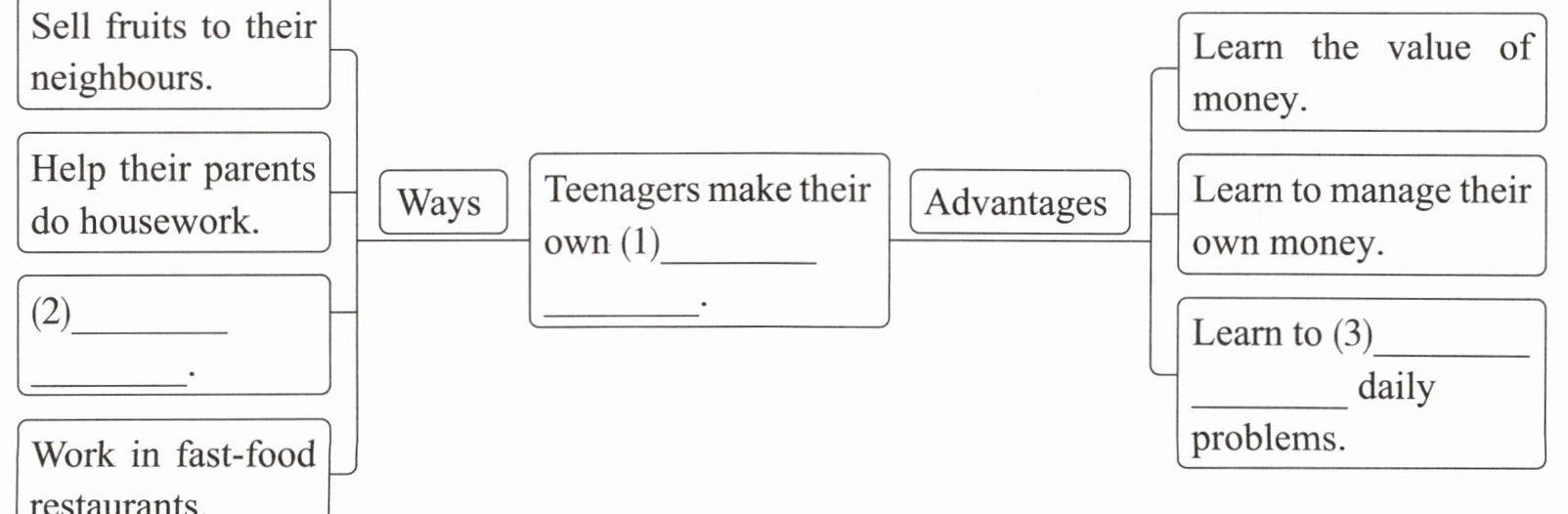
答案
4. (1)pocket money (2)Deliver newspapers (3)deal with
解析
【分析】
本题为思维导图填空题,需结合思维导图的逻辑结构和生活常识完成填空。核心部分是青少年赚取自身的某类资金,左侧是赚钱的具体方式,右侧是对应的优势。首先明确核心部分应填“零花钱”,对应英文短语;左侧补充常见的青少年赚钱方式;右侧最后一个优势对应“处理日常问题”的短语。
【解析】
1. 核心部分“Teenagers make their own (1)”:结合右侧优势提到的“manage their own money”,可知此处应填“零花钱”,英文为pocket money;
2. 左侧方式部分:已给出卖水果、做家务、快餐店工作,补充常见的青少年赚钱方式为送报纸,英文为Deliver newspapers;
3. 右侧优势最后一项:“Learn to (3) daily problems”,结合语境应填“处理”,英文为deal with。
【答案】
(1)pocket money (2)Deliver newspapers (3)deal with
【知识点】
词汇运用、短语搭配、思维导图填空
【点评】
本题以思维导图形式考查英语词汇和短语的运用,结合生活常识即可完成,难度适中,侧重基础词汇的积累与运用。
【难度系数】
0.5
