

 登录
登录
五、语音辨析。(选出画线部分发音与其他不同的选项)
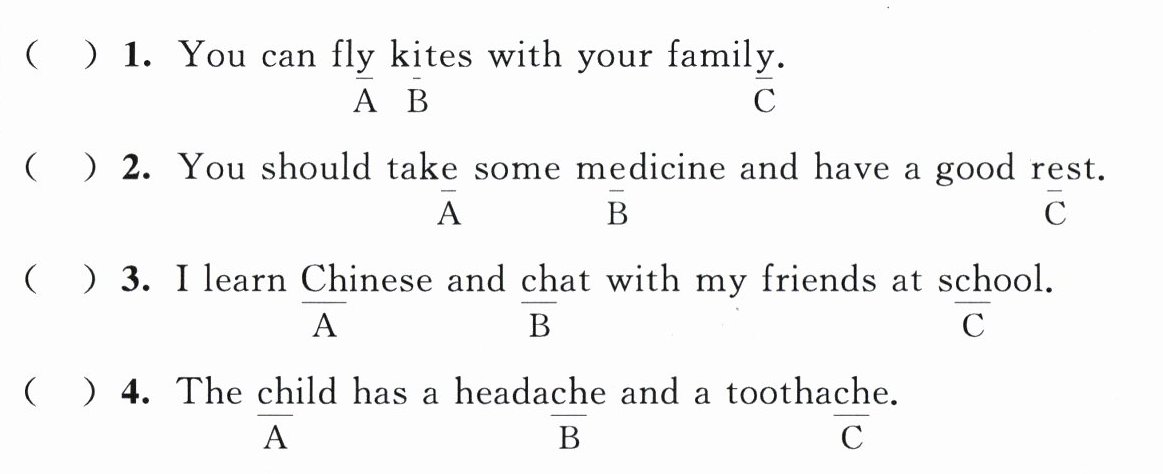
1. (
2. (
3. (
4. (
1. (
C
)2. (
A
)3. (
C
)4. (
A
)答案
1. C;2. A;3. C;4. A
解析
1. 逐个分析发音:
A. fly中y发音为/aɪ/;
B. kite中i发音为/aɪ/;
C. family中y发音为/ɪ/。
发音不同的是C,故选C。
2. 逐个分析发音:
A. take中e不发音;
B. medicine中e发音为/e/;
C. rest中e发音为/e/。
发音不同的是A,故选A。
3. 逐个分析发音:
A. Chinese中ch发音为/tʃ/;
B. chat中ch发音为/tʃ/;
C. school中ch发音为/k/。
发音不同的是C,故选C。
4. 逐个分析发音:
A. child中ch发音为/tʃ/;
B. headache中ch发音为/k/;
C. toothache中ch发音为/k/。
发音不同的是A,故选A。
A. fly中y发音为/aɪ/;
B. kite中i发音为/aɪ/;
C. family中y发音为/ɪ/。
发音不同的是C,故选C。
2. 逐个分析发音:
A. take中e不发音;
B. medicine中e发音为/e/;
C. rest中e发音为/e/。
发音不同的是A,故选A。
3. 逐个分析发音:
A. Chinese中ch发音为/tʃ/;
B. chat中ch发音为/tʃ/;
C. school中ch发音为/k/。
发音不同的是C,故选C。
4. 逐个分析发音:
A. child中ch发音为/tʃ/;
B. headache中ch发音为/k/;
C. toothache中ch发音为/k/。
发音不同的是A,故选A。
六、学贯中西。(英汉互译)
1. She has a toothache. She should
2. Helen wants to
3. Su Hai
4. I feel better. I don’t have to
5. Bobby
6. Nancy,
7.
8. My ear hurts. I can’t hear well.
9. The rabbit points at his long ears.
10. Let me check.
1. She has a toothache. She should
see a dentist
(看牙医).2. Helen wants to
drink some warm water
(喝一些温水).3. Su Hai
brushes her teeth
(刷牙)twice a day.4. I feel better. I don’t have to
take any medicine
(吃任何的药).5. Bobby
helps them
(帮助他们)in the hospital.6. Nancy,
Rest(或have a rest)
(休息)at home and you’ll feel better.7.
Don't drink too much juice
(不要喝太多果汁), Nancy.8. My ear hurts. I can’t hear well.
我的耳朵疼,我听不清楚。
9. The rabbit points at his long ears.
兔子指着他的长耳朵。
10. Let me check.
让我检查一下。
答案
1. see a dentist
2. drink some warm water
3. brushes her teeth
4. take any medicine
5. helps them
6. Rest(或have a rest)
7. Don't drink too much juice
8. 我的耳朵疼,我听不清楚。
9. 兔子指着他的长耳朵。
10. 让我检查一下。
2. drink some warm water
3. brushes her teeth
4. take any medicine
5. helps them
6. Rest(或have a rest)
7. Don't drink too much juice
8. 我的耳朵疼,我听不清楚。
9. 兔子指着他的长耳朵。
10. 让我检查一下。
解析
1. 情态动词should后接动词原形,“看牙医”译为see a dentist;
2. want to后接动词原形,“喝一些温水”译为drink some warm water;
3. 主语Su Hai是第三人称单数,一般现在时中动词用第三人称单数形式,“刷牙”译为brushes her teeth;
4. have to后接动词原形,否定句中用any,“吃任何的药”译为take any medicine;
5. 主语Bobby是第三人称单数,一般现在时中动词用第三人称单数形式,“帮助他们”译为helps them;
6. 祈使句用动词原形,“休息”译为Rest(或have a rest);
7. 否定祈使句以Don't开头,“不要喝太多果汁”译为Don't drink too much juice;
8. 英译汉:结合五年级词汇量,翻译为“我的耳朵疼,我听不清楚。”;
9. 英译汉:结合五年级词汇量,翻译为“兔子指着他的长耳朵。”;
10. 英译汉:结合五年级词汇量,翻译为“让我检查一下。”。
2. want to后接动词原形,“喝一些温水”译为drink some warm water;
3. 主语Su Hai是第三人称单数,一般现在时中动词用第三人称单数形式,“刷牙”译为brushes her teeth;
4. have to后接动词原形,否定句中用any,“吃任何的药”译为take any medicine;
5. 主语Bobby是第三人称单数,一般现在时中动词用第三人称单数形式,“帮助他们”译为helps them;
6. 祈使句用动词原形,“休息”译为Rest(或have a rest);
7. 否定祈使句以Don't开头,“不要喝太多果汁”译为Don't drink too much juice;
8. 英译汉:结合五年级词汇量,翻译为“我的耳朵疼,我听不清楚。”;
9. 英译汉:结合五年级词汇量,翻译为“兔子指着他的长耳朵。”;
10. 英译汉:结合五年级词汇量,翻译为“让我检查一下。”。
