

 登录
登录
一、根据要求完成下列句子。
1. 沿着这条街一直走,然后左转。(翻译句子)
along this street and then .
2. You must listen to the teachers carefully in class.(改为祈使句)
the teachers carefully in class.
3. You shouldn't talk loudly in the hospital.(改为祈使句)
loudly in the hospital.
4. No eating here!(改为同义句)
here.
5. Shall we go to the zoo tomorrow?(改为祈使句)
go to the zoo tomorrow.
1. 沿着这条街一直走,然后左转。(翻译句子)
along this street and then .
2. You must listen to the teachers carefully in class.(改为祈使句)
the teachers carefully in class.
3. You shouldn't talk loudly in the hospital.(改为祈使句)
loudly in the hospital.
4. No eating here!(改为同义句)
here.
5. Shall we go to the zoo tomorrow?(改为祈使句)
go to the zoo tomorrow.
答案
1. Go/Walk; turn left
2. Listen to
3. Don't talk
4. Don't eat
5. Let's
2. Listen to
3. Don't talk
4. Don't eat
5. Let's
解析
本题围绕祈使句的用法和常用情景表达展开:
1. 指路类的祈使句要以动词原形开头,“沿着……走”常用Go/Walk along表达,“左转”是固定短语turn left。
2. 肯定祈使句直接用动词原形开头,省略原句的主语you和情态动词must,保留核心动作短语listen to。
3. 否定祈使句的结构为"Don't + 动词原形",对应原句“你不应该大声交谈”的含义,直接转换即可。
4. 警示标识"No + doing"结构的同义句,可转换为否定祈使句"Don't + 动词原形",No eating等同于Don't eat。
5. 用于提出建议的"Shall we..."句型,转换为祈使句用Let's(让我们)开头,符合表达习惯。
1. 指路类的祈使句要以动词原形开头,“沿着……走”常用Go/Walk along表达,“左转”是固定短语turn left。
2. 肯定祈使句直接用动词原形开头,省略原句的主语you和情态动词must,保留核心动作短语listen to。
3. 否定祈使句的结构为"Don't + 动词原形",对应原句“你不应该大声交谈”的含义,直接转换即可。
4. 警示标识"No + doing"结构的同义句,可转换为否定祈使句"Don't + 动词原形",No eating等同于Don't eat。
5. 用于提出建议的"Shall we..."句型,转换为祈使句用Let's(让我们)开头,符合表达习惯。
二、根据每小题中的图片情景和提示词
写出一个祈使句。(答案不唯一)

(classroom)
1. .
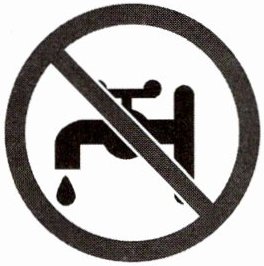
(turn off, brush, teeth)
2. .

(please, hospital)
3. .
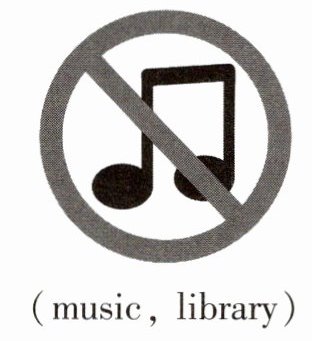
(music, library)
4. .
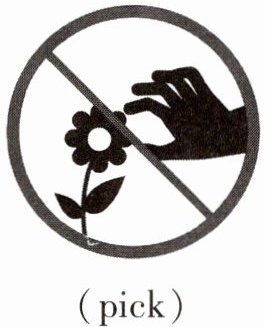
(pick)
5. .
写出一个祈使句。(答案不唯一)
(classroom)
1. .
(turn off, brush, teeth)
2. .
(please, hospital)
3. .
(music, library)
4. .
(pick)
5. .
答案
1. Don't eat or drink in the classroom.
2. Please turn off the tap when you brush your teeth.
3. Please keep quiet in the hospital.
4. Don't listen to music in the library.
5. Don't pick the flowers.
(答案合理即可)
2. Please turn off the tap when you brush your teeth.
3. Please keep quiet in the hospital.
4. Don't listen to music in the library.
5. Don't pick the flowers.
(答案合理即可)
解析
本题考查祈使句的用法,祈使句常以动词原形开头,否定结构为"Don't + 动词原形",结合每张图片的禁止场景和给出的提示词,写出符合情景的正确表达即可,本题答案不唯一。
一、根据汉语意思翻译下列句子,每空一词。
1. 我妈妈很仔细,不浪费钱。
My mother is very money.
2. 如果你愿意,你一定能找到帮助别人的方法。
If you like, you find ways to help others.
3. 不要一次买太多牛奶。
Don't buy too much milk .
4. 昨天火车迟了5分钟到站。
The train the station 5 minutes late yesterday.
5. 下学期初记得带上你们的英语书。
Remember to bring your English books with you next term.
1. 我妈妈很仔细,不浪费钱。
My mother is very money.
2. 如果你愿意,你一定能找到帮助别人的方法。
If you like, you find ways to help others.
3. 不要一次买太多牛奶。
Don't buy too much milk .
4. 昨天火车迟了5分钟到站。
The train the station 5 minutes late yesterday.
5. 下学期初记得带上你们的英语书。
Remember to bring your English books with you next term.
答案
1. careful; and; never; wastes
2. are; sure; to
3. at; a; time
4. arrived; at
5. at; the; beginning; of
2. are; sure; to
3. at; a; time
4. arrived; at
5. at; the; beginning; of
解析
本题考查汉译英的完成句子题型,要求每空一词,结合七年级所学词汇、固定短语和语法规则逐一解答:
1. 要表达“很仔细,从不浪费”,第一空填形容词careful表示“仔细的”,用and连接并列语义,后两空用never wastes表示“从不浪费”,主语my mother是第三人称单数,谓语动词waste变为第三人称单数形式wastes,符合语义和语法。
2. 要表达“一定能”,使用固定搭配be sure to do sth. 表示“肯定/一定做某事”,主语是you,be动词用are,三个空刚好对应are sure to,符合要求。
3. 要表达“一次”,使用固定短语at a time,意为“一次、每次”,符合句子语义。
4. 要表达“到达(车站)”,arrive at后接小地点表示“到达某地”,句中yesterday是过去的时间状语,动词arrive要使用过去式arrived,两个空对应arrived at,符合时态和语义。
5. 要表达“在……初”,使用固定短语at the beginning of,意为“在……的开始/起初”,at the beginning of next term即“下学期初”,符合语义。
1. 要表达“很仔细,从不浪费”,第一空填形容词careful表示“仔细的”,用and连接并列语义,后两空用never wastes表示“从不浪费”,主语my mother是第三人称单数,谓语动词waste变为第三人称单数形式wastes,符合语义和语法。
2. 要表达“一定能”,使用固定搭配be sure to do sth. 表示“肯定/一定做某事”,主语是you,be动词用are,三个空刚好对应are sure to,符合要求。
3. 要表达“一次”,使用固定短语at a time,意为“一次、每次”,符合句子语义。
4. 要表达“到达(车站)”,arrive at后接小地点表示“到达某地”,句中yesterday是过去的时间状语,动词arrive要使用过去式arrived,两个空对应arrived at,符合时态和语义。
5. 要表达“在……初”,使用固定短语at the beginning of,意为“在……的开始/起初”,at the beginning of next term即“下学期初”,符合语义。
