

 登录
登录
语篇研读
五、阅读短文,完成下列任务。
Do you remember some unforgettable things that happened around you? Have you ever seen a fire? What will you do if there is a fire? Will you shout for help? Or will you just stay there and do nothing? Many people are too afraid to do something when there is a fire. But in fact, you must act at once because it is a matter of life and death.
Last Sunday evening my parents went out for a walk with my sister. But I studied alone at home because I would have an English test. Suddenly, I saw bright light coming from my neighbour's kitchen. I thought he was cooking so I went on studying.
Soon, there was a terrible smell in the air and I knew something was wrong. I went out and saw a big fire coming out of my neighbour's kitchen. So I shouted "Fire! Fire!" But no one heard or came out.
I ran quickly back into my house to call 119, and then I rang my neighbour's doorbell and knocked at the door, but there was no response. Seeing a slightly open window, I managed to climb in and found my neighbour sleeping in his bedroom. I woke him up and we rushed out of the house together.
We tried our best to pour water through the kitchen window, but the fire was too big. Luckily, the firemen came and put out the fire quickly. When my parents came back, they found I was dirty and tired. After my neighbour told them the whole story, they were happy and said I was a brave boy.
【任务一 理解文章内容】
1. Why didn't the writer go out for a walk with his parents? (
A. Because he felt uncomfortable.
B. Because he would have an English class.
C. Because he had to study for an English test.
D. Because he had to do his homework.
2. What does the underlined word "response" in paragraph 4 mean? (
A. Result.
B. Answer.
C. Question.
D. Discovery.
3. Who put out the fire at last? (
A. The writer.
B. The writer's parents.
C. The writer's neighbour.
D. The firemen.
【任务二 理清文章结构】
4. How is the passage structured? (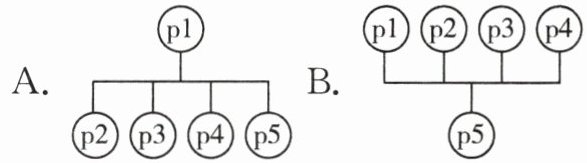
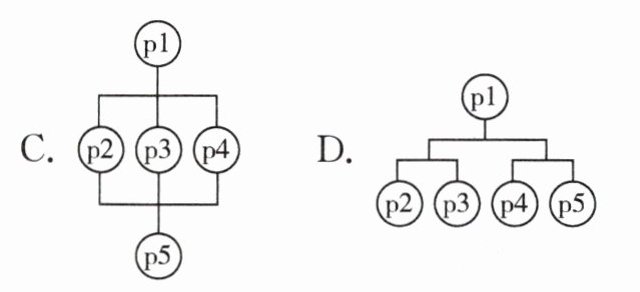
A.
【任务三 探究文章主旨】
5. What's the best title for the passage? (
A. How to Put Out a Fire
B. A Big Fire in the Kitchen
C. My Brave Act in a Fire
D. Ways to Avoid a Fire
【任务四 迁移拓展】
6. What will you do if you find someplace catching fire?
五、阅读短文,完成下列任务。
Do you remember some unforgettable things that happened around you? Have you ever seen a fire? What will you do if there is a fire? Will you shout for help? Or will you just stay there and do nothing? Many people are too afraid to do something when there is a fire. But in fact, you must act at once because it is a matter of life and death.
Last Sunday evening my parents went out for a walk with my sister. But I studied alone at home because I would have an English test. Suddenly, I saw bright light coming from my neighbour's kitchen. I thought he was cooking so I went on studying.
Soon, there was a terrible smell in the air and I knew something was wrong. I went out and saw a big fire coming out of my neighbour's kitchen. So I shouted "Fire! Fire!" But no one heard or came out.
I ran quickly back into my house to call 119, and then I rang my neighbour's doorbell and knocked at the door, but there was no response. Seeing a slightly open window, I managed to climb in and found my neighbour sleeping in his bedroom. I woke him up and we rushed out of the house together.
We tried our best to pour water through the kitchen window, but the fire was too big. Luckily, the firemen came and put out the fire quickly. When my parents came back, they found I was dirty and tired. After my neighbour told them the whole story, they were happy and said I was a brave boy.
【任务一 理解文章内容】
1. Why didn't the writer go out for a walk with his parents? (
C
)A. Because he felt uncomfortable.
B. Because he would have an English class.
C. Because he had to study for an English test.
D. Because he had to do his homework.
2. What does the underlined word "response" in paragraph 4 mean? (
B
)A. Result.
B. Answer.
C. Question.
D. Discovery.
3. Who put out the fire at last? (
D
)A. The writer.
B. The writer's parents.
C. The writer's neighbour.
D. The firemen.
【任务二 理清文章结构】
4. How is the passage structured? (
A
)A.
【任务三 探究文章主旨】
5. What's the best title for the passage? (
C
)A. How to Put Out a Fire
B. A Big Fire in the Kitchen
C. My Brave Act in a Fire
D. Ways to Avoid a Fire
【任务四 迁移拓展】
6. What will you do if you find someplace catching fire?
I'll call 119 first and ask people for help.(言之成理即可)
答案
1. C
2. B
3. D
4. A
5. C
6. I'll call 119 first and ask people for help.(言之成理即可)
2. B
3. D
4. A
5. C
6. I'll call 119 first and ask people for help.(言之成理即可)
解析
【分析】
本题为英语阅读理解题,需结合原文内容解答不同类型题目:1-3题为细节理解/词义猜测题,需定位原文对应信息;4题为文章结构题,需梳理段落逻辑;5题为主旨大意题,需提炼核心内容;6题为开放表达题,结合自身理解作答即可。
【解析】
1. 细节理解题:定位原文第二段第二句“But I studied alone at home because I would have an English test.”,可知作者没去散步是因为要为英语考试学习,对应选项C。
2. 词义猜测题:第四段“knocked at the door, but there was no response”,敲门后没有得到回应,response意为“回应”,对应选项B。
3. 细节理解题:第五段“Luckily, the firemen came and put out the fire quickly.”,可知是消防员扑灭了火,对应选项D。
4. 文章结构题:原文先总述火灾时需立即行动,再讲述作者遇到火灾的具体经历,最后说明结果,为总-分-总结构,对应选项A。
5. 主旨大意题:全文围绕作者在火灾中的勇敢表现展开,最佳标题为“我在火灾中的勇敢行为”,对应选项C。
6. 开放表达题:结合火灾应对常识,合理作答即可,如先拨打119求助,再呼喊周围人帮忙等。
【答案】
1. C
2. B
3. D
4. A
5. C
6. I'll call 119 first and ask people for help.(言之成理即可)
【知识点】
英语阅读理解(细节理解、词义猜测、主旨大意、文章结构)
【点评】
本题贴近生活实际,考查学生对文章细节的定位能力、词义猜测技巧、主旨提炼能力及开放表达能力,题型全面,能有效检验学生的英语阅读综合水平。
【难度系数】
0.7
本题为英语阅读理解题,需结合原文内容解答不同类型题目:1-3题为细节理解/词义猜测题,需定位原文对应信息;4题为文章结构题,需梳理段落逻辑;5题为主旨大意题,需提炼核心内容;6题为开放表达题,结合自身理解作答即可。
【解析】
1. 细节理解题:定位原文第二段第二句“But I studied alone at home because I would have an English test.”,可知作者没去散步是因为要为英语考试学习,对应选项C。
2. 词义猜测题:第四段“knocked at the door, but there was no response”,敲门后没有得到回应,response意为“回应”,对应选项B。
3. 细节理解题:第五段“Luckily, the firemen came and put out the fire quickly.”,可知是消防员扑灭了火,对应选项D。
4. 文章结构题:原文先总述火灾时需立即行动,再讲述作者遇到火灾的具体经历,最后说明结果,为总-分-总结构,对应选项A。
5. 主旨大意题:全文围绕作者在火灾中的勇敢表现展开,最佳标题为“我在火灾中的勇敢行为”,对应选项C。
6. 开放表达题:结合火灾应对常识,合理作答即可,如先拨打119求助,再呼喊周围人帮忙等。
【答案】
1. C
2. B
3. D
4. A
5. C
6. I'll call 119 first and ask people for help.(言之成理即可)
【知识点】
英语阅读理解(细节理解、词义猜测、主旨大意、文章结构)
【点评】
本题贴近生活实际,考查学生对文章细节的定位能力、词义猜测技巧、主旨提炼能力及开放表达能力,题型全面,能有效检验学生的英语阅读综合水平。
【难度系数】
0.7
