

 登录
登录
三、根据课文内容(P70)完成下列各题。
1. How does the writer develop the second paragraph?
2. In which part of the world are people easier to have a good mood?
3. What does the writer advise us to do?
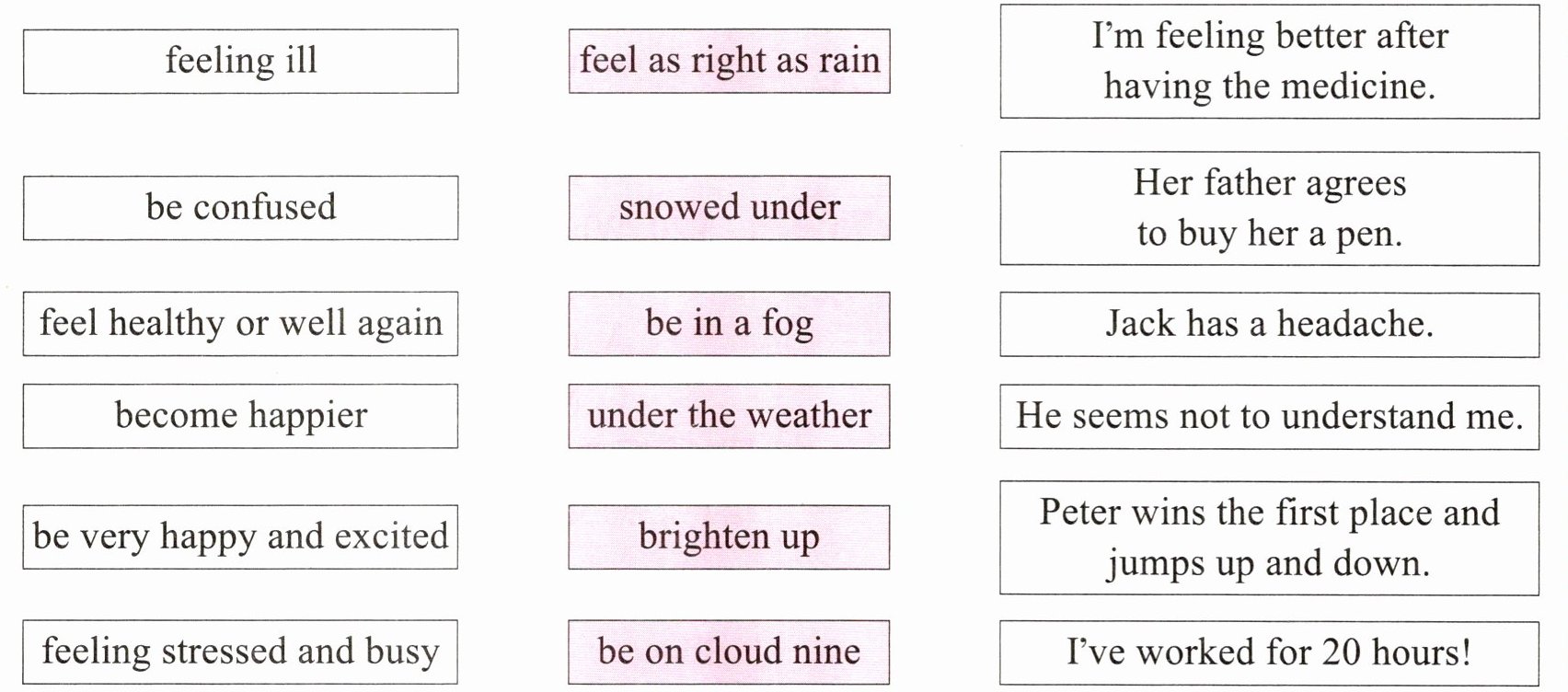
4. Match the weather idioms with the feelings and situations.
1. How does the writer develop the second paragraph?
By giving examples.
2. In which part of the world are people easier to have a good mood?
Warm and cool places with much sunshine.
3. What does the writer advise us to do?
To do more outdoor activities. / Go out often.
4. Match the weather idioms with the feelings and situations.
答案
1. By giving examples.
2. Warm and cool places with much sunshine.
3. To do more outdoor activities. / Go out often.
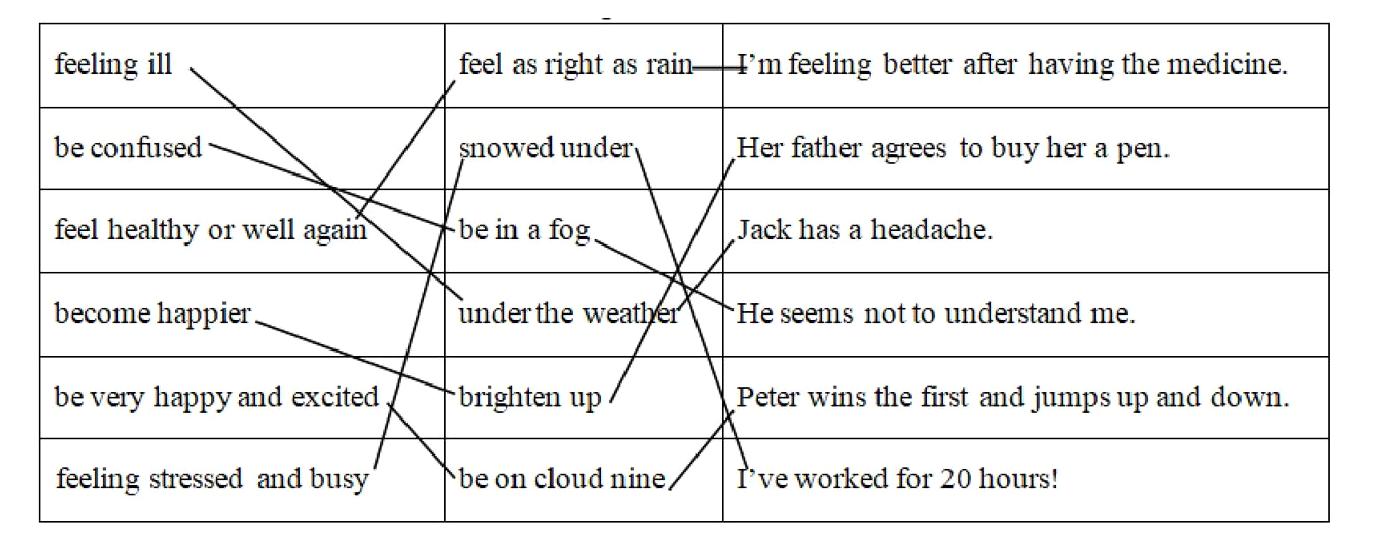
4.
解析
翻译:
三、根据课文内容(第70页)完成下列各题。
1. 作者是如何展开第二段的?
通过举例子。
2. 世界上哪些地区的人们更容易拥有好心情?
阳光充足的温暖和凉爽地区。
3. 作者建议我们做什么?
多做户外活动。/ 经常外出。
4. 将天气习语与感受和情境进行匹配。
三、根据课文内容(第70页)完成下列各题。
1. 作者是如何展开第二段的?
通过举例子。
2. 世界上哪些地区的人们更容易拥有好心情?
阳光充足的温暖和凉爽地区。
3. 作者建议我们做什么?
多做户外活动。/ 经常外出。
4. 将天气习语与感受和情境进行匹配。
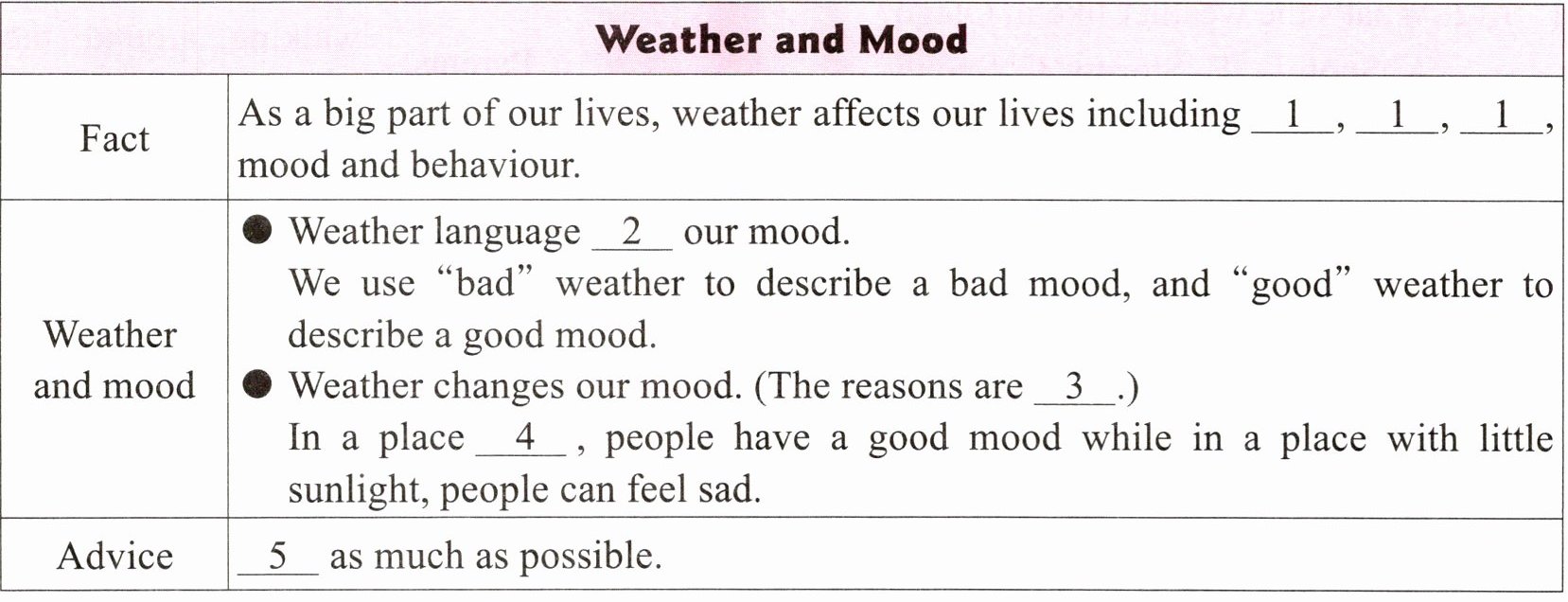
四、根据课文内容(P70)补全图表中所缺的信息。
1.
4.
1.
travel; activities; clothing
2. expresses
3. unclear
4.
full of sunlight
5. Go / Stay outside
答案
1. travel; activities; clothing 2. expresses 3. unclear 4. full of sunlight 5. Go / Stay outside
解析
翻译:
四、根据课文内容(第70页)补全图表中缺失的信息。
1. 旅行;活动;服装
2. 表达
3. 不清楚的
4. 充满阳光
5. 外出/待在户外
四、根据课文内容(第70页)补全图表中缺失的信息。
1. 旅行;活动;服装
2. 表达
3. 不清楚的
4. 充满阳光
5. 外出/待在户外
