

 登录
登录
C
Toad visited Heron several times. He liked talking with Heron because Heron always listened carefully. This made him feel safe. One afternoon, Toad came in looking angry. He sat down heavily in his usual chair.
"What happened, Toad?" Heron asked.
"I had a fight with my friend, Mouse," Toad said sadly. "He said I was selfish(自私的) and only thought about myself. I got angry and shouted at him. Now he doesn't talk to me."
Heron nodded. "Would you like to understand why you felt so angry?"
"Yes, please," said Toad.
"Remember the Child Ego State(儿童自我状态) we talked about last time?" asked Heron.
Toad nodded.
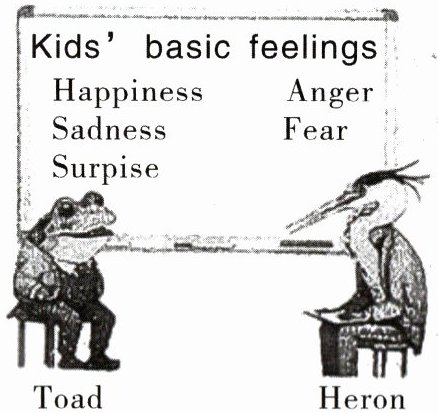
"Children have basic feelings: happiness, anger, sadness, fear and surprise. When your friend hurt you, your 'Natural Child' felt pain and quickly showed anger. It's natural that people feel this way even when they grow up. But sometimes how we act causes more trouble than the problem itself."
Toad looked worried. "So I was acting like a child?"
"In a way, yes," said Heron kindly. "But that doesn't mean you are bad. Those kids' basic feelings are natural and can help us grow. However, if children don't get enough love and care, some bad feelings like anger and sadness can grow stronger and harder to control when they grow up."
Toad thought for a moment. "When I was little, I often felt nobody listened to me. So now, when Mouse says I only think about myself, it feels like people still don't care about my feelings. Maybe that's why his words hurt me so much."
Heron smiled, "That's why understanding your feelings matters. Next time, instead of shouting, you could tell Mouse how you feel."
Toad felt calmer, "I will try."
"Good," said Heron. "Disagreements are part of life. If you learn from them, friendships can become stronger."
Toad left Heron's place feeling hopeful. Maybe he could fix things with Mouse after all.
—Adapted from Counselling for Toads:A Psychological Adventure
(
A. Heron often agreed with his ideas.
B. Heron listened to him carefully.
C. Heron helped him deal with Mouse.
D. Heron told him interesting stories.
(
A. He felt tired after walking.
B. He felt bored and impatient.
C. He felt angry and unhappy.
D. He felt relaxed and comfortable.
(
A. They go away completely as people grow older.
B. They are always harmful to kids and their friends.
C. They keep growing stronger and harder to control.
D. They still have an effect when people grow up.
(
A. Try to avoid talking to Mouse.
B. Have a fight with Mouse again.
C. Talk to Mouse about his feelings.
D. Ask Heron to speak for him.
Toad visited Heron several times. He liked talking with Heron because Heron always listened carefully. This made him feel safe. One afternoon, Toad came in looking angry. He sat down heavily in his usual chair.
"What happened, Toad?" Heron asked.
"I had a fight with my friend, Mouse," Toad said sadly. "He said I was selfish(自私的) and only thought about myself. I got angry and shouted at him. Now he doesn't talk to me."
Heron nodded. "Would you like to understand why you felt so angry?"
"Yes, please," said Toad.
"Remember the Child Ego State(儿童自我状态) we talked about last time?" asked Heron.
Toad nodded.
"Children have basic feelings: happiness, anger, sadness, fear and surprise. When your friend hurt you, your 'Natural Child' felt pain and quickly showed anger. It's natural that people feel this way even when they grow up. But sometimes how we act causes more trouble than the problem itself."
Toad looked worried. "So I was acting like a child?"
"In a way, yes," said Heron kindly. "But that doesn't mean you are bad. Those kids' basic feelings are natural and can help us grow. However, if children don't get enough love and care, some bad feelings like anger and sadness can grow stronger and harder to control when they grow up."
Toad thought for a moment. "When I was little, I often felt nobody listened to me. So now, when Mouse says I only think about myself, it feels like people still don't care about my feelings. Maybe that's why his words hurt me so much."
Heron smiled, "That's why understanding your feelings matters. Next time, instead of shouting, you could tell Mouse how you feel."
Toad felt calmer, "I will try."
"Good," said Heron. "Disagreements are part of life. If you learn from them, friendships can become stronger."
Toad left Heron's place feeling hopeful. Maybe he could fix things with Mouse after all.
—Adapted from Counselling for Toads:A Psychological Adventure
(
B
)38. Why did Toad like talking with Heron?A. Heron often agreed with his ideas.
B. Heron listened to him carefully.
C. Heron helped him deal with Mouse.
D. Heron told him interesting stories.
(
C
)39. What does the sentence "He sat down heavily in his usual chair." show about Toad?A. He felt tired after walking.
B. He felt bored and impatient.
C. He felt angry and unhappy.
D. He felt relaxed and comfortable.
(
D
)40. What can we know about kids' basic feelings?A. They go away completely as people grow older.
B. They are always harmful to kids and their friends.
C. They keep growing stronger and harder to control.
D. They still have an effect when people grow up.
(
C
)41. What will Toad do next according to the passage?A. Try to avoid talking to Mouse.
B. Have a fight with Mouse again.
C. Talk to Mouse about his feelings.
D. Ask Heron to speak for him.
答案
C [文章大意]本文是一篇改编自《蛤蟆先生去看心理医生》的记叙文。蛤蟆因和朋友老鼠吵架后情绪不佳,向苍鹭求助,苍鹭通过讲解儿童自我状态和基本情绪的知识,引导蛤蟆理解自己的情绪,最后蛤蟆决定尝试和老鼠沟通,修复友谊。
38. B [解析]细节理解题。根据“Toad visited Heron several times. He liked talking with Heron because Heron always listened carefully.”可知,蛤蟆喜欢和苍鹭聊天是因为苍鹭会认真听他说话。故选 B。
39. C [解析]推理判断题。根据“One afternoon, Toad came in looking angry. He sat down heavily in his usual chair.”可知,蛤蟆进来时看起来很生气,重重坐下的动作体现了他的愤怒和不快。故选 C。
40. D [解析]细节理解题。根据“It's natural that people feel this way even when they grow up.”可知,儿童的基本情绪在人们长大后仍然会产生影响。故选 D。
41. C [解析]推理判断题。根据“Next time, instead of shouting, you could tell Mouse how you feel.” “Toad felt calmer, 'I will try. '”以及“Maybe he could fix things with Mouse after all.”可知,蛤蟆接下来会尝试和老鼠说出自己的感受。故选 C。
38. B [解析]细节理解题。根据“Toad visited Heron several times. He liked talking with Heron because Heron always listened carefully.”可知,蛤蟆喜欢和苍鹭聊天是因为苍鹭会认真听他说话。故选 B。
39. C [解析]推理判断题。根据“One afternoon, Toad came in looking angry. He sat down heavily in his usual chair.”可知,蛤蟆进来时看起来很生气,重重坐下的动作体现了他的愤怒和不快。故选 C。
40. D [解析]细节理解题。根据“It's natural that people feel this way even when they grow up.”可知,儿童的基本情绪在人们长大后仍然会产生影响。故选 D。
41. C [解析]推理判断题。根据“Next time, instead of shouting, you could tell Mouse how you feel.” “Toad felt calmer, 'I will try. '”以及“Maybe he could fix things with Mouse after all.”可知,蛤蟆接下来会尝试和老鼠说出自己的感受。故选 C。
