

 登录
登录
十一、阅读短文,完成下列任务。(10分)
Kuang Heng was born in a poor family. He liked reading books very much. He needed to work in the daytime, so he could only read books at night. But he was too poor to buy a candle.
One day, he found his neighbour had candles. He thought that he could "borrow" some light. He dug a small hole in the wall so that he could use the light to read books. From that day on, he read books every night until the light went out.
Eventually, he finished reading all his books and there were no books for him to read. Then he went to a rich man's house and worked for him without payment. The rich man asked, "Why don't you want the money?" Kuang Heng said, "Because I only want to borrow your books." The rich man agreed. Kuang Heng read the books one by one.
Later, Kuang Heng became a great scholar.
任务一:用数字给下列图片排序。(4分)
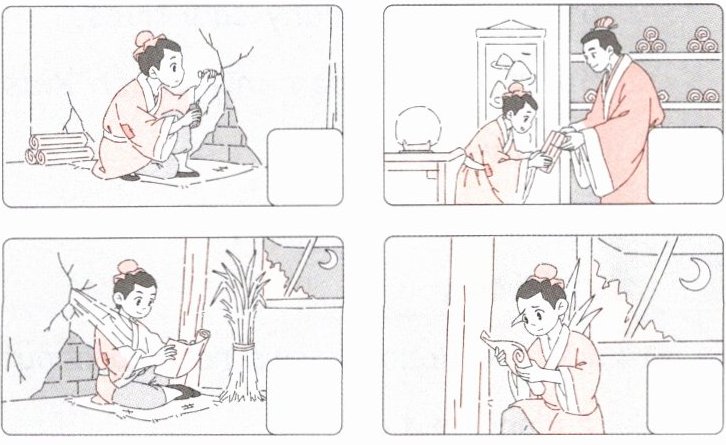
任务二:选择正确的选项。(6分)
(
A. He didn't have books.
B. He didn't have candles.
C. He didn't have a room.
(
A. He borrowed some candles from his neighbour.
B. He bought some candles.
C. He dug a hole in the wall.
(
A. He is greedy.
B. He is not kind.
C. He is helpful.
Kuang Heng was born in a poor family. He liked reading books very much. He needed to work in the daytime, so he could only read books at night. But he was too poor to buy a candle.
One day, he found his neighbour had candles. He thought that he could "borrow" some light. He dug a small hole in the wall so that he could use the light to read books. From that day on, he read books every night until the light went out.
Eventually, he finished reading all his books and there were no books for him to read. Then he went to a rich man's house and worked for him without payment. The rich man asked, "Why don't you want the money?" Kuang Heng said, "Because I only want to borrow your books." The rich man agreed. Kuang Heng read the books one by one.
Later, Kuang Heng became a great scholar.
任务一:用数字给下列图片排序。(4分)
任务二:选择正确的选项。(6分)
(
B
)1. What was Kuang Heng's problem at first?A. He didn't have books.
B. He didn't have candles.
C. He didn't have a room.
(
C
)2. How did Kuang Heng read books without candles?A. He borrowed some candles from his neighbour.
B. He bought some candles.
C. He dug a hole in the wall.
(
C
)3. What do you think of the rich man?A. He is greedy.
B. He is not kind.
C. He is helpful.
答案
十一、任务一:2 4 3 1
任务二:1.B 2.C 3.C
解析
任务一:
依据:①He needed to work in the daytime,so he could only read books at night. But he was too poor to buy a candle.
②He dug a small hole in the wall so that he could use the light to read books.
③From that day on,he read books every night until the light went out.
④Kuang Heng said,"Because I only want to borrow your books." The rich man agreed.
分析:匡衡一开始没有蜡烛,只能在昏暗的屋子里读书,故给图4标1。后来他在墙上挖了个小洞,故给图1标2。有了这个洞后,他每天借助邻居的光读书,故给图3标3。没有书读后,他无偿为富人工作,以换取阅读富人家藏书的机会,故给图2标4。
任务二:
1. 句意:匡衡一开始的困难是什么?
依据:But he was too poor to buy a candle.
分析:匡衡一开始的困难是买不起蜡烛,故选B。
2. 句意:没有蜡烛时匡衡是怎么读书的?
依据:He dug a small hole in the wall so that he could use the light to read books.
分析:匡衡通过挖墙洞借光读书,故选C。
3. 句意:你觉得这个富人怎么样?
依据:The rich man agreed. Kuang Heng read the books one by one.
分析:富人同意匡衡将报酬换成借书的机会,说明他是乐于助人的,故选C。
任务二:1.B 2.C 3.C
解析
任务一:
依据:①He needed to work in the daytime,so he could only read books at night. But he was too poor to buy a candle.
②He dug a small hole in the wall so that he could use the light to read books.
③From that day on,he read books every night until the light went out.
④Kuang Heng said,"Because I only want to borrow your books." The rich man agreed.
分析:匡衡一开始没有蜡烛,只能在昏暗的屋子里读书,故给图4标1。后来他在墙上挖了个小洞,故给图1标2。有了这个洞后,他每天借助邻居的光读书,故给图3标3。没有书读后,他无偿为富人工作,以换取阅读富人家藏书的机会,故给图2标4。
任务二:
1. 句意:匡衡一开始的困难是什么?
依据:But he was too poor to buy a candle.
分析:匡衡一开始的困难是买不起蜡烛,故选B。
2. 句意:没有蜡烛时匡衡是怎么读书的?
依据:He dug a small hole in the wall so that he could use the light to read books.
分析:匡衡通过挖墙洞借光读书,故选C。
3. 句意:你觉得这个富人怎么样?
依据:The rich man agreed. Kuang Heng read the books one by one.
分析:富人同意匡衡将报酬换成借书的机会,说明他是乐于助人的,故选C。
解析
【分析】
这道题是结合传统勤学典故的英语阅读理解,分为排序和选择两个任务。解题时首先通读全文,梳理清楚故事的完整发展脉络:先明确匡衡最初的困境,再依次对应他凿壁借光、借光夜读、到富人家做工换书读的先后情节,把四张图片和对应情节匹配就能完成排序任务;做选择题时,只需要根据题干的关键词回到原文定位对应的语句,对比选项内容就能快速选出正确答案,不需要额外复杂推导。
【解析】
任务一:图片排序
我们先梳理故事的先后发展顺序:
1. 开篇匡衡家境贫寒,买不起蜡烛,夜晚没有光没法看书,对应右下角的图,排序为1;
2. 之后匡衡发现邻居家有烛光,在墙壁上凿出小洞想要借光读书,对应左上角的图,排序为2;
3. 凿完洞之后,匡衡每晚借着从墙洞透过来的光线夜读,对应左下角的图,排序为3;
4. 读完自己所有的藏书后,匡衡前往富人家无偿做工,只求借阅对方的全部藏书,富人同意把书给他,对应右上角的图,排序为4。
因此四幅图的排序结果为2、4、3、1。
任务二:选择题
1. 题干询问匡衡最初的困难,回到原文第一段找到原句"But he was too poor to buy a candle.",可知他最初买不起蜡烛,对应选项B。
2. 题干询问匡衡没有蜡烛时怎么读书,回到原文第二段找到原句"He dug a small hole in the wall so that he could use the light to read books.",可知他在墙上凿洞借邻居的光读书,对应选项C。
3. 题干询问富人的人物品质,原文提到富人同意了匡衡无偿借阅全部藏书的请求,说明富人是乐于助人的,对应选项C。
【答案】
任务一:2 4 3 1
任务二:1.B 2.C 3.C
【知识点】
阅读理解细节定位;故事情节排序;人物品质判断
【点评】
本题结合中国传统典故"凿壁偷光"出题,兼顾英语阅读能力考察和传统文化科普,难度较低,学生只要能耐心从原文找到对应细节,就能顺利完成所有题目,同时也能引导学生学习古人勤学苦读的精神。
【难度系数】
0.8
这道题是结合传统勤学典故的英语阅读理解,分为排序和选择两个任务。解题时首先通读全文,梳理清楚故事的完整发展脉络:先明确匡衡最初的困境,再依次对应他凿壁借光、借光夜读、到富人家做工换书读的先后情节,把四张图片和对应情节匹配就能完成排序任务;做选择题时,只需要根据题干的关键词回到原文定位对应的语句,对比选项内容就能快速选出正确答案,不需要额外复杂推导。
【解析】
任务一:图片排序
我们先梳理故事的先后发展顺序:
1. 开篇匡衡家境贫寒,买不起蜡烛,夜晚没有光没法看书,对应右下角的图,排序为1;
2. 之后匡衡发现邻居家有烛光,在墙壁上凿出小洞想要借光读书,对应左上角的图,排序为2;
3. 凿完洞之后,匡衡每晚借着从墙洞透过来的光线夜读,对应左下角的图,排序为3;
4. 读完自己所有的藏书后,匡衡前往富人家无偿做工,只求借阅对方的全部藏书,富人同意把书给他,对应右上角的图,排序为4。
因此四幅图的排序结果为2、4、3、1。
任务二:选择题
1. 题干询问匡衡最初的困难,回到原文第一段找到原句"But he was too poor to buy a candle.",可知他最初买不起蜡烛,对应选项B。
2. 题干询问匡衡没有蜡烛时怎么读书,回到原文第二段找到原句"He dug a small hole in the wall so that he could use the light to read books.",可知他在墙上凿洞借邻居的光读书,对应选项C。
3. 题干询问富人的人物品质,原文提到富人同意了匡衡无偿借阅全部藏书的请求,说明富人是乐于助人的,对应选项C。
【答案】
任务一:2 4 3 1
任务二:1.B 2.C 3.C
【知识点】
阅读理解细节定位;故事情节排序;人物品质判断
【点评】
本题结合中国传统典故"凿壁偷光"出题,兼顾英语阅读能力考察和传统文化科普,难度较低,学生只要能耐心从原文找到对应细节,就能顺利完成所有题目,同时也能引导学生学习古人勤学苦读的精神。
【难度系数】
0.8
十二、在小学六年的时光里,你暑假或寒假去过哪里呢?(6分)
请参考下面的思维导图,写一写你印象最深刻的一次假期。要求:时态正确,内容完整,不少于5句话。
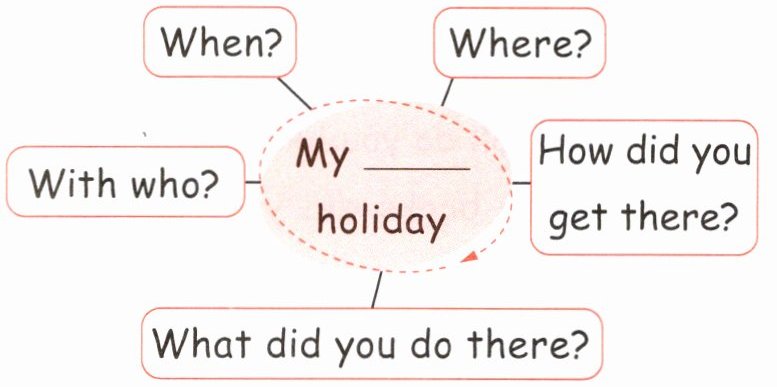
My
I went to
请参考下面的思维导图,写一写你印象最深刻的一次假期。要求:时态正确,内容完整,不少于5句话。
My
summer
holidayI went to
Weihai
over my summer
holiday. I went there with my parents in July.
We went there by plane. We went to the beach. It was beautiful.
My mother walked on the beach. I played on the beach.
We took many pictures there. We also ate fresh food there.
I bought gifts for my friends. We had a wonderful time in Weihai.
答案
十二、示例:
My summer holiday
I went to Weihai over my summer holiday. I went there with my parents in July.
We went there by plane. We went to the beach. It was beautiful. My mother walked on the beach. I played on the beach. We took many pictures there. We also ate fresh food there. I bought gifts for my friends. We had a wonderful time in Weihai.
解析
写作思路
1. 开篇点题:明确假期目的地和旅行时间。
2. 补充要素:依次说明同行人员和交通方式,围绕在当地做了什么展开描写。
3. 结尾总结:用简洁的语句抒发旅行感受,升华整体情感。
写作注意事项
1. 时态准确:旅行发生在过去,需使用一般过去时。
2. 内容完整:涵盖思维导图中的所有核心要素,不少于5句话。
My summer holiday
I went to Weihai over my summer holiday. I went there with my parents in July.
We went there by plane. We went to the beach. It was beautiful. My mother walked on the beach. I played on the beach. We took many pictures there. We also ate fresh food there. I bought gifts for my friends. We had a wonderful time in Weihai.
解析
写作思路
1. 开篇点题:明确假期目的地和旅行时间。
2. 补充要素:依次说明同行人员和交通方式,围绕在当地做了什么展开描写。
3. 结尾总结:用简洁的语句抒发旅行感受,升华整体情感。
写作注意事项
1. 时态准确:旅行发生在过去,需使用一般过去时。
2. 内容完整:涵盖思维导图中的所有核心要素,不少于5句话。
解析
【分析】
首先你可以先观察思维导图给出的5个核心提示要素:出行时间、目的地、同行人员、交通方式、当地活动,我们只需要把这几个要素全部融入写作内容即可。第一步先确定主题,标题的横线可以选填summer或者winter,选定你熟悉的暑假/寒假主题;第二步补全开篇的基础信息,填好你去过的旅行地点、对应的假期类型;第三步按照顺序依次交代同行的人、出行的具体时间,再说明你选择的交通方式,之后详细描写你在目的地做的各类活动,最后收尾抒发旅行的愉快感受,全程注意旅行是已经发生的过往事件,要使用一般过去时,凑够不少于5句话就可以完成写作。
【解析】
写作步骤如下:
1. 确定主题:标题横线填入summer,确定主题为My summer holiday,也可以根据自身经历填入winter写寒假旅行。
2. 开篇点题:第一句的两个空依次填入熟悉的旅行地点(示例为Weihai)、和标题对应的假期类型summer,完成开篇句:I went to Weihai over my summer holiday。
3. 填充核心要素:
① 先回答When和With who两个问题,写出句子:I went there with my parents in July.
② 再回答How did you get there?,写出交通方式相关句子:We went there by plane.
③ 接着回答What did you do there?,拓展多个活动相关的句子:We went to the beach. It was beautiful. My mother walked on the beach. I played on the beach. We took many pictures there. We also ate fresh food there. I bought gifts for my friends.
4. 收尾升华:最后补充感受句:We had a wonderful time in Weihai。
全程所有描述过去动作的动词都使用过去式,内容覆盖所有提示要素,总句数满足不少于5句的题目要求。
【答案】
示例:
My summer holiday
I went to Weihai over my summer holiday. I went there with my parents in July.
We went there by plane. We went to the beach. It was beautiful. My mother walked on the beach. I played on the beach. We took many pictures there. We also ate fresh food there. I bought gifts for my friends. We had a wonderful time in Weihai.
【知识点】
一般过去时,假期话题写作
【点评】
本题是小学阶段常见的提示类话题写作,借助思维导图给学生明确了所有需要覆盖的写作要点,大幅降低了写作的构思难度,学生只需要注意旅行事件的时态为一般过去时,把各个提示要素用通顺的句子串联起来,保证句数达标就可以拿到不错的分数,也能锻炼学生按要点梳理叙事内容的写作习惯。
【难度系数】
0.7
首先你可以先观察思维导图给出的5个核心提示要素:出行时间、目的地、同行人员、交通方式、当地活动,我们只需要把这几个要素全部融入写作内容即可。第一步先确定主题,标题的横线可以选填summer或者winter,选定你熟悉的暑假/寒假主题;第二步补全开篇的基础信息,填好你去过的旅行地点、对应的假期类型;第三步按照顺序依次交代同行的人、出行的具体时间,再说明你选择的交通方式,之后详细描写你在目的地做的各类活动,最后收尾抒发旅行的愉快感受,全程注意旅行是已经发生的过往事件,要使用一般过去时,凑够不少于5句话就可以完成写作。
【解析】
写作步骤如下:
1. 确定主题:标题横线填入summer,确定主题为My summer holiday,也可以根据自身经历填入winter写寒假旅行。
2. 开篇点题:第一句的两个空依次填入熟悉的旅行地点(示例为Weihai)、和标题对应的假期类型summer,完成开篇句:I went to Weihai over my summer holiday。
3. 填充核心要素:
① 先回答When和With who两个问题,写出句子:I went there with my parents in July.
② 再回答How did you get there?,写出交通方式相关句子:We went there by plane.
③ 接着回答What did you do there?,拓展多个活动相关的句子:We went to the beach. It was beautiful. My mother walked on the beach. I played on the beach. We took many pictures there. We also ate fresh food there. I bought gifts for my friends.
4. 收尾升华:最后补充感受句:We had a wonderful time in Weihai。
全程所有描述过去动作的动词都使用过去式,内容覆盖所有提示要素,总句数满足不少于5句的题目要求。
【答案】
示例:
My summer holiday
I went to Weihai over my summer holiday. I went there with my parents in July.
We went there by plane. We went to the beach. It was beautiful. My mother walked on the beach. I played on the beach. We took many pictures there. We also ate fresh food there. I bought gifts for my friends. We had a wonderful time in Weihai.
【知识点】
一般过去时,假期话题写作
【点评】
本题是小学阶段常见的提示类话题写作,借助思维导图给学生明确了所有需要覆盖的写作要点,大幅降低了写作的构思难度,学生只需要注意旅行事件的时态为一般过去时,把各个提示要素用通顺的句子串联起来,保证句数达标就可以拿到不错的分数,也能锻炼学生按要点梳理叙事内容的写作习惯。
【难度系数】
0.7
