

 登录
登录
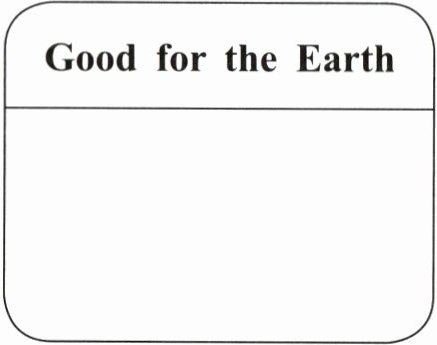
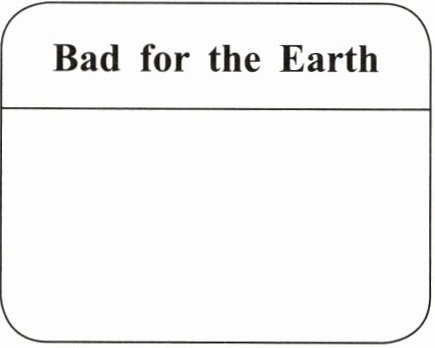
七、Read and do.分类小博士。请将下列行为分类到对应的方框中。(10分)
A. Help to plant trees.
B. People hurt animals’ homes for money.
C. Walk, ride or take a bus to school.
D. Too much dirty air comes out of factories.
E. Throw rubbish in lakes.
Good for the Earth
Bad for the Earth
A. Help to plant trees.
B. People hurt animals’ homes for money.
C. Walk, ride or take a bus to school.
D. Too much dirty air comes out of factories.
E. Throw rubbish in lakes.
Good for the Earth
Bad for the Earth
答案
Good for the Earth: A、C
Bad for the Earth: B、D、E
Bad for the Earth: B、D、E
解析
【分析】首先需理解每个选项的英文含义,再依据“对地球有益”“对地球有害”的标准,逐一判断各行为的环保属性,最后对应分类到指定方框中。
【解析】先明确各选项含义:A.帮忙种树(利于地球生态,属于有益行为);B.为牟利破坏动物家园(破坏生态,属于有害行为);C.步行、骑车或乘公交上学(低碳环保,属于有益行为);D.工厂排放过多脏空气(污染大气,属于有害行为);E.往湖里扔垃圾(污染水源,属于有害行为)。因此对应分类为:Good for the Earth对应A、C;Bad for the Earth对应B、D、E。
【答案】Good for the Earth: A、C;Bad for the Earth: B、D、E
【知识点】英语词汇理解、环保行为分类
【点评】本题结合英语阅读与环保常识,考察学生对日常行为的环保属性判断,贴近生活实际,难度适中。
【难度系数】0.6
【解析】先明确各选项含义:A.帮忙种树(利于地球生态,属于有益行为);B.为牟利破坏动物家园(破坏生态,属于有害行为);C.步行、骑车或乘公交上学(低碳环保,属于有益行为);D.工厂排放过多脏空气(污染大气,属于有害行为);E.往湖里扔垃圾(污染水源,属于有害行为)。因此对应分类为:Good for the Earth对应A、C;Bad for the Earth对应B、D、E。
【答案】Good for the Earth: A、C;Bad for the Earth: B、D、E
【知识点】英语词汇理解、环保行为分类
【点评】本题结合英语阅读与环保常识,考察学生对日常行为的环保属性判断,贴近生活实际,难度适中。
【难度系数】0.6
八、Read and choose. Tom 和 Lily 在讨论小动物。读一读,选择合适的句子补全对话。(10分)
Tom: Hi, Lily! 1.
Lily: Yes, I love pandas. They are so cute.
Tom: 2.
Lily: They eat bamboo. What about kangaroos?
Tom: They eat grass. 3.
Lily: They live in the Arctic. It’s cold and windy.
Tom: Why can’t some animals find homes?
Lily: 4.
Tom: That’s bad. 5.
Lily: You’re right!
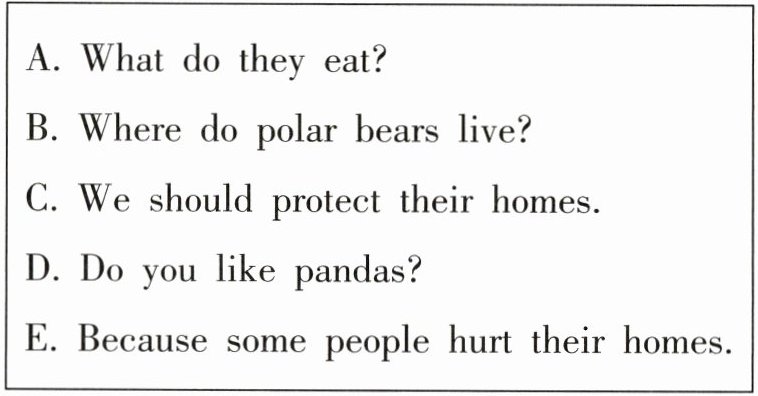
Tom: Hi, Lily! 1.
D
Lily: Yes, I love pandas. They are so cute.
Tom: 2.
A
Lily: They eat bamboo. What about kangaroos?
Tom: They eat grass. 3.
B
Lily: They live in the Arctic. It’s cold and windy.
Tom: Why can’t some animals find homes?
Lily: 4.
E
They cut down trees and make the air dirty.Tom: That’s bad. 5.
C
And we should keep the Earth clean.Lily: You’re right!
答案
1. D 2. A 3. B 4. E 5. C
解析
【分析】
本题是补全对话题型,需结合上下文的问答逻辑匹配句子:第1空,Tom提问后Lily回答“Yes, I love pandas”,对应询问是否喜欢熊猫的句子;第2空,Lily回答“They eat bamboo”,对应询问吃什么的句子;第3空,Lily回答“They live in the Arctic”,对应询问居住地点的句子;第4空,Tom用“Why”提问,需用“Because”引导的句子回答原因;第5空,结合语境表达保护家园的建议,匹配对应句子。
【解析】
1. 第1空:根据Lily的回答“Yes, I love pandas”,可知Tom询问是否喜欢熊猫,选D;
2. 第2空:根据Lily的回答“They eat bamboo”,可知Tom询问熊猫吃什么,选A;
3. 第3空:根据Lily的回答“They live in the Arctic”,可知Tom询问某种动物的居住地点,选B;
4. 第4空:根据Tom的问题“Why can’t some animals find homes?”,需用“Because”引导的句子回答原因,选E;
5. 第5空:结合语境表达保护动物家园的建议,选C。
【答案】
1. D 2. A 3. B 4. E 5. C
【知识点】
英语情景交际、补全对话
【点评】
本题考查情景对话的逻辑匹配,需结合上下文问答关系选择合适句子,难度适中,是基础的英语交际题型。
【难度系数】
0.5
本题是补全对话题型,需结合上下文的问答逻辑匹配句子:第1空,Tom提问后Lily回答“Yes, I love pandas”,对应询问是否喜欢熊猫的句子;第2空,Lily回答“They eat bamboo”,对应询问吃什么的句子;第3空,Lily回答“They live in the Arctic”,对应询问居住地点的句子;第4空,Tom用“Why”提问,需用“Because”引导的句子回答原因;第5空,结合语境表达保护家园的建议,匹配对应句子。
【解析】
1. 第1空:根据Lily的回答“Yes, I love pandas”,可知Tom询问是否喜欢熊猫,选D;
2. 第2空:根据Lily的回答“They eat bamboo”,可知Tom询问熊猫吃什么,选A;
3. 第3空:根据Lily的回答“They live in the Arctic”,可知Tom询问某种动物的居住地点,选B;
4. 第4空:根据Tom的问题“Why can’t some animals find homes?”,需用“Because”引导的句子回答原因,选E;
5. 第5空:结合语境表达保护动物家园的建议,选C。
【答案】
1. D 2. A 3. B 4. E 5. C
【知识点】
英语情景交际、补全对话
【点评】
本题考查情景对话的逻辑匹配,需结合上下文问答关系选择合适句子,难度适中,是基础的英语交际题型。
【难度系数】
0.5
九、Read and do.我们的地球,动物的家园。阅读短文,完成下列任务。(10分)
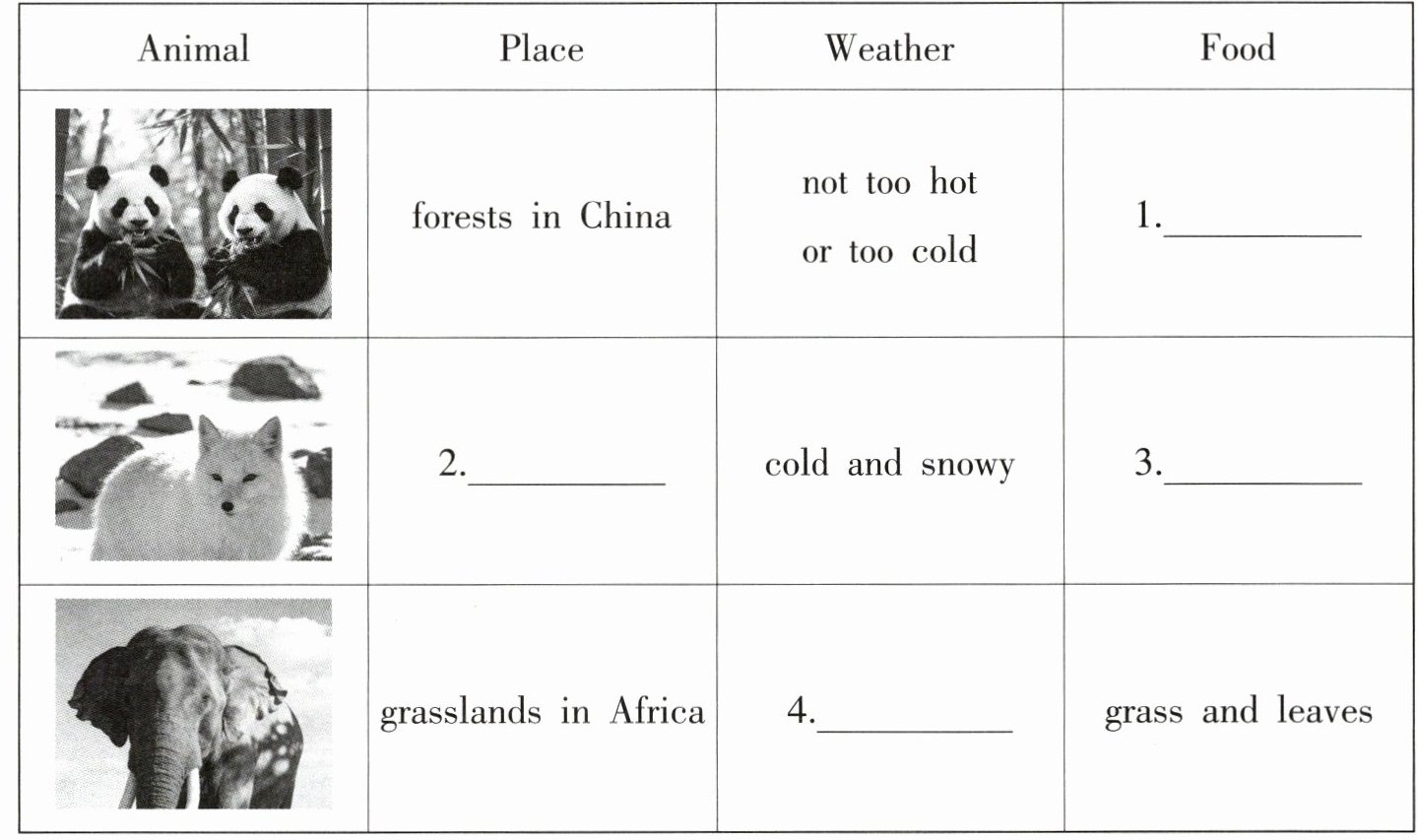
All the animals need homes to live in. Pandas live in forests in China. The weather there is not too hot or too cold. They like eating bamboo. Polar foxes live in the Arctic. It's a cold and snowy place. They eat fish. Elephants live in grasslands(草原)in Africa. The
weather there is hot and dry. They eat grass and leaves.
But now, many animals are in danger. People cut down too many trees. Factories make the air and the water dirty. Some people throw rubbish everywhere. Animals can't find clean homes or enough food. We have only one Earth. Let's do something to help: walk or ride bikes to school, plant more trees, and don't litter.
任务一:根据短文内容补全表格。(8分)
任务二:读一读,判断下列说法是(√)否(×)正确。(2分)
(
(
All the animals need homes to live in. Pandas live in forests in China. The weather there is not too hot or too cold. They like eating bamboo. Polar foxes live in the Arctic. It's a cold and snowy place. They eat fish. Elephants live in grasslands(草原)in Africa. The
weather there is hot and dry. They eat grass and leaves.
But now, many animals are in danger. People cut down too many trees. Factories make the air and the water dirty. Some people throw rubbish everywhere. Animals can't find clean homes or enough food. We have only one Earth. Let's do something to help: walk or ride bikes to school, plant more trees, and don't litter.
任务一:根据短文内容补全表格。(8分)
任务二:读一读,判断下列说法是(√)否(×)正确。(2分)
(
×
)5. Polar foxes live in a warm and sunny place.(
√
)6. Cutting down trees is bad for animals' homes.答案
任务一:1. bamboo 2. the Arctic 3. fish 4. hot and dry
任务二:5. × 6. √
任务二:5. × 6. √
解析
【分析】
本题分为任务一补全表格和任务二判断正误,解题思路是先通读短文,定位每个问题对应的原文细节:任务一需根据动物的食物、栖息地、生存环境的描述补全表格空缺;任务二需对比短文内容与题目说法,判断正误。
【解析】
任务一:1. 短文明确提到“Pandas like eating bamboo”,故熊猫的食物是bamboo;2. 短文指出“Polar foxes live in the Arctic”,故极地狐的栖息地是the Arctic;3. 短文说明极地狐的食物是fish;4. 短文提到非洲草原的天气是hot and dry。
任务二:5. 短文说极地狐生活在寒冷多雪的北极,题目称其生活在温暖晴朗的地方,与原文不符,故打×;6. 短文提到人们砍树导致动物失去家园,说明砍树对动物家园有害,故打√。
【答案】
任务一:1. bamboo 2. the Arctic 3. fish 4. hot and dry
任务二:5. × 6. √
【知识点】
英语阅读理解、细节信息提取
【点评】
本题围绕动物的家园、食物等内容考察学生对英语短文细节的理解能力,题型基础,贴近生活,能帮助学生巩固动物相关的英语表达和阅读技巧。
【难度系数】
0.7
本题分为任务一补全表格和任务二判断正误,解题思路是先通读短文,定位每个问题对应的原文细节:任务一需根据动物的食物、栖息地、生存环境的描述补全表格空缺;任务二需对比短文内容与题目说法,判断正误。
【解析】
任务一:1. 短文明确提到“Pandas like eating bamboo”,故熊猫的食物是bamboo;2. 短文指出“Polar foxes live in the Arctic”,故极地狐的栖息地是the Arctic;3. 短文说明极地狐的食物是fish;4. 短文提到非洲草原的天气是hot and dry。
任务二:5. 短文说极地狐生活在寒冷多雪的北极,题目称其生活在温暖晴朗的地方,与原文不符,故打×;6. 短文提到人们砍树导致动物失去家园,说明砍树对动物家园有害,故打√。
【答案】
任务一:1. bamboo 2. the Arctic 3. fish 4. hot and dry
任务二:5. × 6. √
【知识点】
英语阅读理解、细节信息提取
【点评】
本题围绕动物的家园、食物等内容考察学生对英语短文细节的理解能力,题型基础,贴近生活,能帮助学生巩固动物相关的英语表达和阅读技巧。
【难度系数】
0.7
