

 登录
(
—It 2 kilometers north to that shopping mall.
A.lays
B.lies
C.lives
D.leads
B
)5. —Pardon me, could you please tell me where the amusement park is?—It 2 kilometers north to that shopping mall.
A.lays
B.lies
C.lives
D.leads
答案
5. B
解析
【分析】本题为英语词义辨析题,解题时需先理解对话语境(询问并回答地点位置),再逐一辨析四个选项动词的含义、词性及适用场景,最终选出符合语境的选项。
【解析】首先,对话语境是询问游乐园的位置,答句需表达“位于……”的含义。分析选项:A. lays是lay的第三人称单数,意为“放置、产卵”,为及物动词,不符合表位置的语境;B. lies是lie的第三人称单数,意为“位于、躺”,为不及物动词,可用于描述地理位置,契合语境;C. lives是live的第三人称单数,意为“居住”,主语通常为人,此处主语是“amusement park”(物),不适用;D. leads是lead的第三人称单数,意为“带领、通向”,常用搭配为lead to,此处语义和搭配均不符。因此答案为B。
【答案】B
【知识点】动词词义辨析;动词用法
【点评】本题考查基础英语动词的词义与用法辨析,结合语境即可判断,属于基础题型,难度较低。
【难度系数】0.3
(
—The idea is to some chemicals to protect the trees from pests(害虫).
A.put
B.lay
C.coat
D.serve
C
)6. —Look at those trees. They're painted white.—The idea is to some chemicals to protect the trees from pests(害虫).
A.put
B.lay
C.coat
D.serve
答案
6. C
解析
【分析】
首先理解对话语境:第一句提到树被涂成白色,第二句说明该做法的目的是用某种方式处理树木以保护其免受害虫侵害。接下来需要辨析各选项动词的含义,结合“给树木涂化学物质”的语境,选择合适的动词。
【解析】
对话翻译为:“——看那些树,它们被涂成白色了。——这个做法是为了在树上涂上一些化学物质来保护它们免受害虫侵害。”
选项分析:A.put意为“放置”,不符合“涂覆”的语境;B.lay意为“放置、产卵”,与句意不符;C.coat意为“涂、覆盖”,符合“给树木涂化学物质”的语境;D.serve意为“服务”,语义不通。因此正确选项为C。
【答案】
C
【知识点】
动词词义辨析
【点评】
本题考查动词词义辨析,需结合语境准确理解各动词含义,难度适中,学生需掌握常见动词的用法差异。
【难度系数】
0.5
(
—Yes, but now it has become one of the liveliest cities in China.
A.noisy
B.sleepy
C.dirty
D.busy
B
)7. 新课标 伟人事迹 —If Deng Xiaoping didn't visit Shenzhen in 1992, it would have still been a town in the south of China.—Yes, but now it has become one of the liveliest cities in China.
A.noisy
B.sleepy
C.dirty
D.busy
答案
7. B
解析
【分析】本题为英语词义辨析题,解题思路是:先结合对话语境与邓小平1992年南巡的背景,明确第一句是虚拟假设(若邓小平未访深)、第二句是实际情况(深圳现为最有活力的城市之一),需选择与“lively(有活力的)”语义相反的形容词;再逐一分析选项含义,匹配语境即可得出答案。
【解析】首先梳理句子逻辑:第一句是虚拟条件句,假设邓小平1992年未访问深圳,那么深圳会仍是中国南方的一个________小镇;第二句转折说明深圳现在是中国最有活力的城市之一,空格处需填与“lively”(有活力的)相反的词。选项A“noisy”(吵闹的)、C“dirty”(脏的)均不符合语境;选项D“busy”(忙碌的)是深圳当前的状态,不符合“未发展前的小镇”的假设;选项B“sleepy”意为“冷清的、沉睡的”,“sleepy town”指冷清的小镇,与“lively cities”形成鲜明对比,符合语境,故选B。
【答案】B
【知识点】形容词词义辨析、语境理解
【点评】本题结合历史背景考查英语形容词词义辨析,需学生结合语境判断词汇含义,难度适中,注重知识的实际应用。
【难度系数】0.6
(
—Yeah! Because he had helped the team win so many scores!
A.mobile
B.lively
C.valuable
D.secret
C
)8. —James was named the most player this season.—Yeah! Because he had helped the team win so many scores!
A.mobile
B.lively
C.valuable
D.secret
答案
8. C
解析
【分析】首先通读对话理解句意:第一句提到James被命名为这个赛季最怎样的球员,第二句说明原因是他帮助球队赢得了很多分数。解题思路是结合语境分析各选项形容词的含义,选出符合“对球队有重要贡献”的词汇。
【解析】逐一分析选项:A选项mobile意为“可移动的”,不符合语境;B选项lively意为“活泼的”,与帮助球队得分的语境无关;C选项valuable意为“有价值的”,契合“对球队有重要作用”的语境;D选项secret意为“秘密的”,不符合句意。因此答案选C。
【答案】C
【知识点】形容词词义辨析
【点评】本题考查形容词词义辨析,需结合上下文语境判断词汇含义,属于基础词义应用类题目,难度适中。
【难度系数】0.6
(
A.what can water do
B.when should we start trying
C.why stone is worn away
D.how important keeping trying is
D
)9. The saying “Constant dropping water wears away the stone.” tells us .A.what can water do
B.when should we start trying
C.why stone is worn away
D.how important keeping trying is
答案
9. D
解析
【分析】首先明确题干谚语“Constant dropping water wears away the stone.”的含义是“滴水穿石”,核心是强调持续坚持、不断努力的重要性;接着逐一分析选项:A选项为疑问语序,宾语从句需用陈述语序,且语义与谚语寓意不符;B选项是疑问语序,不符合宾语从句的陈述语序要求;C选项侧重石头被磨损的原因,并非谚语要表达的核心内涵;D选项表达“坚持尝试的重要性”,契合谚语寓意,由此得出答案。
【解析】1. 谚语翻译:“Constant dropping water wears away the stone.”意为“滴水穿石”,比喻只要有恒心、持续努力,就能达成目标,核心是强调坚持的重要性。2. 选项分析:A选项使用疑问语序,宾语从句需用陈述语序,且语义与谚语寓意不符,排除;B选项为疑问语序,违反宾语从句的陈述语序规则,排除;C选项聚焦石头被磨损的原因,并非谚语的核心表达,排除;D选项“how important keeping trying is”准确传达了坚持的重要性,符合谚语内涵,故正确。
【答案】D
【知识点】宾语从句语序、英语谚语理解
【点评】本题结合谚语考查宾语从句的语序规则,属于英语基础题型,需掌握常见谚语含义及宾语从句的基本用法,难度适中。
【难度系数】0.7
Ⅳ. 情境题 悦悦在向外国朋友介绍世界未解之谜之麦田怪圈。请根据所给情境和汉语意思完成句子,每空一词。
1. 据说麦田怪圈是在田野中被发现的神秘图案。
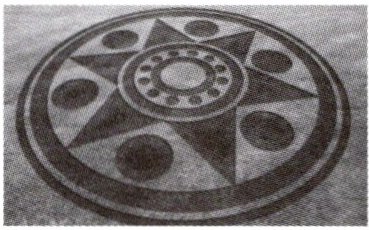
2. 它们被认为是世界上最大的未解之谜之一。
They
3. 一般来说,麦田怪圈会一夜之间突然出现在谷物田里。
4. 没有必要害怕麦田怪圈,因为它们只是一个谜团。
5. 无论麦田怪圈是不是人类制造的,它们都等待着被揭开谜底。
1. 据说麦田怪圈是在田野中被发现的神秘图案。
It's
said
that
crop circles are mysterious patterns found in the fields. 2. 它们被认为是世界上最大的未解之谜之一。
They
are
known/considered/regarded
as
one of the world's greatest unsolved mysteries.3. 一般来说,麦田怪圈会一夜之间突然出现在谷物田里。
Generally
speaking
,crop circles would suddenly appear in the grain fields overnight.4. 没有必要害怕麦田怪圈,因为它们只是一个谜团。
There
is
no
need
to be afraid of crop circles,because they are just a mystery.5. 无论麦田怪圈是不是人类制造的,它们都等待着被揭开谜底。
Whether
or
not
crop circles are made by humans,they are waiting to be solved.答案
1. It's said that
2. are known/considered/regarded as
3. Generally speaking
4. There is no need
5. Whether or not
解析
【分析】
本题为英语情境填空题,需根据汉语意思及英语固定表达、语法规则填写正确短语。解题时需回忆常见的固定句型、被动结构、常用插入语等,结合句子结构匹配对应表达。
【解析】
1. “据说”的固定英文句型为It's said that,符合句子结构要求,故填It's said that。
2. 主语They指代麦田怪圈,与“认为”是被动关系,“被认为是”的固定表达为are considered/known/regarded as,符合被动语态用法。
3. “一般来说”的常用插入语是Generally speaking,为固定短语,适配语境。
4. “没有必要做某事”的固定句型为There is no need to do sth,对应汉语意思。
5. “无论是否”引导让步状语从句的固定表达是Whether or not,符合句子逻辑。
【答案】
1. It's said that
2. are considered/known/regarded as
3. Generally speaking
4. There is no need
5. Whether or not
【知识点】
固定句型、固定短语、被动语态
【点评】
本题考查英语常用固定表达的运用,需学生掌握常见句型和短语,结合语法规则解题,难度适中。
【难度系数】
0.3
Ⅴ. 完形填空。
“Look at this!” Fred said to his friend Tom. Then he 1 something on the road.
In his hand, Fred held a silver-colored watch which he had longed for a long time. Most of his classmates had watches, 2 his parents had never had enough money to buy one for him. He felt a rush of 3 when he held the watch in his hand.
“What are you going to do with it?” asked Tom.
“ 4 it!” said Fred. “I don’t know who lost it.”
“But I think I know 5 it is,” said Tom. “Of course you don’t,” Fred answered quickly.
Tom shrugged(耸肩) and said 6 more. Fred put the watch in his schoolbag and hurried back home. He looked at it again and again. That night, before he fell asleep, he put it 7 on his bedside table and kept turning his head to look at it. But the more he looked at it, the more a(n) 8 feeling started to eat away at him. It was a beautiful watch—but Fred 9 it was something that was not his.
“Tom,” he said, the next day at school, “didn’t you say you might know the 10 of the watch?”
“Yes. It looks like Doctor Perry's. I saw him 11 it before.”
After school ended, Fred hurried to the doctor's office. “Excuse me, Doctor Perry. Is this watch yours?” said Fred.
The doctor took a good look at the 12. “It is,” said the doctor. “I lost it the other day.”
“I found it,” said Fred, “and I took it home. I didn’t know it was yours. Now, here you are.”
The doctor said, “You've been very 13 and helpful. I bought a new one, so now I have two. I'm so 14 that I'd like you to keep the old one.”
“Really? Oh! Thank you!” said Fred. When he looked at the watch in his hand, he felt another rush of joy—but this one was 15 and much, much better. He had done the right thing!
()1. A. put up B. mixed up C. made up D. picked up
()2. A. or B. but C. since D. because
()3. A. joy B. fear C. pride D. regret
()4. A. Sell B. Throw C. Return D. Keep
()5. A. what B. where C. whose D. which
()6. A. nothing B. anything C. something D. everything
()7. A. wildly B. carefully C. heavily D. successfully
()8. A. angry B. uneasy C. unfair D. lonely
()9. A. hoped B. doubted C. realized D. imagined
()10. A. owner B. maker C. director D. inventor
()11. A. hiding B. wearing C. taking D. dropping
()12. A. hand B. time C. watch D. schoolbag
()13. A. brave B. smart C. honest D. active
()14. A. thankful B. satisfied C. sorry D. mysterious
()15. A. necessary B. difficult C. important D. different
答案
1. D
2. B
3. A
4. D
5. C
6. A
7. B
8. B
9. C
10. A
11. B
12. C
13. C
14. A
15. D
解析
【分析】
本题为记叙文完形填空,解题思路是先通读全文把握文章主旨(Fred拾到手表后从想留到归还并收获善意的故事),再结合每个空格的上下文语境、词汇词义辨析、逻辑关系逐一分析选项,确定正确答案。
【解析】
1. 考查动词短语辨析:A.张贴;B.混合;C.编造;D.捡起。根据后文Fred手里拿着手表,可知他是捡起路上的东西,选D。
2. 考查连词辨析:A.或者;B.但是;C.自从;D.因为。前文说同学大多有手表,后文说父母没钱买,是转折关系,选B。
3. 考查名词辨析:A.喜悦;B.恐惧;C.骄傲;D.遗憾。Fred渴望手表很久,拿到时应是喜悦,选A。
4. 考查动词辨析:A.卖;B.扔;C.归还;D.保留。不知道失主,所以想保留手表,选D。
5. 考查疑问词辨析:A.什么;B.哪里;C.谁的;D.哪一个。Tom说知道手表是谁的,用whose,选C。
6. 考查不定代词辨析:A.没有什么;B.任何事;C.某事;D.一切。Tom耸肩后没说更多,选nothing,A。
7. 考查副词辨析:A.疯狂地;B.小心地;C.沉重地;D.成功地。Fred珍惜手表,小心放在床头柜,选B。
8. 考查形容词辨析:A.生气的;B.不安的;C.不公平的;D.孤独的。越看越觉得不是自己的,产生不安感,选B。
9. 考查动词辨析:A.希望;B.怀疑;C.意识到;D.想象。Fred意识到手表不是自己的,选C。
10. 考查名词辨析:A.主人;B.制造者;C.导演;D.发明家。Fred问Tom是否知道手表的主人,选A。
11. 考查动词辨析:A.躲藏;B.穿戴;C.拿;D.掉落。Tom说见过医生戴这块表,选B。
12. 考查名词辨析:A.手;B.时间;C.手表;D.书包。医生看Fred手里的手表,选C。
13. 考查形容词辨析:A.勇敢的;B.聪明的;C.诚实的;D.积极的。Fred拾到手表归还,是诚实的,选C。
14. 考查形容词辨析:A.感激的;B.满意的;C.抱歉的;D.神秘的。医生感谢Fred,选A。
15. 考查形容词辨析:A.必要的;B.困难的;C.重要的;D.不同的。这次的喜悦和之前想留表的喜悦不同,选D。
【答案】
1.D 2.B 3.A 4.D 5.C 6.A 7.B 8.B 9.C 10.A 11.B 12.C 13.C 14.A 15.D
【知识点】
完形填空语境理解、词汇词义辨析、记叙文语篇理解
【点评】
本文围绕诚实拾物归还的主题展开,考查学生对语篇逻辑、词汇搭配及词义的掌握,是典型的初中英语完形填空练习题,能引导学生树立诚实的价值观。
【难度系数】
0.6
