

 登录
登录
一、在下列各组单词中,选出画线部分读音与其他三项不同的选项
1. A. love B. mother C. doctor D. brother
2. A. fast B. ask C. after D. make
3. A. what B. apple C. want D. watch
4. A. wood B. book C. foot D. food
5. A. city B. cry C. call D. clean
1. A. love B. mother C. doctor D. brother
2. A. fast B. ask C. after D. make
3. A. what B. apple C. want D. watch
4. A. wood B. book C. foot D. food
5. A. city B. cry C. call D. clean
答案
1. C 2. D 3. B 4. D 5. A
解析
【分析】这类题是英语单词划线部分读音辨析题,解题思路是:先准确读出每个选项单词的发音,确定划线字母的音标,再对比所有选项的划线音标,找出发音与其他三项不同的选项。需注意区分元音、辅音字母在不同单词中的发音差异,结合常见发音规则判断。
【解析】
1. 各选项划线部分发音:A. love中o读/ʌ/,B. mother中o读/ʌ/,C. doctor中o读/ɒ/,D. brother中o读/ʌ/,仅C发音不同,故选C。
2. 各选项划线部分发音:A. fast中a读/ɑː/,B. ask中a读/ɑː/,C. after中a读/ɑː/,D. make中a读/eɪ/,仅D发音不同,故选D。
3. 各选项划线部分发音:A. what中a读/ɒ/,B. apple中a读/æ/,C. want中a读/ɒ/,D. watch中a读/ɒ/,仅B发音不同,故选B。
4. 各选项划线部分发音:A. wood中oo读/ʊ/,B. book中oo读/ʊ/,C. foot中oo读/ʊ/,D. food中oo读/uː/,仅D发音不同,故选D。
5. 各选项划线部分发音:A. city中c读/s/,B. cry中c读/k/,C. call中c读/k/,D. clean中c读/k/,仅A发音不同,故选A。
【答案】1.C 2.D 3.B 4.D 5.A
【知识点】英语单词读音辨析,元音字母发音,辅音字母发音
【点评】本题为英语基础语音题,考察常见单词的字母发音,属于初中英语基础考点,需学生积累单词正确读音、掌握字母常见发音规则,整体难度较低。
【难度系数】0.3
【解析】
1. 各选项划线部分发音:A. love中o读/ʌ/,B. mother中o读/ʌ/,C. doctor中o读/ɒ/,D. brother中o读/ʌ/,仅C发音不同,故选C。
2. 各选项划线部分发音:A. fast中a读/ɑː/,B. ask中a读/ɑː/,C. after中a读/ɑː/,D. make中a读/eɪ/,仅D发音不同,故选D。
3. 各选项划线部分发音:A. what中a读/ɒ/,B. apple中a读/æ/,C. want中a读/ɒ/,D. watch中a读/ɒ/,仅B发音不同,故选B。
4. 各选项划线部分发音:A. wood中oo读/ʊ/,B. book中oo读/ʊ/,C. foot中oo读/ʊ/,D. food中oo读/uː/,仅D发音不同,故选D。
5. 各选项划线部分发音:A. city中c读/s/,B. cry中c读/k/,C. call中c读/k/,D. clean中c读/k/,仅A发音不同,故选A。
【答案】1.C 2.D 3.B 4.D 5.A
【知识点】英语单词读音辨析,元音字母发音,辅音字母发音
【点评】本题为英语基础语音题,考察常见单词的字母发音,属于初中英语基础考点,需学生积累单词正确读音、掌握字母常见发音规则,整体难度较低。
【难度系数】0.3
二、看音标写单词
1. /'rʌbɪʃ/
2. /'ʌðə(r)/
3. /plɑːnt/
4. /wɒʃ/
5. /pə'luːʃn/
6. /'hɑːmfl/
7. /ɪk'splɔː(r)/
8. /bluː/
9. /sə'luːʃn/
10. /wɔː(r)/
1. /'rʌbɪʃ/
rubbish
2. /'ʌðə(r)/
other
3. /plɑːnt/
plant
4. /wɒʃ/
wash
5. /pə'luːʃn/
pollution
6. /'hɑːmfl/
harmful
7. /ɪk'splɔː(r)/
explore
8. /bluː/
blue
9. /sə'luːʃn/
solution
10. /wɔː(r)/
war
答案
1. rubbish 2. other 3. plant 4. wash 5. pollution 6. harmful 7. explore 8. blue 9. solution 10. war
解析
【分析】
本题是根据音标写单词的基础题型,解题思路为:先明确每个音标的发音(含重音位置),再结合积累的英语核心词汇,匹配对应的正确单词,逐个完成即可。
【解析】
1. 音标/'rʌbɪʃ/对应单词rubbish;
2. 音标/'ʌðə(r)/对应单词other;
3. 音标/plɑːnt/对应单词plant;
4. 音标/wɒʃ/对应单词wash;
5. 音标/pə'luːʃn/对应单词pollution;
6. 音标/'hɑːmfl/对应单词harmful;
7. 音标/ɪk'splɔː(r)/对应单词explore;
8. 音标/bluː/对应单词blue;
9. 音标/sə'luːʃn/对应单词solution;
10. 音标/wɔː(r)/对应单词war。
【答案】
1. rubbish 2. other 3. plant 4. wash 5. pollution 6. harmful 7. explore 8. blue 9. solution 10. war
【知识点】
音标认读、英语单词拼写
【点评】
本题考查基础音标与单词的对应能力,属于英语入门阶段的基础题型,涉及的均为常见核心词汇,是巩固音标和单词的典型练习。
【难度系数】
0.8
本题是根据音标写单词的基础题型,解题思路为:先明确每个音标的发音(含重音位置),再结合积累的英语核心词汇,匹配对应的正确单词,逐个完成即可。
【解析】
1. 音标/'rʌbɪʃ/对应单词rubbish;
2. 音标/'ʌðə(r)/对应单词other;
3. 音标/plɑːnt/对应单词plant;
4. 音标/wɒʃ/对应单词wash;
5. 音标/pə'luːʃn/对应单词pollution;
6. 音标/'hɑːmfl/对应单词harmful;
7. 音标/ɪk'splɔː(r)/对应单词explore;
8. 音标/bluː/对应单词blue;
9. 音标/sə'luːʃn/对应单词solution;
10. 音标/wɔː(r)/对应单词war。
【答案】
1. rubbish 2. other 3. plant 4. wash 5. pollution 6. harmful 7. explore 8. blue 9. solution 10. war
【知识点】
音标认读、英语单词拼写
【点评】
本题考查基础音标与单词的对应能力,属于英语入门阶段的基础题型,涉及的均为常见核心词汇,是巩固音标和单词的典型练习。
【难度系数】
0.8
三、写作练习
单元写作任务中,第三部分提出的环保措施与第二部分提出的问题应该一一对应,即第三部分应围绕如何解决第二部分提出的问题来提建议。比如课本中提供的例子,第二部分提出水污染(water pollution)的问题,第三部分则相应地提出防治水污染的措施,如 factories stop polluting rivers and lakes。请根据“提出问题—解决措施”的逻辑,完成以下表格。
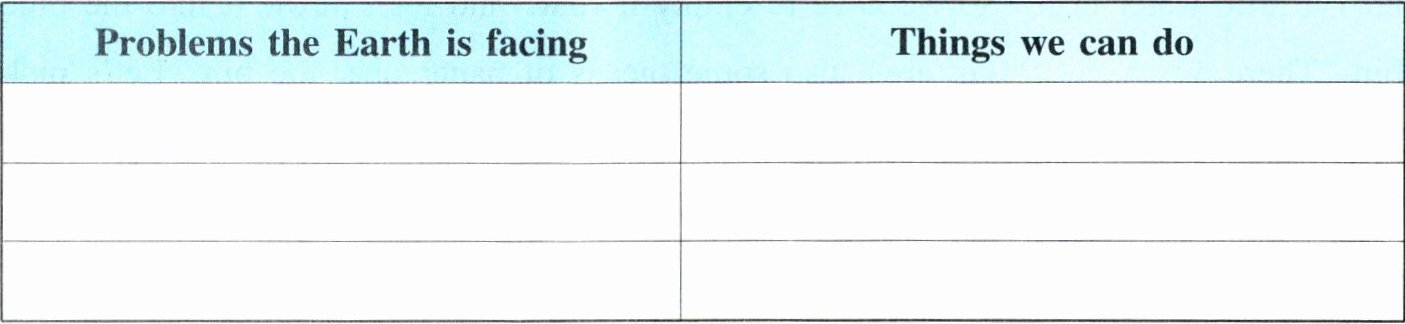
单元写作任务中,第三部分提出的环保措施与第二部分提出的问题应该一一对应,即第三部分应围绕如何解决第二部分提出的问题来提建议。比如课本中提供的例子,第二部分提出水污染(water pollution)的问题,第三部分则相应地提出防治水污染的措施,如 factories stop polluting rivers and lakes。请根据“提出问题—解决措施”的逻辑,完成以下表格。
答案
Problems the Earth is facing | Things we can do
--- | ---
Water pollution | Don't throw rubbish into the rivers or lakes.
Plastic pollution | Always bring our own water bottles instead of buying bottled water.
Air pollution | Go out on foot, by bike or by bus instead of by car.
--- | ---
Water pollution | Don't throw rubbish into the rivers or lakes.
Plastic pollution | Always bring our own water bottles instead of buying bottled water.
Air pollution | Go out on foot, by bike or by bus instead of by car.
解析
【分析】
本题为英语环保话题的写作练习,要求遵循“提出问题—解决措施”的逻辑完成表格。解题时需先明确地球面临的典型环境问题,再针对每个问题匹配对应的可行环保措施,确保问题与措施一一对应,语言符合英语表达习惯,贴合环保主题。
【解析】
根据环保常识,常见的地球环境问题及对应措施如下:
1. 水污染(Water pollution):对应措施为不要向河湖中扔垃圾(Don't throw rubbish into the rivers or lakes);
2. 塑料污染(Plastic pollution):对应措施为自带水杯而非购买瓶装水(Always bring our own water bottles instead of buying bottled water);
3. 空气污染(Air pollution):对应措施为步行、骑车或乘公交出行,而非开私家车(Go out on foot, by bike or by bus instead of by car),将这些内容填入表格对应位置即可。
【答案】
Problems the Earth is facing | Things we can do
--- | ---
Water pollution | Don't throw rubbish into the rivers or lakes.
Plastic pollution | Always bring our own water bottles instead of buying bottled water.
Air pollution | Go out on foot, by bike or by bus instead of by car.
【知识点】
英语写作、环保常识、问题措施对应
【点评】
本题考查学生对环保话题的英语应用能力,要求掌握常见环境问题及对应解决措施的英语表达,逻辑清晰,贴近生活,是基础的英语写作练习。
【难度系数】
0.5
本题为英语环保话题的写作练习,要求遵循“提出问题—解决措施”的逻辑完成表格。解题时需先明确地球面临的典型环境问题,再针对每个问题匹配对应的可行环保措施,确保问题与措施一一对应,语言符合英语表达习惯,贴合环保主题。
【解析】
根据环保常识,常见的地球环境问题及对应措施如下:
1. 水污染(Water pollution):对应措施为不要向河湖中扔垃圾(Don't throw rubbish into the rivers or lakes);
2. 塑料污染(Plastic pollution):对应措施为自带水杯而非购买瓶装水(Always bring our own water bottles instead of buying bottled water);
3. 空气污染(Air pollution):对应措施为步行、骑车或乘公交出行,而非开私家车(Go out on foot, by bike or by bus instead of by car),将这些内容填入表格对应位置即可。
【答案】
Problems the Earth is facing | Things we can do
--- | ---
Water pollution | Don't throw rubbish into the rivers or lakes.
Plastic pollution | Always bring our own water bottles instead of buying bottled water.
Air pollution | Go out on foot, by bike or by bus instead of by car.
【知识点】
英语写作、环保常识、问题措施对应
【点评】
本题考查学生对环保话题的英语应用能力,要求掌握常见环境问题及对应解决措施的英语表达,逻辑清晰,贴近生活,是基础的英语写作练习。
【难度系数】
0.5
阅读课文,回答问题
1. What is Saihanba?
2. What happened to Saihanba in the 1800s?
3. How did people change Saihanba into a forest?
4. Why is Saihanba important today?
1. What is Saihanba?
Saihanba is a forest park.
2. What happened to Saihanba in the 1800s?
In the 1800s, there were forest fires and wars, and people cut down many trees.
3. How did people change Saihanba into a forest?
Three generations of forest workers planted trees in Saihanba and turned it into a forest.
4. Why is Saihanba important today?
Saihanba is important today because it helps provide the capital with clean water and there are fewer sandstorms in Beijing now.
答案
1. Saihanba is a forest park. 2. In the 1800s, there were forest fires and wars, and people cut down many trees. 3. Three generations of forest workers planted trees in Saihanba and turned it into a forest. 4. Saihanba is important today because it helps provide the capital with clean water and there are fewer sandstorms in Beijing now.
解析
【分析】
本题为阅读理解简答题,需根据课文内容,针对每个问题的核心疑问,定位文本中的关键信息,将其整理为符合问题要求的简洁英文回答。
【解析】
1. 问题询问塞罕坝是什么,对应课文信息为塞罕坝是一个森林公园,故回答为Saihanba is a forest park.;
2. 问题问19世纪塞罕坝发生了什么,对应信息为森林火灾、战争及大量树木被砍伐,故回答为In the 1800s, there were forest fires and wars, and people cut down many trees.;
3. 问题问人们如何将塞罕坝变成森林,对应信息为三代林业工人植树造林,故回答为Three generations of forest workers planted trees in Saihanba and turned it into a forest.;
4. 问题问如今塞罕坝为何重要,对应信息为为首都提供清洁水源、减少北京沙尘暴,故回答为Saihanba is important today because it helps provide the capital with clean water and there are fewer sandstorms in Beijing now.
【答案】
1. Saihanba is a forest park. 2. In the 1800s, there were forest fires and wars, and people cut down many trees. 3. Three generations of forest workers planted trees in Saihanba and turned it into a forest. 4. Saihanba is important today because it helps provide the capital with clean water and there are fewer sandstorms in Beijing now.
【知识点】
阅读理解、信息提取
【点评】
本题考查学生对文本关键信息的抓取与整理能力,属于基础阅读理解题型,难度适中。
【难度系数】
0.6
本题为阅读理解简答题,需根据课文内容,针对每个问题的核心疑问,定位文本中的关键信息,将其整理为符合问题要求的简洁英文回答。
【解析】
1. 问题询问塞罕坝是什么,对应课文信息为塞罕坝是一个森林公园,故回答为Saihanba is a forest park.;
2. 问题问19世纪塞罕坝发生了什么,对应信息为森林火灾、战争及大量树木被砍伐,故回答为In the 1800s, there were forest fires and wars, and people cut down many trees.;
3. 问题问人们如何将塞罕坝变成森林,对应信息为三代林业工人植树造林,故回答为Three generations of forest workers planted trees in Saihanba and turned it into a forest.;
4. 问题问如今塞罕坝为何重要,对应信息为为首都提供清洁水源、减少北京沙尘暴,故回答为Saihanba is important today because it helps provide the capital with clean water and there are fewer sandstorms in Beijing now.
【答案】
1. Saihanba is a forest park. 2. In the 1800s, there were forest fires and wars, and people cut down many trees. 3. Three generations of forest workers planted trees in Saihanba and turned it into a forest. 4. Saihanba is important today because it helps provide the capital with clean water and there are fewer sandstorms in Beijing now.
【知识点】
阅读理解、信息提取
【点评】
本题考查学生对文本关键信息的抓取与整理能力,属于基础阅读理解题型,难度适中。
【难度系数】
0.6
