

 登录
登录
A.词汇与语法。
My Weekend Shopping List
Last Sunday, I went to a supermarket with my mum to buy food for the coming week. There we picked some fresh 1. (strawberry) and a big 2. (watermelon) that smelled sweet. We also got a box of fresh salad for our meals later.
Next, we moved to the vegetable area and got some 3. (bean), a fresh head of 4. (cabbage), and a bag of fresh 5. (vegetable) like carrots and tomatoes. Also, we picked up a bag of rice and a box of cold milk for breakfast.
In the warm, nice-smelling bakery(面包店), we bought a box of 6. (cookie). We also chose a bag of sweet bread to share. In the meat area, my mum turned to me and asked, “Would you like to buy 7. (chicken) wings(翅膀) or fried 8. (fish) for dinner tonight?” I chose fish right away because I know it’s lighter and healthier. We also decided to buy some tea to drink after our meal.
We also got a small bag of 9. (sugar) to make lemonade(柠檬水) later, and a bag of 10. (potato chip) as a weekend snack. Before finishing, our cart(购物车) was full, and we couldn’t wait to cook our healthy meals at home.
任务一:请在横线处写出单词的正确形式。
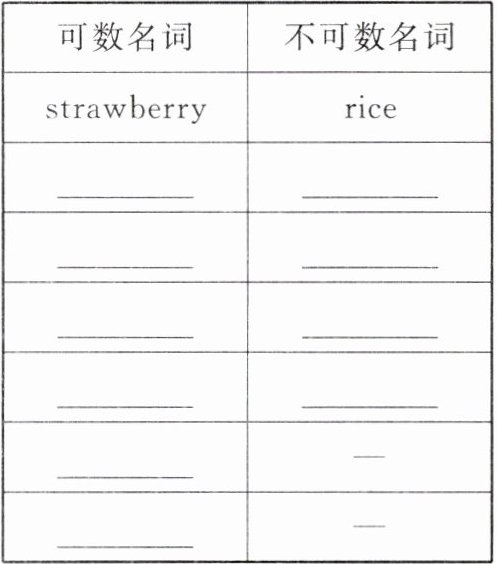
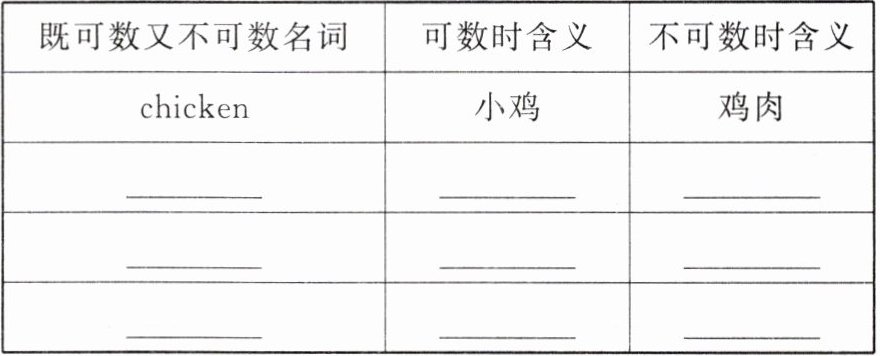
任务二:请给短文中所有食物名词画线,并将这些食物名词填入下表,按可数名词、不可数名词、既可数又不可数名词进行分类。
任务三:根据短文内容,回答下列问题。
1. Where did the writer and her mum go last Sunday?
2. What did the writer and her mum buy in the bakery?
3. How many kinds of vegetables did the writer and her mum buy?
4. Why did the writer choose fried fish for dinner, not chicken wings?
5. Did the writer buy potato chips or chocolate as a special weekend snack?
6. According to the passage, what is the bakery like?
My Weekend Shopping List
Last Sunday, I went to a supermarket with my mum to buy food for the coming week. There we picked some fresh 1. (strawberry) and a big 2. (watermelon) that smelled sweet. We also got a box of fresh salad for our meals later.
Next, we moved to the vegetable area and got some 3. (bean), a fresh head of 4. (cabbage), and a bag of fresh 5. (vegetable) like carrots and tomatoes. Also, we picked up a bag of rice and a box of cold milk for breakfast.
In the warm, nice-smelling bakery(面包店), we bought a box of 6. (cookie). We also chose a bag of sweet bread to share. In the meat area, my mum turned to me and asked, “Would you like to buy 7. (chicken) wings(翅膀) or fried 8. (fish) for dinner tonight?” I chose fish right away because I know it’s lighter and healthier. We also decided to buy some tea to drink after our meal.
We also got a small bag of 9. (sugar) to make lemonade(柠檬水) later, and a bag of 10. (potato chip) as a weekend snack. Before finishing, our cart(购物车) was full, and we couldn’t wait to cook our healthy meals at home.
任务一:请在横线处写出单词的正确形式。
任务二:请给短文中所有食物名词画线,并将这些食物名词填入下表,按可数名词、不可数名词、既可数又不可数名词进行分类。
任务三:根据短文内容,回答下列问题。
1. Where did the writer and her mum go last Sunday?
2. What did the writer and her mum buy in the bakery?
3. How many kinds of vegetables did the writer and her mum buy?
4. Why did the writer choose fried fish for dinner, not chicken wings?
5. Did the writer buy potato chips or chocolate as a special weekend snack?
6. According to the passage, what is the bakery like?
答案
任务一
1. strawberries
2. watermelon
3. beans
4. cabbage
5. vegetables
6. cookies
7. chicken
8. fish
9. sugar
10. potato chips
---
任务二
| 可数名词 | 不可数名词 |
| ---- | ---- |
| strawberry | rice |
| watermelon | salad |
| bean | milk |
| cabbage | bread |
| vegetable | tea |
| carrot | sugar |
| tomato | — |
| cookie | — |
| potato chip | — |
| 既可数又不可数名词 | 可数时含义 | 不可数时含义 |
| ---- | ---- | ---- |
| chicken | 小鸡 | 鸡肉 |
| fish | 活的鱼(指生物个体、条数) | 鱼肉 |
| cabbage | 整颗的卷心菜 | 切好作为食材的卷心菜 |
| salad | 一份沙拉 | 沙拉(食物统称) |
---
任务三
1. They went to a supermarket last Sunday.
2. They bought a box of cookies and a bag of sweet bread.
3. Four (They bought beans, cabbage, carrots and tomatoes, four kinds of vegetables in total).
4. Because she thinks fried fish is lighter and healthier than chicken wings.
5. She bought potato chips as the weekend snack.
6. It is warm and nice-smelling.
1. strawberries
2. watermelon
3. beans
4. cabbage
5. vegetables
6. cookies
7. chicken
8. fish
9. sugar
10. potato chips
---
任务二
| 可数名词 | 不可数名词 |
| ---- | ---- |
| strawberry | rice |
| watermelon | salad |
| bean | milk |
| cabbage | bread |
| vegetable | tea |
| carrot | sugar |
| tomato | — |
| cookie | — |
| potato chip | — |
| 既可数又不可数名词 | 可数时含义 | 不可数时含义 |
| ---- | ---- | ---- |
| chicken | 小鸡 | 鸡肉 |
| fish | 活的鱼(指生物个体、条数) | 鱼肉 |
| cabbage | 整颗的卷心菜 | 切好作为食材的卷心菜 |
| salad | 一份沙拉 | 沙拉(食物统称) |
---
任务三
1. They went to a supermarket last Sunday.
2. They bought a box of cookies and a bag of sweet bread.
3. Four (They bought beans, cabbage, carrots and tomatoes, four kinds of vegetables in total).
4. Because she thinks fried fish is lighter and healthier than chicken wings.
5. She bought potato chips as the weekend snack.
6. It is warm and nice-smelling.
解析
任务一 解析:
本题考察可数名词单复数、不可数名词的基础用法:
1. 限定词some后接可数名词时需用复数形式,strawberry以辅音字母+y结尾,变复数要改y为i加es,填strawberries。
2. 前面有不定冠词a修饰,后接可数名词单数,填watermelon。
3. 限定词some后接可数名词bean,要变为复数beans。
4. 短语a head of cabbage表示“一颗卷心菜”,此处cabbage作为食材不可数,用原形cabbage。
5. 后文列举了carrots和tomatoes两种蔬菜,说明此处指多种蔬菜,some后接vegetable要用复数vegetables。
6. 短语a box of后接可数名词cookie,要变为复数cookies。
7. chicken wings是固定搭配“鸡翅”,chicken此处作定语修饰wings,用原形chicken。
8. fried fish表示“炸鱼肉”,fish表示鱼肉时是不可数名词,用原形fish。
9. sugar(糖)是不可数名词,没有复数形式,用原形sugar。
10. 短语a bag of后接可数名词potato chip,要变为复数potato chips。
任务二 解析:
先定位全文所有食物名词,再结合七年级名词分类规则划分:
1. 可数名词:指可以独立计数的食物个体,除示例strawberry外,其余符合要求的食物名词都填入对应栏位。
2. 不可数名词:指无法拆分独立计数的食物,除示例rice外,其余符合要求的食物名词都填入对应栏位。
3. 既可数又不可数名词:同一名词在不同语境下含义不同,可分别作可数/不可数使用,对应填写不同含义即可。
任务三 解析:
所有问题都可以从原文中直接定位找到答案,回答时保持人称、时态和原文一致,符合七年级英语表达规范即可。
本题考察可数名词单复数、不可数名词的基础用法:
1. 限定词some后接可数名词时需用复数形式,strawberry以辅音字母+y结尾,变复数要改y为i加es,填strawberries。
2. 前面有不定冠词a修饰,后接可数名词单数,填watermelon。
3. 限定词some后接可数名词bean,要变为复数beans。
4. 短语a head of cabbage表示“一颗卷心菜”,此处cabbage作为食材不可数,用原形cabbage。
5. 后文列举了carrots和tomatoes两种蔬菜,说明此处指多种蔬菜,some后接vegetable要用复数vegetables。
6. 短语a box of后接可数名词cookie,要变为复数cookies。
7. chicken wings是固定搭配“鸡翅”,chicken此处作定语修饰wings,用原形chicken。
8. fried fish表示“炸鱼肉”,fish表示鱼肉时是不可数名词,用原形fish。
9. sugar(糖)是不可数名词,没有复数形式,用原形sugar。
10. 短语a bag of后接可数名词potato chip,要变为复数potato chips。
任务二 解析:
先定位全文所有食物名词,再结合七年级名词分类规则划分:
1. 可数名词:指可以独立计数的食物个体,除示例strawberry外,其余符合要求的食物名词都填入对应栏位。
2. 不可数名词:指无法拆分独立计数的食物,除示例rice外,其余符合要求的食物名词都填入对应栏位。
3. 既可数又不可数名词:同一名词在不同语境下含义不同,可分别作可数/不可数使用,对应填写不同含义即可。
任务三 解析:
所有问题都可以从原文中直接定位找到答案,回答时保持人称、时态和原文一致,符合七年级英语表达规范即可。
