

 登录
登录
二、看图写话
根据每小题所提供的提示词,写出一个与图画情景相符的句子。
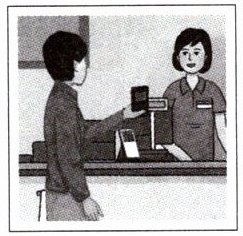
1.
with; now
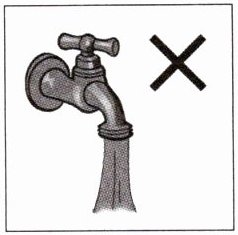
2.
should
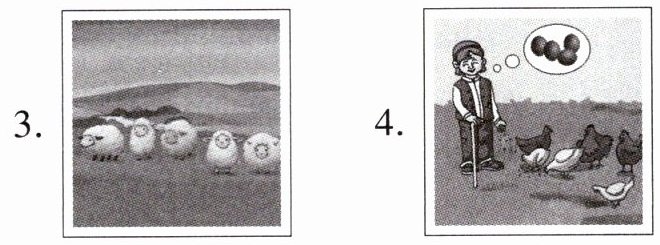
3.
five, on the farm
4.
feed, because
1.
2.
3.
4.
根据每小题所提供的提示词,写出一个与图画情景相符的句子。
1.
with; now
2.
should
3.
five, on the farm
4.
feed, because
1.
He is paying with his phone now.
2.
We shouldn't/should never waste water.
3.
There are five sheep on the farm.
4.
The old woman/lady feeds hens because she wants eggs.
答案
1. He is paying with his phone now.
2. We shouldn't/should never waste water.
3. There are five sheep on the farm.
4. The old woman/lady feeds hens because
she wants eggs.
2. We shouldn't/should never waste water.
3. There are five sheep on the farm.
4. The old woman/lady feeds hens because
she wants eggs.
三、根据短文完成思维导图
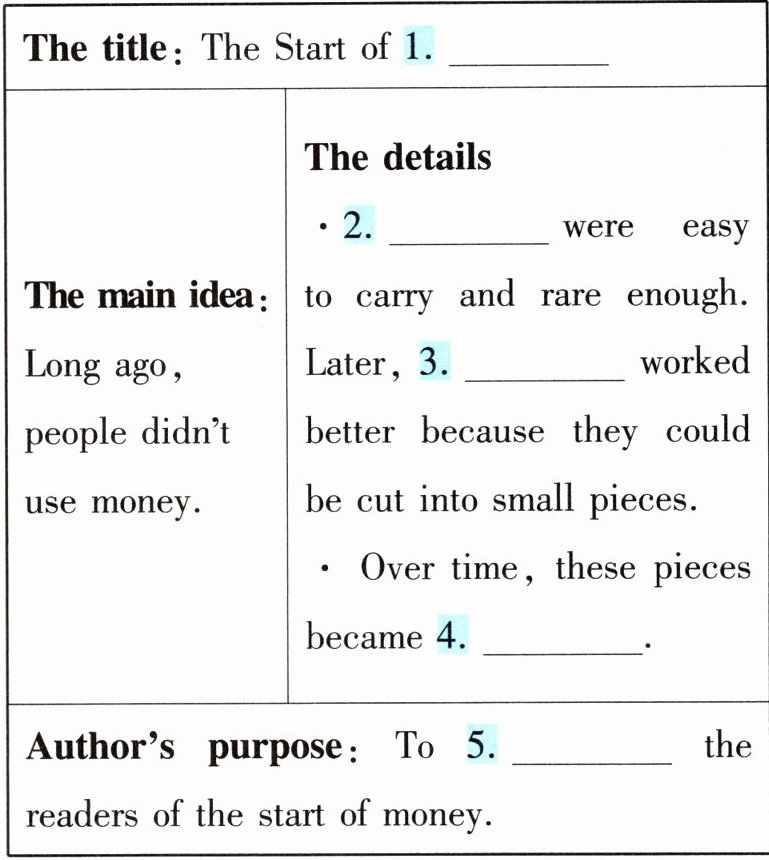
Long ago, people didn't use money like we do now. They traded things instead. For example, a farmer might give a cow to a baker and get bread in return. This was called "barter". But barter had problems. What if the baker didn't need a cow? How would trade take place? They needed something everyone wanted. Maybe shells (贝壳)? They were easy to carry and rare (稀有的) enough. Later, metals (金属) worked better because they could be cut into small pieces.
Over time, these pieces became coins. Coins were simple and everyone knew their value. That's how money began. It solved the old problem, making trade easier for everyone.
Long ago, people didn't use money like we do now. They traded things instead. For example, a farmer might give a cow to a baker and get bread in return. This was called "barter". But barter had problems. What if the baker didn't need a cow? How would trade take place? They needed something everyone wanted. Maybe shells (贝壳)? They were easy to carry and rare (稀有的) enough. Later, metals (金属) worked better because they could be cut into small pieces.
Over time, these pieces became coins. Coins were simple and everyone knew their value. That's how money began. It solved the old problem, making trade easier for everyone.
答案
1. Money 2. Shells 3. metals
4. coins 5. inform
4. coins 5. inform
一、用括号中所给单词的适当形式填空
1. As we know, the Chinese
2. Lingling always
3. In some
4. Today we will continue
5. We will pay more
1. As we know, the Chinese
invented
paper-making technique before the Eastern Han dynasty. (invent)2. Lingling always
numbers
her books because she thinks it's easy for her to find the book she wants. (number)3. In some
cases
trade didn't take place because people didn't need each other's things. (case)4. Today we will continue
to learn/learning
about the history of money. (learn)5. We will pay more
easily
because of digital money. (easy)答案
1. invented 2. numbers 3. cases
4. to learn/learning 5. easily
4. to learn/learning 5. easily
(
A.library
B.museum
C.city
B
)1.We can see money from all over the world in this museum
. It's open on every Wednesday, Friday and Sunday.A.library
B.museum
C.city
答案
1. B 根据语境,在这个地方可以看到
来自世界各地的钱币,由此推
断,应该选 B。museum 意为
“博物馆”。
来自世界各地的钱币,由此推
断,应该选 B。museum 意为
“博物馆”。
