

 登录
登录
一、连词成句。
1. well, understand, does, Mike, not, Chinese (.)
2. are, for, names, words, things (.)
3. do, what, you, do, feel, to, good (?)
4. boy, studies, the, hard, school, at (.)
5. Liu Tao, shouts, at, brother, his (.)
1. well, understand, does, Mike, not, Chinese (.)
Mike does not understand Chinese well.
2. are, for, names, words, things (.)
Words are names for things.
3. do, what, you, do, feel, to, good (?)
What do you do to feel good?
4. boy, studies, the, hard, school, at (.)
The boy studies hard at school.
5. Liu Tao, shouts, at, brother, his (.)
Liu Tao shouts at his brother.
答案
1. Mike does not understand Chinese well.
2. Words are names for things.
3. What do you do to feel good?
4. The boy studies hard at school.
5. Liu Tao shouts at his brother.
2. Words are names for things.
3. What do you do to feel good?
4. The boy studies hard at school.
5. Liu Tao shouts at his brother.
解析
【分析】
连词成句的解题思路:1. 先看标点符号,判断句子是陈述句还是疑问句,确定句型;2. 找出句子的核心成分(主语、谓语、宾语/表语等);3. 调整修饰词(如副词、介词短语)的位置,确保语法正确;4. 检查单词是否全部使用,无遗漏或多余。
【解析】
1. 标点为句号,是陈述句。先确定主语Mike,否定结构用does not,谓语为understand,宾语是Chinese,副词well修饰动词understand,需放句末,组合得:Mike does not understand Chinese well.
2. 标点为句号,是陈述句,属于主系表结构。主语是Words,系动词为are,表语是names,介词短语for things作后置定语修饰names,组合得:Words are names for things.
3. 标点为问号,是特殊疑问句。以特殊疑问词What开头,助动词用do,主语是you,谓语为do,不定式to feel good作目的状语,组合得:What do you do to feel good?
4. 标点为句号,是陈述句。主语是The boy,谓语为studies,副词hard修饰studies,介词短语at school作地点状语,组合得:The boy studies hard at school.
5. 标点为句号,是陈述句。主语是Liu Tao,谓语为shouts,介词短语at his brother作状语,组合得:Liu Tao shouts at his brother.
【答案】
1. Mike does not understand Chinese well.
2. Words are names for things.
3. What do you do to feel good?
4. The boy studies hard at school.
5. Liu Tao shouts at his brother.
【知识点】
英语连词成句;简单句结构;句型判断
【点评】
本题为英语基础连词成句题,考察学生对简单句成分、单词顺序及标点对应句型的掌握,是英语学习的核心基础题型,需熟练掌握常见句子的结构规则。
【难度系数】
0.7
连词成句的解题思路:1. 先看标点符号,判断句子是陈述句还是疑问句,确定句型;2. 找出句子的核心成分(主语、谓语、宾语/表语等);3. 调整修饰词(如副词、介词短语)的位置,确保语法正确;4. 检查单词是否全部使用,无遗漏或多余。
【解析】
1. 标点为句号,是陈述句。先确定主语Mike,否定结构用does not,谓语为understand,宾语是Chinese,副词well修饰动词understand,需放句末,组合得:Mike does not understand Chinese well.
2. 标点为句号,是陈述句,属于主系表结构。主语是Words,系动词为are,表语是names,介词短语for things作后置定语修饰names,组合得:Words are names for things.
3. 标点为问号,是特殊疑问句。以特殊疑问词What开头,助动词用do,主语是you,谓语为do,不定式to feel good作目的状语,组合得:What do you do to feel good?
4. 标点为句号,是陈述句。主语是The boy,谓语为studies,副词hard修饰studies,介词短语at school作地点状语,组合得:The boy studies hard at school.
5. 标点为句号,是陈述句。主语是Liu Tao,谓语为shouts,介词短语at his brother作状语,组合得:Liu Tao shouts at his brother.
【答案】
1. Mike does not understand Chinese well.
2. Words are names for things.
3. What do you do to feel good?
4. The boy studies hard at school.
5. Liu Tao shouts at his brother.
【知识点】
英语连词成句;简单句结构;句型判断
【点评】
本题为英语基础连词成句题,考察学生对简单句成分、单词顺序及标点对应句型的掌握,是英语学习的核心基础题型,需熟练掌握常见句子的结构规则。
【难度系数】
0.7
二、根据首字母提示补全对话。
A: Look at Yang Ling. She is sad.
B: Why is she sad?
A: Because she can't understand these new w
B: What can she do to f
A: She can ask Miss Li. Miss Li can t
B: Great! And she also s
A: Yes. She will understand soon.
A: Look at Yang Ling. She is sad.
B: Why is she sad?
A: Because she can't understand these new w
words
.B: What can she do to f
feel
good?A: She can ask Miss Li. Miss Li can t
teach
her.B: Great! And she also s
studies
hhard
.A: Yes. She will understand soon.
答案
words; feel; teach; studies hard
解析
【分析】先通读对话理解语境:杨玲因不懂新内容难过,需结合首字母提示和语法规则补全单词。第一个空在形容词new后,需名词,首字母w对应“单词”的复数形式;第二个空在不定式符号to后,需动词原形,首字母f对应“感觉”;第三个空在情态动词can后,需动词原形,首字母t对应“教”;第四、五个空结合语境“努力学习”,主语是第三人称单数,动词用三单形式,首字母s、h对应固定搭配。
【解析】1. 第一个空:new是形容词,修饰名词,结合语境“不懂新的……”及首字母w,填words(word的复数形式);2. 第二个空:to是不定式符号,后接动词原形,结合语境“做什么能感觉好”及首字母f,填feel;3. 第三个空:情态动词can后接动词原形,结合语境“李老师能教她”及首字母t,填teach;4. 第四、五个空:主语she是第三人称单数,谓语动词用三单形式,结合语境“努力学习”及首字母s、h,填studies hard(固定搭配)。
【答案】words; feel; teach; studies hard
【知识点】名词复数、动词形式、固定搭配
【点评】本题考查根据语境和首字母提示补全单词,需结合对话逻辑和基础语法知识,难度适中,适合小学英语学习者巩固相关知识点。
【难度系数】0.5
【解析】1. 第一个空:new是形容词,修饰名词,结合语境“不懂新的……”及首字母w,填words(word的复数形式);2. 第二个空:to是不定式符号,后接动词原形,结合语境“做什么能感觉好”及首字母f,填feel;3. 第三个空:情态动词can后接动词原形,结合语境“李老师能教她”及首字母t,填teach;4. 第四、五个空:主语she是第三人称单数,谓语动词用三单形式,结合语境“努力学习”及首字母s、h,填studies hard(固定搭配)。
【答案】words; feel; teach; studies hard
【知识点】名词复数、动词形式、固定搭配
【点评】本题考查根据语境和首字母提示补全单词,需结合对话逻辑和基础语法知识,难度适中,适合小学英语学习者巩固相关知识点。
【难度系数】0.5
三、新素材 阅读绘本,选择正确的答案。
Ant meets a bird.
Bird: Hi, Ant. Let’s fly together.
Ant: But I can’t fly.

Ant feels sad. Then he meets a fish.
Fish: Hi, Ant. Let’s swim together.
Ant: But I’m not good at swimming.
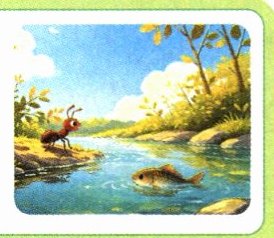
Ant feels sad. He meets a bee too.
Ant: I feel bad. I’m not good at flying or swimming.
Bee: Hi, Ant. Don’t be sad. You are good at other things.

Bee: Can you crawl(爬行)up a wall, like a spider(蜘蛛)?
Ant: Yes. I’m good at it.
Bee: Well done!

(
A. bird B. ant C. fish
(
A. flying B. crawling C. swimming
(
A. two B. three C. four
(
A. good B. sad C. happy
(
A. Ant and Spider are good at crawling up a wall.
B. Ant and Bee are good at crawling up a wall.
C. Spider is good at flying.
Ant meets a bird.
Bird: Hi, Ant. Let’s fly together.
Ant: But I can’t fly.
Ant feels sad. Then he meets a fish.
Fish: Hi, Ant. Let’s swim together.
Ant: But I’m not good at swimming.
Ant feels sad. He meets a bee too.
Ant: I feel bad. I’m not good at flying or swimming.
Bee: Hi, Ant. Don’t be sad. You are good at other things.
Bee: Can you crawl(爬行)up a wall, like a spider(蜘蛛)?
Ant: Yes. I’m good at it.
Bee: Well done!
(
A
)1. The is good at flying.A. bird B. ant C. fish
(
C
)2. The fish is good at .A. flying B. crawling C. swimming
(
B
)3. Ant meets animals.A. two B. three C. four
(
B
)4. Ant feels at first.A. good B. sad C. happy
(
A
)5. Which is true?A. Ant and Spider are good at crawling up a wall.
B. Ant and Bee are good at crawling up a wall.
C. Spider is good at flying.
答案
1. A 2. C 3. B 4. B 5. A
解析
【分析】
做这类英语阅读理解题,需先通读原文理解绘本内容,再针对每个问题回到原文定位关键信息,逐一匹配选项得出答案。需重点关注原文中动物的技能、Ant遇到的动物数量、情绪变化等细节内容。
【解析】
1. 题干询问谁擅长飞,原文中Bird邀请Ant一起飞,Ant回应“But I can’t fly”,说明Bird擅长飞,对应选项A。
2. 题干询问鱼擅长的技能,原文中Fish邀请Ant一起游泳,对应选项C(swimming)。
3. 题干询问Ant遇到的动物数量,原文依次提到Ant meets a bird、meets a fish、meets a bee,共3种,对应选项B。
4. 题干询问Ant最初的感受,原文中首次出现的情绪描述为“Ant feels sad”,对应选项B。
5. 题干判断正确表述:原文Bee问Ant“Can you crawl up a wall, like a spider?”,Ant答“Yes. I’m good at it”,说明Ant和蜘蛛擅长爬墙,A正确;B中bee未提及擅长爬墙,C中蜘蛛不会飞,均错误,对应选项A。
【答案】
1.A 2.C 3.B 4.B 5.A
【知识点】
英语阅读理解、细节理解
【点评】
本题为英语绘本类阅读理解,主要考查学生从原文提取细节信息的能力,题目设置基础,贴近原文内容,适合学生巩固英语阅读细节查找的技能。
【难度系数】
0.8
做这类英语阅读理解题,需先通读原文理解绘本内容,再针对每个问题回到原文定位关键信息,逐一匹配选项得出答案。需重点关注原文中动物的技能、Ant遇到的动物数量、情绪变化等细节内容。
【解析】
1. 题干询问谁擅长飞,原文中Bird邀请Ant一起飞,Ant回应“But I can’t fly”,说明Bird擅长飞,对应选项A。
2. 题干询问鱼擅长的技能,原文中Fish邀请Ant一起游泳,对应选项C(swimming)。
3. 题干询问Ant遇到的动物数量,原文依次提到Ant meets a bird、meets a fish、meets a bee,共3种,对应选项B。
4. 题干询问Ant最初的感受,原文中首次出现的情绪描述为“Ant feels sad”,对应选项B。
5. 题干判断正确表述:原文Bee问Ant“Can you crawl up a wall, like a spider?”,Ant答“Yes. I’m good at it”,说明Ant和蜘蛛擅长爬墙,A正确;B中bee未提及擅长爬墙,C中蜘蛛不会飞,均错误,对应选项A。
【答案】
1.A 2.C 3.B 4.B 5.A
【知识点】
英语阅读理解、细节理解
【点评】
本题为英语绘本类阅读理解,主要考查学生从原文提取细节信息的能力,题目设置基础,贴近原文内容,适合学生巩固英语阅读细节查找的技能。
【难度系数】
0.8
