

 登录
Ⅰ. Listen and number. 听一听,用数字给下列图片排序。
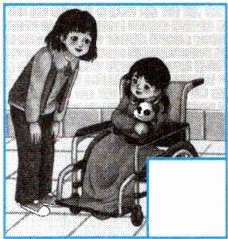
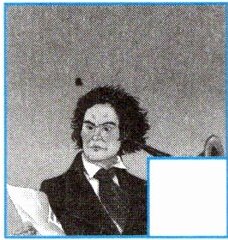
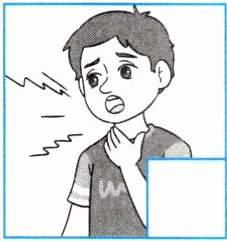
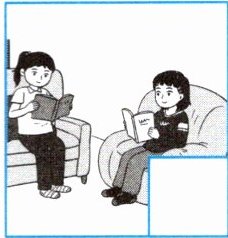
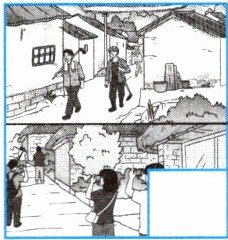
答案
1. 2 2. 1 3. 3 4. 4 5. 5
Ⅱ. Listen and tick or cross. Xiaoli 在分享自己的成长故事。听一听,判断下列描述与录音内容是否相符,相符的画“√”,不相符的画“×”。
(
(
(
(
(
(
×
) 1. Xiaoli got a toy panda when she was in Year 1.(
×
) 2. She took the panda with her all the time because she was scared of the dark.(
√
) 3. Last year, she went to a children’s village with her parents.(
×
) 4. She gave her storybooks and a toy car to a little girl there.(
√
) 5. Her mum said she was a big girl because she learned to care for others.答案
1. × 2. × 3. √ 4. × 5. √
Ⅲ. Read and choose. 读一读,选出与图片相符的描述,将字母序号写在圆圈里。
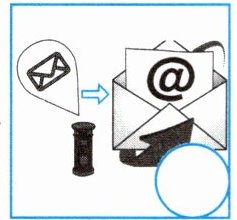
1.
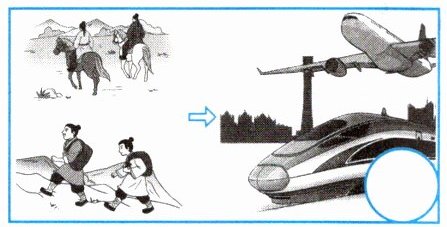
2.
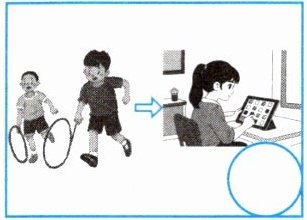
3.
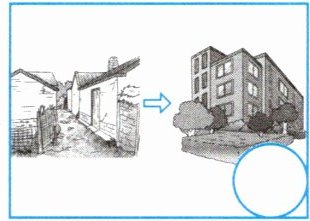
4.
A. People travelled on foot or by horse long ago. Now we go by train or plane.
B. In the past, people wrote letters. Now we send emails.
C. In the past, the villagers lived in small houses. Now they live in tall buildings.
D. My grandpa played with iron hoops. Now I read interesting e-books sometimes.
1.
2.
3.
4.
A. People travelled on foot or by horse long ago. Now we go by train or plane.
B. In the past, people wrote letters. Now we send emails.
C. In the past, the villagers lived in small houses. Now they live in tall buildings.
D. My grandpa played with iron hoops. Now I read interesting e-books sometimes.
答案
1. B 2. A 3. D 4. C
解析
【分析】首先,解题时需先梳理每个选项描述的核心内容(均为过去与现在的生活变化),再逐一对应1-4的插图场景:1对应通讯方式的古今变化,2对应交通方式的古今变化,3对应娱乐方式的古今变化,4对应居住条件的古今变化,据此匹配正确选项。
【解析】1. 选项B描述“过去写信,现在发邮件”,对应通讯场景,故1选B;2. 选项A描述“过去步行/骑马,现在火车/飞机”,对应交通场景,故2选A;3. 选项D描述“爷爷玩铁环,现在看电子书”,对应娱乐场景,故3选D;4. 选项C描述“过去住小房子,现在住高楼”,对应居住场景,故4选C。
【答案】1. B 2. A 3. D 4. C
【知识点】图文匹配;情景交际;时态对比
【点评】本题为英语图文匹配题,考查学生对不同生活场景下古今变化的理解,需准确把握选项核心场景与图片的对应关系,难度适中,适合小学阶段学生练习。
【难度系数】0.7
【解析】1. 选项B描述“过去写信,现在发邮件”,对应通讯场景,故1选B;2. 选项A描述“过去步行/骑马,现在火车/飞机”,对应交通场景,故2选A;3. 选项D描述“爷爷玩铁环,现在看电子书”,对应娱乐场景,故3选D;4. 选项C描述“过去住小房子,现在住高楼”,对应居住场景,故4选C。
【答案】1. B 2. A 3. D 4. C
【知识点】图文匹配;情景交际;时态对比
【点评】本题为英语图文匹配题,考查学生对不同生活场景下古今变化的理解,需准确把握选项核心场景与图片的对应关系,难度适中,适合小学阶段学生练习。
【难度系数】0.7
Ⅳ. Read and write. 读一读,从方框中选择合适的单词(可重复使用),用其正确形式填空,补全短文。
be clean change
Azheke is different now. In the past, it 1.
be clean change
Azheke is different now. In the past, it 1.
was
dirty and villagers didn’t have much money. There 2. was
only one dirty, small road. There 3. were
no visitors. The Azheke Project 4. changed
everything. The villagers 5. cleaned
the village up. Now, there 6. are
many visitors. Life is better. Many young people are coming back home.答案
1. was 2. was 3. were 4. changed 5. cleaned 6. are
解析
【分析】首先通读短文,明确短文分为过去和现在两个时间阶段,需根据时间标志判断时态:描述过去的情况用一般过去时,描述现在的情况用一般现在时;再结合主语的单复数,选择be动词的正确形式,或动词的过去式形式。
【解析】1. 句中时间状语为In the past,主语it是单数,be动词用一般过去式was;2. 描述过去的情况,主语one dirty, small road是单数,be动词用一般过去式was;3. 描述过去的情况,主语visitors是复数,be动词用一般过去式were;4. 表示过去发生的动作“改变”,用change的过去式changed;5. 表示过去的动作“打扫”,用clean的过去式cleaned;6. 句中时间状语为Now,主语many visitors是复数,be动词用一般现在式are。
【答案】1. was 2. was 3. were 4. changed 5. cleaned 6. are
【知识点】一般过去时be动词、一般过去时动词变形、一般现在时be动词
【点评】本题结合语境考查动词时态的正确运用,需通过上下文的时间提示判断时态,再依据主谓一致原则确定单词的正确形式,是基础题型,需掌握时态和主谓一致的基本规则。
【难度系数】0.6
