

 登录
三、Read and write. 一日之计在于晨,同学们写下了自己每天早上的活动规律。读一读,回答下列问题。
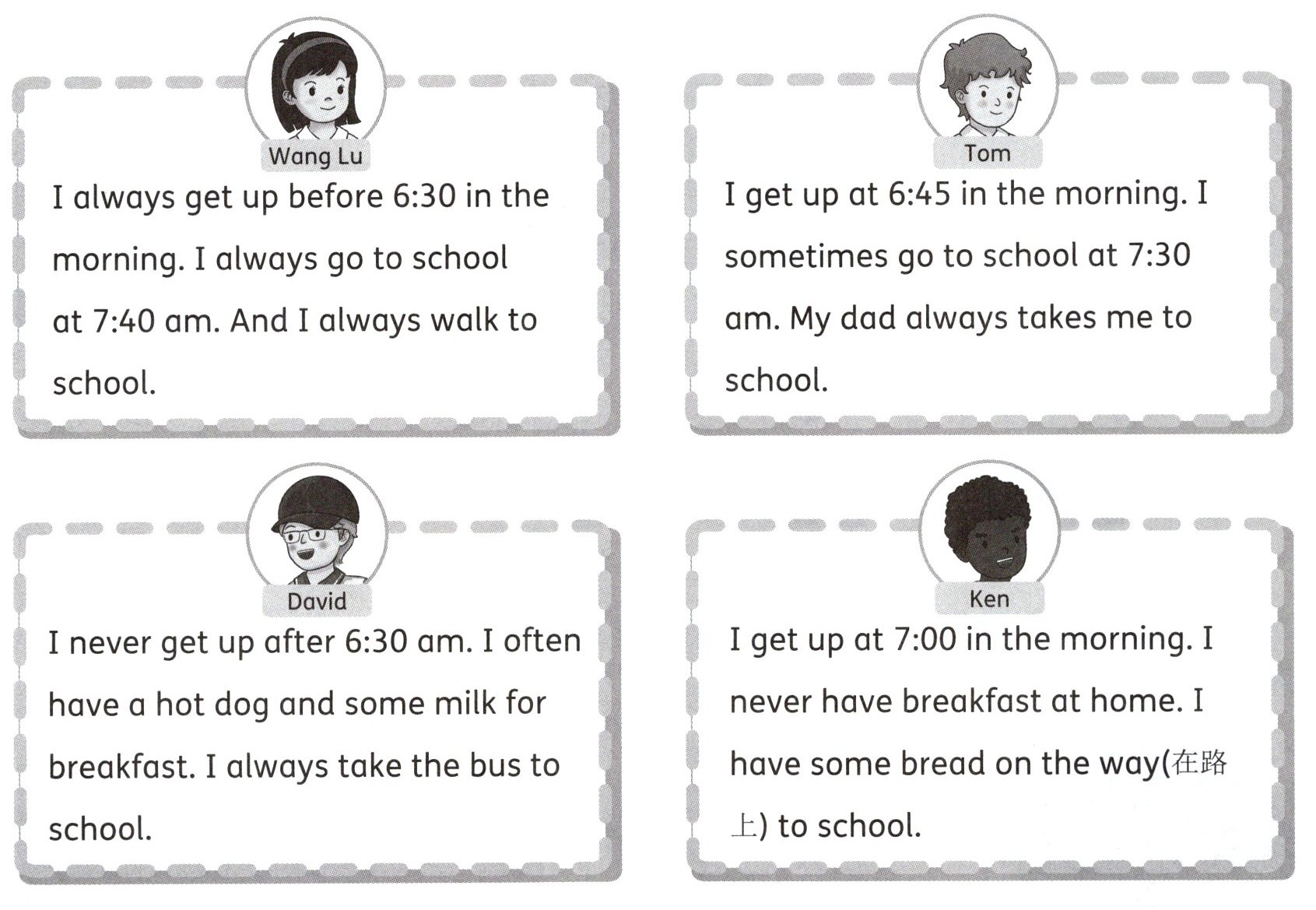

1. How many students get up before 6:40 am?
2. Does Ken have breakfast at home?
3. How often does Wang Lu walk to school?
4. What time does Tom sometimes go to school?
1. How many students get up before 6:40 am?
Three.
.2. Does Ken have breakfast at home?
No, he doesn’t.
.3. How often does Wang Lu walk to school?
Always.
.4. What time does Tom sometimes go to school?
At 7:30 am.
.答案
1. Three.
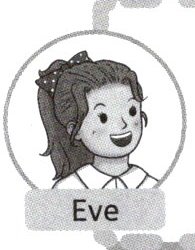
解析:符合早于6:40起床的学生共3名,分别是Wang Lu、David、Eve,Tom起床时间为6:45,Ken起床时间为7:00,均晚于6:40。
2. No, he doesn’t.
解析:原文Ken的描述明确提到"I never have breakfast at home",因此给出否定回答。
3. Always.
解析:Wang Lu的自我介绍里写明"And I always walk to school"。
4. At 7:30 am.
解析:Tom的自我介绍里写明"I sometimes go to school at 7:30 am"。
解析
【分析】这是一道英语信息提取类题目,解题思路为:1. 明确每个问题的核心关键词,如第1题关键词是“get up before 6:40 am”,第2题是“Ken have breakfast at home”,第3题是“Wang Lu walk to school”的频率,第4题是“Tom sometimes go to school”的时间;2. 回到对应学生的描述中定位相关信息;3. 根据定位到的信息整理出符合问题要求的答案。
【解析】1. 统计学生起床时间:Wang Lu、David、Eve的起床时间早于6:40,Tom为6:45,Ken为7:00,早于6:40的共3人,故答案为Three;2. Ken的描述明确提到“I never have breakfast at home”,因此给出否定回答,即No, he doesn’t;3. Wang Lu的自我介绍写明“And I always walk to school”,故步行上学的频率为Always;4. Tom的自我介绍写明“I sometimes go to school at 7:30 am”,故有时上学的时间为At 7:30 am。
【答案】1. Three. 2. No, he doesn’t. 3. Always. 4. At 7:30 am.
【知识点】英语阅读理解、信息提取、一般疑问句回答
【点评】本题为基础的英语信息查找题,主要考查学生从文本中定位具体细节的能力,题目难度较低,只要仔细阅读对应内容即可正确作答。
【难度系数】0.8
四、Think and write. 你是如何安排早上的时间的?想一想,写一写。
I
I
usually
get up at 6:30 in the morning.
Then I do 10 minutes’ morning exercise, and I have porridge and an egg for breakfast.
My dad sometimes drives me to school at 7:40, and I get to school before 8:00 every day.
答案
参考示例(答案不唯一,符合自身日常作息实际即可):
I usually get up at 6:30 in the morning. Then I do 10 minutes’ morning exercise, and I have porridge and an egg for breakfast. My dad sometimes drives me to school at 7:40, and I get to school before 8:00 every day.
解析
【分析】这是一道英语写作题,要求结合自身日常作息,用英语描述早上的时间安排。解题思路为:先确定起床的时间及相关表达,再按时间顺序依次写出起床后进行的活动(如锻炼、吃早餐、上学等),使用合适的连接词(如then、and)使内容连贯,语句通顺,符合英语表达习惯即可。
【解析】解题步骤:1. 用“主语+频率副词(如usually)+get up+时间”的结构写出起床的时间;2. 按时间先后,用连接词衔接起床后的活动,比如晨练、吃早餐、上学的方式与时间,确保内容符合自身实际作息,语句正确。
【答案】I usually get up at 6:30 in the morning. Then I do 10 minutes’ morning exercise, and I have porridge and an egg for breakfast. My dad sometimes drives me to school at 7:40, and I get to school before 8:00 every day.
【知识点】英语写作、日常作息表达、一般现在时
【点评】本题贴近学生日常生活,考查学生对日常作息的英语表达能力,难度适中,学生结合自身实际即可完成。
【难度系数】0.8
