

 登录
听第二段长对话,回答第13至14小题。
(
A. He read magazines.
B. He visited it recently.
C. His teacher told him.
(
A. Wider roads.
B. New apartments.
C. More parks.
(
B
)13. How did the boy know the village changed a lot?A. He read magazines.
B. He visited it recently.
C. His teacher told him.
(
C
)14. Which improvement is NOT mentioned in the village?A. Wider roads.
B. New apartments.
C. More parks.
答案
13. B
14. C
听第三段长对话,回答第15至17小题。
(
A. Reporter and local resident.
B. Mother and son.
C. Doctor and patient.
(
A. Only farm work.
B. Staying indoors doing nothing.
C. All kinds of entertainment.
(
A. It brings many great changes.
B. It has no improvements at all.
C. It makes people much busier for no reason.
(
A
)15. What's the relationship between the two speakers?A. Reporter and local resident.
B. Mother and son.
C. Doctor and patient.
(
C
)16. What do young people's leisure activities include nowadays?A. Only farm work.
B. Staying indoors doing nothing.
C. All kinds of entertainment.
(
A
)17. What does the man think of the new era?A. It brings many great changes.
B. It has no improvements at all.
C. It makes people much busier for no reason.
答案
15. A
16. C
17. A
第四节 听短文,填写表格
下面你将听到一段短文,根据你所听到的内容,填写表格中所缺单词,每空仅填一词。短文听两遍。
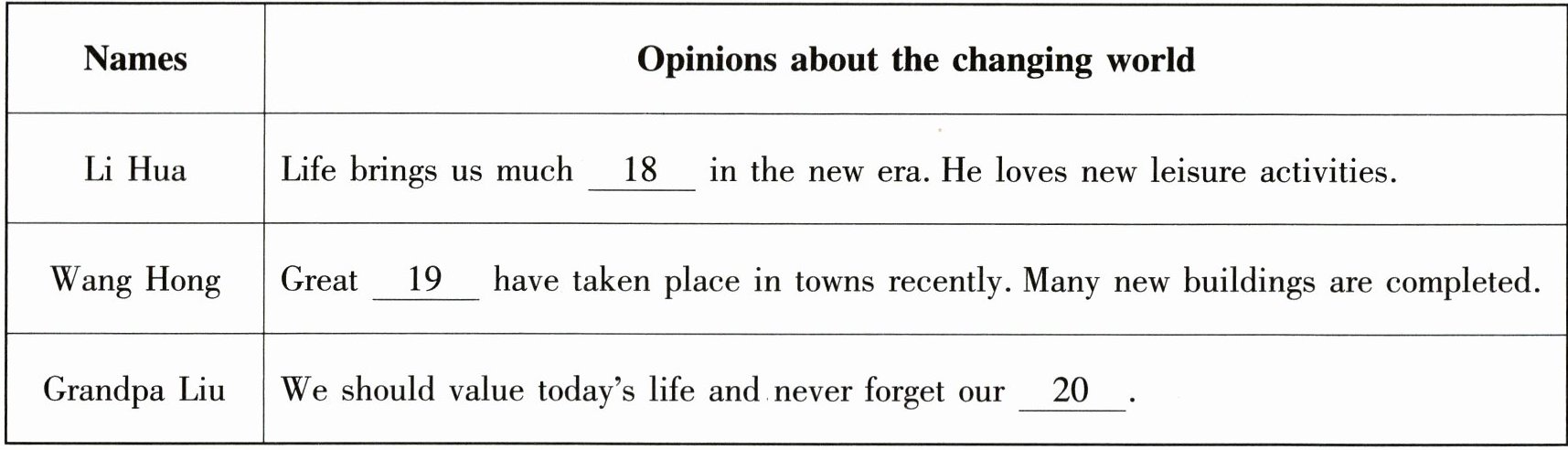
18.
下面你将听到一段短文,根据你所听到的内容,填写表格中所缺单词,每空仅填一词。短文听两遍。
18.
comfort
19. improvements
20. childhood
答案
18. comfort
19. improvements
20. childhood
