

 登录
登录
项目名称 Compare two countries' customs
项目时长 45分钟
项目简述 本项目以“比较中国与另一个国家的习俗”为主题,让同学们以小组为单位,从问候方式、拜访他人、得体着装、餐桌礼仪、赠送与接受礼物是否恰当等话题中选择一些话题进行比较,探究两国文化差异。各小组之间相互交流探究成果,了解不同国家的文化,学会尊重差异。
教材与相关资料 人教版八年级下册Unit 6
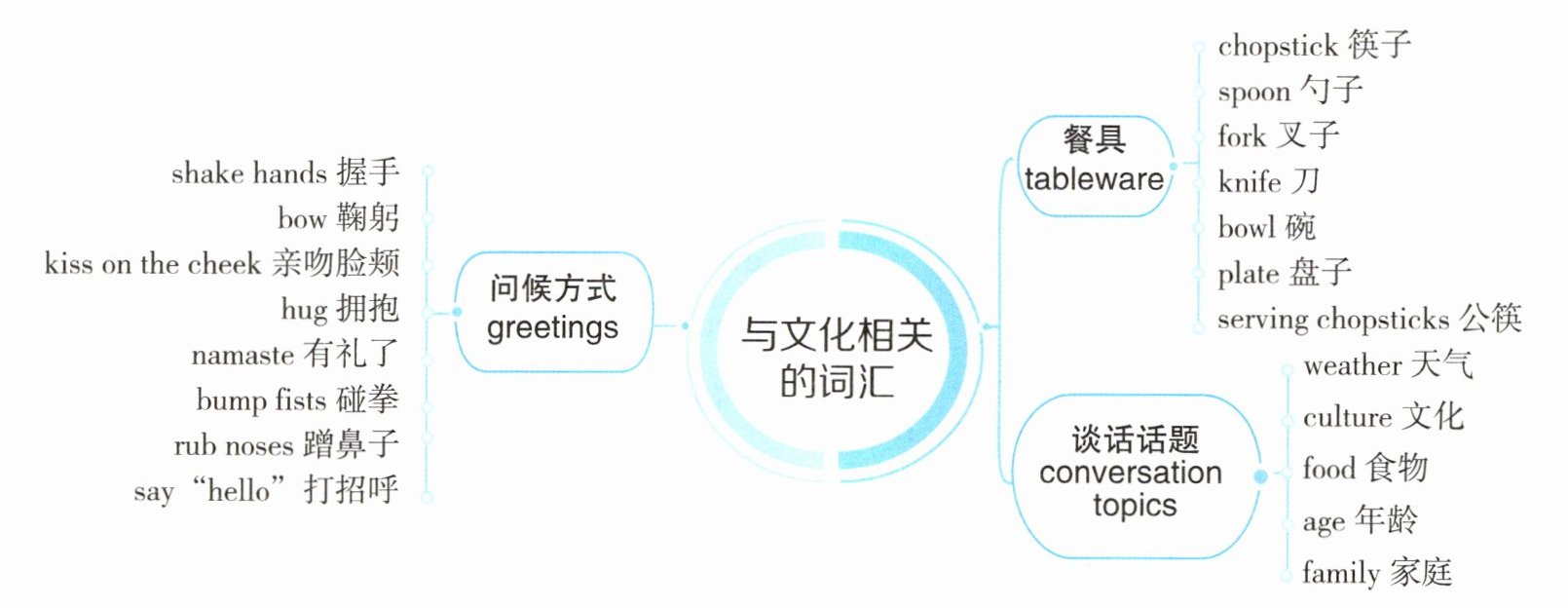
核心知识梳理
重点单词与短语
项目规划与设计
活动一 中外习俗初探秘
小组合作。四人一组,围绕问题展开讨论,结合生活经验回答。
1. What customs do you know about greeting people in China?
2. What about gift-giving customs in China?
3. Do you know any customs from other countries?
活动二 中巴习俗对照营
1.小组合作。四人一组,完成对比表格。
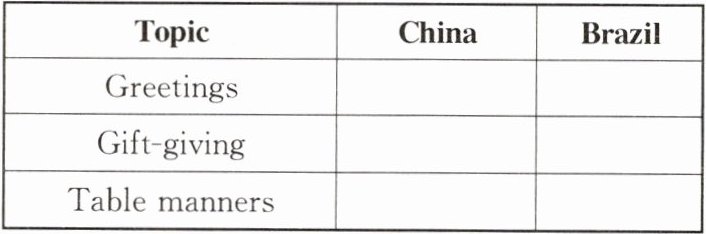
2.拓展探究。从“拜访他人”“正式场合的穿着”“交谈禁忌话题”中选1个主题,补充对比中巴习俗的异同。
项目时长 45分钟
项目简述 本项目以“比较中国与另一个国家的习俗”为主题,让同学们以小组为单位,从问候方式、拜访他人、得体着装、餐桌礼仪、赠送与接受礼物是否恰当等话题中选择一些话题进行比较,探究两国文化差异。各小组之间相互交流探究成果,了解不同国家的文化,学会尊重差异。
教材与相关资料 人教版八年级下册Unit 6
核心知识梳理
重点单词与短语
项目规划与设计
活动一 中外习俗初探秘
小组合作。四人一组,围绕问题展开讨论,结合生活经验回答。
1. What customs do you know about greeting people in China?
In China, people usually shake
hands when meeting for the first time.
Sometimes, they may nod to greet
others.
hands when meeting for the first time.
Sometimes, they may nod to greet
others.
2. What about gift-giving customs in China?
In China, it's improper to give a
clock as a gift because it sounds like
"the end of life" in Chinese. People
often open gifts later.
clock as a gift because it sounds like
"the end of life" in Chinese. People
often open gifts later.
3. Do you know any customs from other countries?
Yes. In Japan, people bow to greet
others./...
others./...
活动二 中巴习俗对照营
1.小组合作。四人一组,完成对比表格。
2.拓展探究。从“拜访他人”“正式场合的穿着”“交谈禁忌话题”中选1个主题,补充对比中巴习俗的异同。
答案
活动一
1. (1) In China, people usually shake
hands when meeting for the first time.
Sometimes, they may nod to greet
others.
(2) In China, it's improper to give a
clock as a gift because it sounds like
"the end of life" in Chinese. People
often open gifts later.
(3)Yes. In Japan, people bow to greet
others./...
活动二答案
1.
| Topic | China | Brazil |
| ---- | ---- | ---- |
| Greetings | People usually shake hands when meeting for the first time; close friends may nod or wave to greet each other in daily life. | People often give two light kisses on the cheek (one on each side) as a common greeting, even for people they meet for the first time; physical contact during greetings is very natural. |
| Gift-giving | Giving clocks, umbrellas or pears is considered improper; people usually receive gifts with both hands and open them later after the guest leaves. | Gifts like handkerchiefs are seen as unlucky, for they are related to sad occasions; people usually open the gift right away in front of the giver and express their sincere praise. |
| Table manners | People use chopsticks as the main tableware, and it is impolite to stick chopsticks vertically into the bowl of rice; we usually prepare serving chopsticks for others to share dishes. | People eat most dishes with knives and forks; it is acceptable to bring small amounts of food to the plate with hands in casual meals, and making a soft burp after meals is not seen as rude. |
2. (以选择“拜访他人”主题为例)
- Similarity: In both China and Brazil, it is polite to bring a small proper gift when you are invited to visit others' home, to show your thanks to the host.
- Difference: In China, you are supposed to arrive at the host's home a few minutes earlier, and it is very impolite to be late without telling the host in advance. But in Brazil, being 10 to 15 minutes late for a visiting is a very common situation, and local people even think arriving too early will make the host feel pressured.
1. (1) In China, people usually shake
hands when meeting for the first time.
Sometimes, they may nod to greet
others.
(2) In China, it's improper to give a
clock as a gift because it sounds like
"the end of life" in Chinese. People
often open gifts later.
(3)Yes. In Japan, people bow to greet
others./...
活动二答案
1.
| Topic | China | Brazil |
| ---- | ---- | ---- |
| Greetings | People usually shake hands when meeting for the first time; close friends may nod or wave to greet each other in daily life. | People often give two light kisses on the cheek (one on each side) as a common greeting, even for people they meet for the first time; physical contact during greetings is very natural. |
| Gift-giving | Giving clocks, umbrellas or pears is considered improper; people usually receive gifts with both hands and open them later after the guest leaves. | Gifts like handkerchiefs are seen as unlucky, for they are related to sad occasions; people usually open the gift right away in front of the giver and express their sincere praise. |
| Table manners | People use chopsticks as the main tableware, and it is impolite to stick chopsticks vertically into the bowl of rice; we usually prepare serving chopsticks for others to share dishes. | People eat most dishes with knives and forks; it is acceptable to bring small amounts of food to the plate with hands in casual meals, and making a soft burp after meals is not seen as rude. |
2. (以选择“拜访他人”主题为例)
- Similarity: In both China and Brazil, it is polite to bring a small proper gift when you are invited to visit others' home, to show your thanks to the host.
- Difference: In China, you are supposed to arrive at the host's home a few minutes earlier, and it is very impolite to be late without telling the host in advance. But in Brazil, being 10 to 15 minutes late for a visiting is a very common situation, and local people even think arriving too early will make the host feel pressured.
解析
【解析】
活动一
1. 结合中国日常问候的文化常识,用符合八年级英语水平的语句作答:In China, people usually shake hands when meeting for the first time. Sometimes, they may nod to greet others.
2. 结合中国送礼的文化禁忌和习惯作答:In China, it's improper to give a clock as a gift because it sounds like "the end of life" in Chinese. People often open gifts later.
3. 任选一个其他国家的典型习俗作答即可,示例:Yes. In Japan, people bow to greet others.
活动二
1. 按照表格主题分别梳理中巴两国对应习俗:
| Topic | China | Brazil |
| ---- | ---- | ---- |
| Greetings | People usually shake hands when meeting for the first time; close friends may nod or wave to greet each other in daily life. | People often give two light kisses on the cheek (one on each side) as a common greeting, even for people they meet for the first time; physical contact during greetings is very natural. |
| Gift-giving | Giving clocks, umbrellas or pears is considered improper; people usually receive gifts with both hands and open them later after the guest leaves. | Gifts like handkerchiefs are seen as unlucky, for they are related to sad occasions; people usually open the gift right away in front of the giver and express their sincere praise. |
| Table manners | People use chopsticks as the main tableware, and it is impolite to stick chopsticks vertically into the bowl of rice; we usually prepare serving chopsticks for others to share dishes. | People eat most dishes with knives and forks; it is acceptable to bring small amounts of food to the plate with hands in casual meals, and making a soft burp after meals is not seen as rude. |
2. 以选择“拜访他人”主题为例,梳理异同点:
- Similarity: In both China and Brazil, it is polite to bring a small proper gift when you are invited to visit others' home, to show your thanks to the host.
- Difference: In China, you are supposed to arrive at the host's home a few minutes earlier, and it is very impolite to be late without telling the host in advance. But in Brazil, being 10 to 15 minutes late for a visiting is a very common situation, and local people even think arriving too early will make the host feel pressured.
【答案】
活动一:
1. In China, people usually shake hands when meeting for the first time. Sometimes, they may nod to greet others.
2. In China, it's improper to give a clock as a gift because it sounds like "the end of life" in Chinese. People often open gifts later.
3. Yes. In Japan, people bow to greet others./(其他符合要求的答案也可)
活动二:
1. 对比表格内容如上所示
2. 以“拜访他人”主题为例的对比内容如上所示(选择其余主题的合理对比答案也可)
【知识点】
跨文化习俗认知
英语情景表达
中外文化差异
【点评】
本题围绕不同国家的习俗对比展开,既考查学生对中国本土文化常识的掌握,也引导学生了解其他国家的文化特点,同时锻炼学生用规范英语表达文化相关内容的能力,帮助学生建立尊重不同文化差异的意识,题型以小组合作探究为主,兼具知识性和趣味性。
【难度系数】
0.7
活动一
1. 结合中国日常问候的文化常识,用符合八年级英语水平的语句作答:In China, people usually shake hands when meeting for the first time. Sometimes, they may nod to greet others.
2. 结合中国送礼的文化禁忌和习惯作答:In China, it's improper to give a clock as a gift because it sounds like "the end of life" in Chinese. People often open gifts later.
3. 任选一个其他国家的典型习俗作答即可,示例:Yes. In Japan, people bow to greet others.
活动二
1. 按照表格主题分别梳理中巴两国对应习俗:
| Topic | China | Brazil |
| ---- | ---- | ---- |
| Greetings | People usually shake hands when meeting for the first time; close friends may nod or wave to greet each other in daily life. | People often give two light kisses on the cheek (one on each side) as a common greeting, even for people they meet for the first time; physical contact during greetings is very natural. |
| Gift-giving | Giving clocks, umbrellas or pears is considered improper; people usually receive gifts with both hands and open them later after the guest leaves. | Gifts like handkerchiefs are seen as unlucky, for they are related to sad occasions; people usually open the gift right away in front of the giver and express their sincere praise. |
| Table manners | People use chopsticks as the main tableware, and it is impolite to stick chopsticks vertically into the bowl of rice; we usually prepare serving chopsticks for others to share dishes. | People eat most dishes with knives and forks; it is acceptable to bring small amounts of food to the plate with hands in casual meals, and making a soft burp after meals is not seen as rude. |
2. 以选择“拜访他人”主题为例,梳理异同点:
- Similarity: In both China and Brazil, it is polite to bring a small proper gift when you are invited to visit others' home, to show your thanks to the host.
- Difference: In China, you are supposed to arrive at the host's home a few minutes earlier, and it is very impolite to be late without telling the host in advance. But in Brazil, being 10 to 15 minutes late for a visiting is a very common situation, and local people even think arriving too early will make the host feel pressured.
【答案】
活动一:
1. In China, people usually shake hands when meeting for the first time. Sometimes, they may nod to greet others.
2. In China, it's improper to give a clock as a gift because it sounds like "the end of life" in Chinese. People often open gifts later.
3. Yes. In Japan, people bow to greet others./(其他符合要求的答案也可)
活动二:
1. 对比表格内容如上所示
2. 以“拜访他人”主题为例的对比内容如上所示(选择其余主题的合理对比答案也可)
【知识点】
跨文化习俗认知
英语情景表达
中外文化差异
【点评】
本题围绕不同国家的习俗对比展开,既考查学生对中国本土文化常识的掌握,也引导学生了解其他国家的文化特点,同时锻炼学生用规范英语表达文化相关内容的能力,帮助学生建立尊重不同文化差异的意识,题型以小组合作探究为主,兼具知识性和趣味性。
【难度系数】
0.7
