

 登录
登录
三、阅读理解
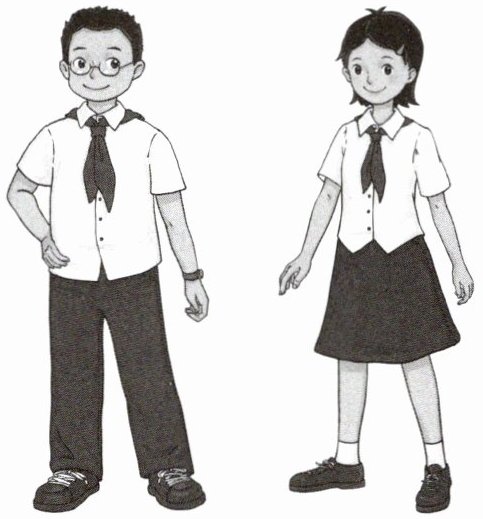
School uniforms are becoming more and more popular. That’s no surprise, because they have many benefits.
School uniforms are good for the students who are not so rich. If all students are dressed in the same way, they will not pay too much attention to their clothing and some of them will not be laughed at for wearing the “wrong” clothes. Students want to look just like their friends and wearing school uniforms can do it easily.
Uniforms also remind the wearers of their duties (责任). For example, when a man or woman puts on a police uniform, he or she becomes, for a time, the symbol (象征) of law and order. The uniform tells the wearer his or her special duties and sends the same message to everyone the wearer meets. People with different jobs wear uniforms of one kind or another. For students, the school uniform reminds them that their task for the six or seven hours at school is to study.
Some parents are unhappy about school uniforms, saying they will affect their children’s “creativity (创造力)”. First, as noted above, choosing what to wear doesn’t really mean students are creative. Maybe they just copy their classmates. Second, students have weekends and holidays to be as creative as they like. While they’re at school, their job is to learn reading, writing and Maths. They should show their creativity in this way.
(
A. help to create social barriers (社会壁垒)
B. are seen as a symbol of power
C. prevent the wearers from being laughed at
D. help the wearers keep their duties in mind
(
A. they think that school uniforms are too popular
B. they don’t agree that uniforms can remove social barriers
C. they believe that uniforms will make students less creative
D. they don’t realize that students love their uniforms
(
A. students’ creativity is largely related to the clothes they choose
B. school uniforms help to create equality among students
C. students’ creativity may not come from school education
D. it makes no difference whether to wear school uniforms or not
School uniforms are becoming more and more popular. That’s no surprise, because they have many benefits.
School uniforms are good for the students who are not so rich. If all students are dressed in the same way, they will not pay too much attention to their clothing and some of them will not be laughed at for wearing the “wrong” clothes. Students want to look just like their friends and wearing school uniforms can do it easily.
Uniforms also remind the wearers of their duties (责任). For example, when a man or woman puts on a police uniform, he or she becomes, for a time, the symbol (象征) of law and order. The uniform tells the wearer his or her special duties and sends the same message to everyone the wearer meets. People with different jobs wear uniforms of one kind or another. For students, the school uniform reminds them that their task for the six or seven hours at school is to study.
Some parents are unhappy about school uniforms, saying they will affect their children’s “creativity (创造力)”. First, as noted above, choosing what to wear doesn’t really mean students are creative. Maybe they just copy their classmates. Second, students have weekends and holidays to be as creative as they like. While they’re at school, their job is to learn reading, writing and Maths. They should show their creativity in this way.
(
D
) 1. From the passage we learn that uniforms in general .A. help to create social barriers (社会壁垒)
B. are seen as a symbol of power
C. prevent the wearers from being laughed at
D. help the wearers keep their duties in mind
(
C
) 2. Some parents are against school uniforms because .A. they think that school uniforms are too popular
B. they don’t agree that uniforms can remove social barriers
C. they believe that uniforms will make students less creative
D. they don’t realize that students love their uniforms
(
B
) 3. The writer would probably agree that .A. students’ creativity is largely related to the clothes they choose
B. school uniforms help to create equality among students
C. students’ creativity may not come from school education
D. it makes no difference whether to wear school uniforms or not
答案
1.D 2.C 3.B
解析
【分析】
做这类英语阅读理解题,需先通读文章把握主旨,再针对每个题目回到原文定位关键信息,逐一比对选项排除错误答案。第1题考查制服的普遍作用,需找到对应原文的核心表述;第2题考查家长反对校服的原因,直接定位家长的观点句;第3题考查作者的态度,需结合全文作者的论述(尤其是反驳家长的部分)判断。
【解析】
1. 第1题:根据原文第三段第一句“Uniforms also remind the wearers of their duties (责任).”可知,制服能让穿戴者牢记自身责任,对应选项D。A选项与原文第二段“不会因穿错衣服被嘲笑(减少社会壁垒)”相悖;B选项中“权力”仅针对警察制服,并非制服的普遍象征;C选项是校服的部分好处,但不符合题干“in general(一般来说)”的要求,故排除A、B、C,选D。
2. 第2题:根据原文第四段第一句“Some parents are unhappy about school uniforms, saying they will affect their children’s ‘creativity (创造力)’.”可知,家长反对校服是因为认为校服会降低学生的创造力,对应选项C。A、B、D均未在原文提及,故排除,选C。
3. 第3题:原文第二段指出校服对不富裕的学生友好,避免其因穿着被嘲笑,说明校服有助于学生间的平等;第四段作者反驳家长“校服影响创造力”的观点,认为学生的创造力并非来自穿着选择,而是来自学习。由此可知作者同意“校服帮助创造学生间的平等”,对应选项B。A选项与作者观点相悖;C选项“创造力与学校教育无关”无依据;D选项“穿不穿校服无区别”不符合原文,故排除A、C、D,选B。
【答案】
1.D 2.C 3.B
【知识点】
英语阅读理解(细节理解)、英语阅读理解(推理判断)
【点评】
本文围绕校服的利弊展开论述,题目以细节理解和观点判断为主,需学生精准定位原文信息,理解作者的核心态度,整体难度适中。
【难度系数】
0.6
做这类英语阅读理解题,需先通读文章把握主旨,再针对每个题目回到原文定位关键信息,逐一比对选项排除错误答案。第1题考查制服的普遍作用,需找到对应原文的核心表述;第2题考查家长反对校服的原因,直接定位家长的观点句;第3题考查作者的态度,需结合全文作者的论述(尤其是反驳家长的部分)判断。
【解析】
1. 第1题:根据原文第三段第一句“Uniforms also remind the wearers of their duties (责任).”可知,制服能让穿戴者牢记自身责任,对应选项D。A选项与原文第二段“不会因穿错衣服被嘲笑(减少社会壁垒)”相悖;B选项中“权力”仅针对警察制服,并非制服的普遍象征;C选项是校服的部分好处,但不符合题干“in general(一般来说)”的要求,故排除A、B、C,选D。
2. 第2题:根据原文第四段第一句“Some parents are unhappy about school uniforms, saying they will affect their children’s ‘creativity (创造力)’.”可知,家长反对校服是因为认为校服会降低学生的创造力,对应选项C。A、B、D均未在原文提及,故排除,选C。
3. 第3题:原文第二段指出校服对不富裕的学生友好,避免其因穿着被嘲笑,说明校服有助于学生间的平等;第四段作者反驳家长“校服影响创造力”的观点,认为学生的创造力并非来自穿着选择,而是来自学习。由此可知作者同意“校服帮助创造学生间的平等”,对应选项B。A选项与作者观点相悖;C选项“创造力与学校教育无关”无依据;D选项“穿不穿校服无区别”不符合原文,故排除A、C、D,选B。
【答案】
1.D 2.C 3.B
【知识点】
英语阅读理解(细节理解)、英语阅读理解(推理判断)
【点评】
本文围绕校服的利弊展开论述,题目以细节理解和观点判断为主,需学生精准定位原文信息,理解作者的核心态度,整体难度适中。
【难度系数】
0.6
