

 登录
1. 完成3b习题。补全句子。
(1) A: Where the lockers?
B: next to the reading corner.
(2) There a nice library behind the classroom building.
(3) A: there a book shop in this school?
B: Yes, there . across from the dining hall.
(4) A: there any flowers in front of their classroom?
B: No, there . But there some trees.
(5) A: Where the school hall?
B: between the classroom building and the science building.
(6) There some pictures of famous people on the wall.
2. 思考如何更精确地介绍位置。
常见的方位介词:
询问方位或地点的wh-特殊疑问句结构为:
3. 完成活动3c。选择正确的方位介词。
This is a classroom in the UK. There are many things in the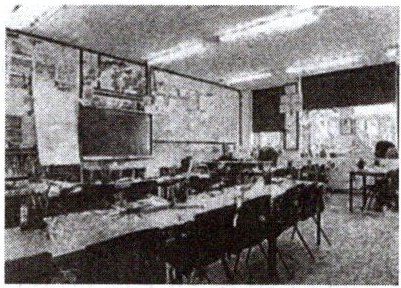 room. There's a screen (in front of/ on) the wall. A whiteboard is next to/between the screen. There are some bookcases (behind / under) them. The teacher's desk is in the comer, ( across from / in front of ) a window. Students sit ( between / on ) chairs at long tables, but today there aren't any students.
创新运用
(1) A: Where the lockers?
B: next to the reading corner.
(2) There a nice library behind the classroom building.
(3) A: there a book shop in this school?
B: Yes, there . across from the dining hall.
(4) A: there any flowers in front of their classroom?
B: No, there . But there some trees.
(5) A: Where the school hall?
B: between the classroom building and the science building.
(6) There some pictures of famous people on the wall.
2. 思考如何更精确地介绍位置。
常见的方位介词:
询问方位或地点的wh-特殊疑问句结构为:
3. 完成活动3c。选择正确的方位介词。
This is a classroom in the UK. There are many things in the
room. There's a screen (in front of/ on) the wall. A whiteboard is next to/between the screen. There are some bookcases (behind / under) them. The teacher's desk is in the comer, ( across from / in front of ) a window. Students sit ( between / on ) chairs at long tables, but today there aren't any students.创新运用
答案
1. 补全句子
(1) are; They're
(2) is
(3) Is; is; It's
(4) Are; aren't; are
(5) is; It's
(6) are
2. 常见的方位介词:in, on, under, next to, in front of, behind, between, across from
询问方位或地点的wh-特殊疑问句结构为:Where + be动词/助动词 + 主语 + 其他?
3. 正确的方位介词依次为:on; next to; behind; across from; on
(1) are; They're
(2) is
(3) Is; is; It's
(4) Are; aren't; are
(5) is; It's
(6) are
2. 常见的方位介词:in, on, under, next to, in front of, behind, between, across from
询问方位或地点的wh-特殊疑问句结构为:Where + be动词/助动词 + 主语 + 其他?
3. 正确的方位介词依次为:on; next to; behind; across from; on
解析
【分析】本题分为三部分,第一部分为句子补全,考察there be句型的主谓一致、代词指代;第二部分总结方位介词与方位特殊疑问句结构;第三部分为方位介词选择,考察词义辨析与语境运用。解题时需先回忆there be句型的用法(be动词由主语单复数决定,复数用are、单数用is),结合语境判断代词与方位介词,掌握特殊疑问句的结构。
【解析】1. 补全句子:
(1) 主语the lockers是复数,be动词用are;指代复数事物用They're,故填are; They're。
(2) there be句型中主语a nice library为单数,be动词用is,故填is。
(3) 主语a book shop是单数,一般疑问句用Is开头;肯定回答对应be动词is;指代单数事物用It's,故填Is; is; It's。
(4) 主语any flowers是复数,一般疑问句用Are开头;否定回答用aren't;主语some trees为复数,be动词用are,故填Are; aren't; are。
(5) 主语the school hall是单数,be动词用is;指代单数事物用It's,故填is; It's。
(6) 主语some pictures是复数,be动词用are,故填are。
2. 常见方位介词为所学的in, on, under, next to, in front of, behind, between, across from;询问方位的特殊疑问句结构为Where + be动词/助动词 + 主语 + 其他?
3. 方位介词选择:屏幕在墙表面用on;白板在屏幕旁用next to;书架在后方用behind;教师桌在窗户对面用across from;学生在椅子上用on,故依次填on; next to; behind; across from; on。
【答案】1. 补全句子
(1) are; They're
(2) is
(3) Is; is; It's
(4) Are; aren't; are
(5) is; It's
(6) are
2. 常见的方位介词:in, on, under, next to, in front of, behind, between, across from
询问方位或地点的wh-特殊疑问句结构为:Where + be动词/助动词 + 主语 + 其他?
3. 正确的方位介词依次为:on; next to; behind; across from; on
【知识点】there be句型、方位介词、特殊疑问句
【点评】本题为初中英语基础巩固题,围绕there be句型、方位表达展开,侧重基础知识点的应用,帮助学生掌握方位描述的基本用法。
【难度系数】0.7
1.小组合作,谈论自己的教室和3c图片中英国学校教室的不同。
A:In our school, there are plants next to the teacher's desk.
B: And there's a reading corner in our classroom.
C:...
2.观看英国学生上课视频,了解中西方教育的异同。
A:In our school, there are plants next to the teacher's desk.
B: And there's a reading corner in our classroom.
C:...
2.观看英国学生上课视频,了解中西方教育的异同。
答案
1. 参考对话(符合七年级词汇难度,答案不唯一):
C: In the UK classroom, there aren't many plants. And there are only 4 or 5 desks in a small group.
D: In our classroom, all desks face the blackboard. But in the UK classroom, students can sit around the desks to talk with each other easily.
只要正确使用there be句型,表述内容符合两类教室的真实差异即可。
2. 参考异同总结:
相同点:两类教室都配备黑板、讲台、课桌椅,都为学生提供合适的学习场所,都重视学生的知识学习。
不同点:中国教室的桌椅大多整齐排列朝向讲台,课堂上老师统一讲授的占比更高,课堂秩序相对严谨;英国教室的桌椅常拼成小组样式,学生课堂上自主发言、动手实践的环节更多,课堂氛围更灵活自由。
解析
【分析】本题是七年级英语跨文化交际类任务,分为两部分:第一部分需对比中英教室的不同,要求使用there be句型,结合七年级词汇难度,可从教室物品、桌椅布局等差异点组织对话;第二部分需总结中西方教育(从教室延伸)的异同,需从教室配置、课堂模式等方面梳理。解题时先明确中英教室的真实差异,再用正确的英语句型组织表达,总结异同要贴合实际情况。
【解析】1. 对话部分:围绕教室差异,用there be句型表述,比如英国教室植物少、桌椅成组排列,中国教室桌椅朝向黑板等,符合七年级词汇即可;2. 异同总结:相同点从教室基本配置、学习场所功能等方面归纳,不同点从桌椅布局、课堂模式(讲授/自主实践)等方面对比,确保表述准确贴合实际。
【答案】1. 参考对话(符合七年级词汇难度,答案不唯一):C: In the UK classroom, there aren't many plants. And there are only 4 or 5 desks in a small group. D: In our classroom, all desks face the blackboard. But in the UK classroom, students can sit around the desks to talk with each other easily. 只要正确使用there be句型,表述内容符合两类教室的真实差异即可。2. 参考异同总结:相同点:两类教室都配备黑板、讲台、课桌椅,都为学生提供合适的学习场所,都重视学生的知识学习。不同点:中国教室的桌椅大多整齐排列朝向讲台,课堂上老师统一讲授的占比更高,课堂秩序相对严谨;英国教室的桌椅常拼成小组样式,学生课堂上自主发言、动手实践的环节更多,课堂氛围更灵活自由。
【知识点】there be句型、跨文化交际
【点评】本题结合口语表达与跨文化认知,考查学生的英语语言运用能力和对中西方教育差异的理解,贴近七年级学生的学习生活,实用性较强。
【难度系数】0.7
Ⅰ.根据汉语提示完成句子,每空一词。
1. 教室里有多少桌子和椅子?
How many desks and
2. 你们教室里有一个读书角吗?
Is there a
3. 墙上有一些名人图片。
There are some pictures of famous people
4. 有一个书橱在角落。
There is a bookcase
1. 教室里有多少桌子和椅子?
How many desks and
chairs
are there in the classroom?2. 你们教室里有一个读书角吗?
Is there a
reading
corner
in your classroom?3. 墙上有一些名人图片。
There are some pictures of famous people
on
the
wall
.4. 有一个书橱在角落。
There is a bookcase
in
the
corner
.答案
1. chairs 2. reading corner 3. on the wall 4. in the corner
解析
【分析】本题为根据汉语提示完成句子,需结合汉语含义匹配对应的英语词汇或固定表达,注意名词单复数、介词短语的正确形式。第1题对应“椅子”,需与前面desks保持复数形式;第2题“读书角”是固定短语;第3题“在墙上”需用正确的介词短语;第4题“在角落”是固定介词短语。
【解析】1. 汉语“椅子”对应英语chair,因前面desks为复数,故填chairs;2. “读书角”的固定英语表达为reading corner;3. “在墙上”的介词短语是on the wall;4. “在角落”的固定表达为in the corner。
【答案】1. chairs 2. reading corner 3. on the wall 4. in the corner
【知识点】名词复数、固定短语、介词短语
【点评】本题考查基础英语词汇与固定搭配,属于单元基础题型,需掌握校园相关常用表达,难度较低。
【难度系数】0.8
【解析】1. 汉语“椅子”对应英语chair,因前面desks为复数,故填chairs;2. “读书角”的固定英语表达为reading corner;3. “在墙上”的介词短语是on the wall;4. “在角落”的固定表达为in the corner。
【答案】1. chairs 2. reading corner 3. on the wall 4. in the corner
【知识点】名词复数、固定短语、介词短语
【点评】本题考查基础英语词汇与固定搭配,属于单元基础题型,需掌握校园相关常用表达,难度较低。
【难度系数】0.8
