

 登录
五、 核心素养 中华优秀传统文化 阅读理解。
主题群:历史、社会与文化 子主题:瓷器文化 语篇类型:说明文 难度:★★
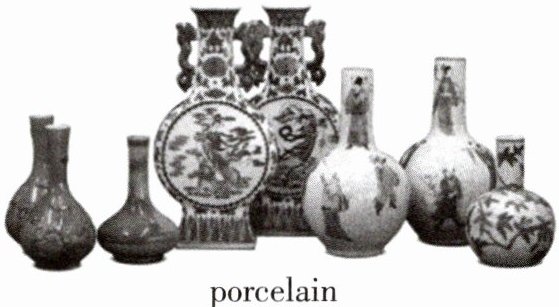
porcelain
As a Chinese invention, almost from the beginning, porcelain was a popular item for export(出口) to nearby countries. As early as Roman times, Chinese porcelain was carried west to Europe along the Silk Road. However, the amount of Chinese porcelain reaching Europe was quite small.
Things changed in the early 16th century when Europeans built bases for trade in Asia. Millions of pieces of Chinese porcelain were imported(进口) by the Dutch in the 17th century, with Britain and France not far behind.
At that time, much of the porcelain produced in Jingdezhen was specially made for sale to Europe. Later, Western companies bought undecorated Jingdezhen porcelain, and transported it to Guangzhou for decoration with Western designs. In time, Europeans learned the secrets of porcelain-making and produced it locally in their own factories in the West. With lower shipping costs, their products were cheaper. As a result, Jingdezhen went into decline(衰落) in the late Qing Dynasty and almost stopped production in the early 20th century. However, in the late 20th century, fine Jingdezhen porcelain became popular again worldwide, bringing the ancient kilns back to life.
Now we have plenty of quality factory-made tableware. It can be hard for many people to understand why Chinese porcelain was so popular in the past. About four hundred years ago, European families might have only two choices—cheap, low-quality metal dishes, or fine, expensive Chinese porcelain. Metal dishes would finally be melted down(熔化). However, the fine Chinese porcelain would be kept for many years, loved and admired by guests. Which of these would you choose?
Today, Chinese porcelain still holds great value. When you pick up a modern-day teacup, you are holding something made by a machine. However, when you pick up an ancient piece of porcelain, you are holding a piece of art made by hand. It is the result of the imagination, the labour, the love, and the very hearts of the people who made it—and that has great value even for a simple bowl for washing brushes.
(
A. By sea trade.
B. Along the Silk Road.
C. Through Dutch traders.
D. With the help of Britain and France.
(
A. It was mainly made for local use in the 17th century.
B. Europeans knew little about porcelain-making secrets.
C. Europeans decorated it with special Chinese designs.
D. It went through a hard time but came back to life later.
(
A. it would be kept for years
B. it was a way to show love to guests
C. it would finally be melted down
D. it was much cheaper than metal dishes
(
A. What caused Jingdezhen porcelain's decline.
B. When Chinese porcelain first reached Western Europe.
C. Why Chinese porcelain has been valued across centuries.
D. How European countries copied Chinese porcelain styles.
主题群:历史、社会与文化 子主题:瓷器文化 语篇类型:说明文 难度:★★
porcelain
As a Chinese invention, almost from the beginning, porcelain was a popular item for export(出口) to nearby countries. As early as Roman times, Chinese porcelain was carried west to Europe along the Silk Road. However, the amount of Chinese porcelain reaching Europe was quite small.
Things changed in the early 16th century when Europeans built bases for trade in Asia. Millions of pieces of Chinese porcelain were imported(进口) by the Dutch in the 17th century, with Britain and France not far behind.
At that time, much of the porcelain produced in Jingdezhen was specially made for sale to Europe. Later, Western companies bought undecorated Jingdezhen porcelain, and transported it to Guangzhou for decoration with Western designs. In time, Europeans learned the secrets of porcelain-making and produced it locally in their own factories in the West. With lower shipping costs, their products were cheaper. As a result, Jingdezhen went into decline(衰落) in the late Qing Dynasty and almost stopped production in the early 20th century. However, in the late 20th century, fine Jingdezhen porcelain became popular again worldwide, bringing the ancient kilns back to life.
Now we have plenty of quality factory-made tableware. It can be hard for many people to understand why Chinese porcelain was so popular in the past. About four hundred years ago, European families might have only two choices—cheap, low-quality metal dishes, or fine, expensive Chinese porcelain. Metal dishes would finally be melted down(熔化). However, the fine Chinese porcelain would be kept for many years, loved and admired by guests. Which of these would you choose?
Today, Chinese porcelain still holds great value. When you pick up a modern-day teacup, you are holding something made by a machine. However, when you pick up an ancient piece of porcelain, you are holding a piece of art made by hand. It is the result of the imagination, the labour, the love, and the very hearts of the people who made it—and that has great value even for a simple bowl for washing brushes.
(
B
)1. How did Chinese porcelain spread to Europe in Roman times?A. By sea trade.
B. Along the Silk Road.
C. Through Dutch traders.
D. With the help of Britain and France.
(
D
)2. What can we learn about the development of Jingdezhen porcelain?A. It was mainly made for local use in the 17th century.
B. Europeans knew little about porcelain-making secrets.
C. Europeans decorated it with special Chinese designs.
D. It went through a hard time but came back to life later.
(
A
)3. According to Paragraph 3, Europeans chose Chinese porcelain because .A. it would be kept for years
B. it was a way to show love to guests
C. it would finally be melted down
D. it was much cheaper than metal dishes
(
C
)4. What is the main idea of the passage?A. What caused Jingdezhen porcelain's decline.
B. When Chinese porcelain first reached Western Europe.
C. Why Chinese porcelain has been valued across centuries.
D. How European countries copied Chinese porcelain styles.
答案
1. B
2. D
3. A
4. C
解析
【分析】本题为中华优秀传统文化主题的英语阅读理解题,需通过定位原文细节、梳理发展脉络、归纳核心主旨来解答各小题:第1题定位罗马时期瓷器传播路径的原文信息;第2题梳理景德镇瓷器的兴衰历程;第3题查找欧洲人选择中国瓷器的原因;第4题通读全文归纳主旨。
【解析】1. 细节理解题:根据原文第一段“As early as Roman times, Chinese porcelain was carried west to Europe along the Silk Road.”可知,罗马时期中国瓷器沿丝绸之路传到欧洲,故选B。2. 细节理解题:根据第三段“Jingdezhen went into decline in the late Qing Dynasty and almost stopped production in the early 20th century. However, in the late 20th century, fine Jingdezhen porcelain became popular again worldwide, bringing the ancient kilns back to life.”可知,景德镇瓷器经历衰落后来复兴,故选D。3. 细节理解题:根据第四段“the fine Chinese porcelain would be kept for many years, loved and admired by guests.”可知,欧洲人选中国瓷器是因为它能保存多年,故选A。4. 主旨大意题:全文围绕中国瓷器从古代出口欧洲,到发展、衰落、复兴的历程,阐述其跨越世纪的价值,核心是说明中国瓷器为何长期被珍视,故选C。
【答案】1.B 2.D 3.A 4.C
【知识点】英语阅读理解,细节理解,主旨大意
【点评】本题结合中华优秀传统文化(瓷器文化),考查学生的英语阅读能力,涵盖细节查找与主旨归纳,难度适中,帮助学生了解中国瓷器的发展脉络与文化价值。
【难度系数】0.5
