

 登录
登录
Ⅲ. Fill in the blanks according to the given Chinese. 根据中文提示,完成下列句子。
1. — May I ?(给你照相)
— Sure!
2. — Help! I hurt my leg!
— !(别担心)I can .(帮助你)
3. It's (天气晴朗的)today. The sky is .(蓝色的)
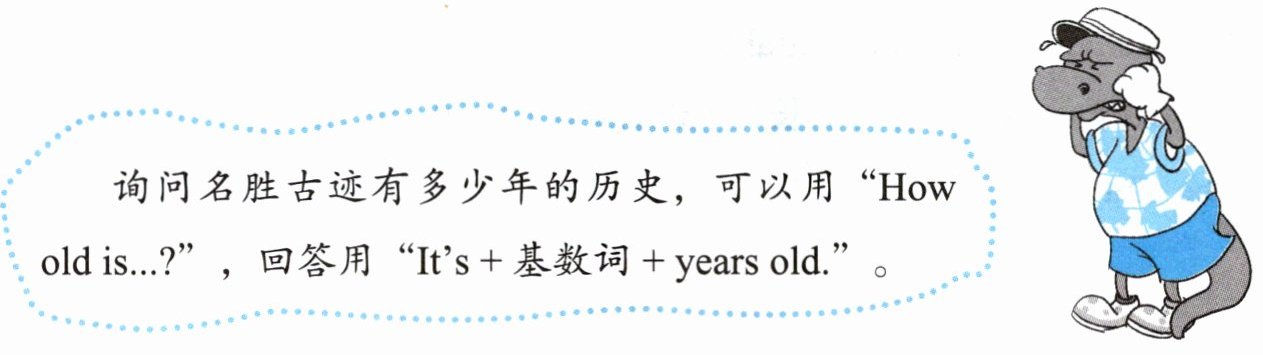
4. — How old is the Palace Museum?
— It's .(大约600年)
1. — May I ?(给你照相)
— Sure!
2. — Help! I hurt my leg!
— !(别担心)I can .(帮助你)
3. It's (天气晴朗的)today. The sky is .(蓝色的)
4. — How old is the Palace Museum?
— It's .(大约600年)
答案
1. take a picture of you
2. Don't worry; help you
3. sunny; blue
4. about 600 years old
2. Don't worry; help you
3. sunny; blue
4. about 600 years old
解析
1. “给你照相”的英文固定表达为take a picture of you,情态动词May后接动词原形。
2. “别担心”的英文是Don't worry,“帮助你”是help you,情态动词can后接动词原形。
3. “天气晴朗的”用形容词sunny,“蓝色的”用形容词blue,用于描述天气和天空的特征。
4. “大约600年”的英文表达为about 600 years old,用于回答物品的年龄。
2. “别担心”的英文是Don't worry,“帮助你”是help you,情态动词can后接动词原形。
3. “天气晴朗的”用形容词sunny,“蓝色的”用形容词blue,用于描述天气和天空的特征。
4. “大约600年”的英文表达为about 600 years old,用于回答物品的年龄。
Ⅳ. Match the pictures with the sentences. 把句子和图片匹配起来。
1.
2.
3.

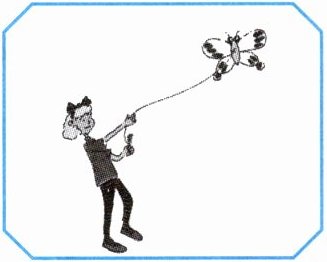
4.
5.
6.

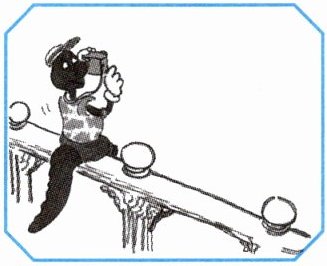
Danny is taking a picture.
Flying a kite is easy for Jenny.

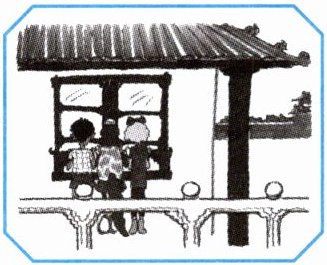
They are looking in the window.
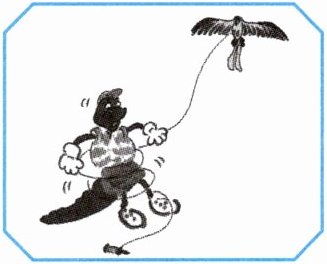
Danny can't fly his kite high.
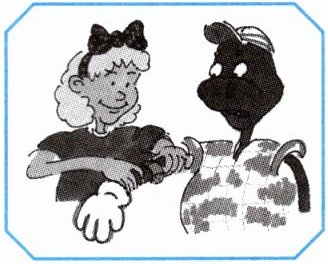
Jenny is helping Danny with his arm.
Danny is falling.
1.
2.
3.
4.
5.
6.
Danny is taking a picture.
Flying a kite is easy for Jenny.
They are looking in the window.
Danny can't fly his kite high.
Jenny is helping Danny with his arm.
Danny is falling.
答案
1. Danny can't fly his kite high.
2. Danny is taking a picture.
3. They are looking in the window.
4. Danny is falling.
5. Jenny is helping Danny with his arm.
6. Flying a kite is easy for Jenny.
2. Danny is taking a picture.
3. They are looking in the window.
4. Danny is falling.
5. Jenny is helping Danny with his arm.
6. Flying a kite is easy for Jenny.
解析
根据图片内容与句子含义的对应关系进行匹配:
1. 图1里Danny的风筝飞不起来,对应句子“Danny can't fly his kite high.”
2. 图2里Danny拿着相机在拍照,对应句子“Danny is taking a picture.”
3. 图3里两个人正往窗户里看,对应句子“They are looking in the window.”
4. 图4里Danny处于摔倒的状态,对应句子“Danny is falling.”
5. 图5里Jenny在扶着Danny的胳膊,对应句子“Jenny is helping Danny with his arm.”
6. 图6里Jenny很轻松地放着风筝,对应句子“Flying a kite is easy for Jenny.”
1. 图1里Danny的风筝飞不起来,对应句子“Danny can't fly his kite high.”
2. 图2里Danny拿着相机在拍照,对应句子“Danny is taking a picture.”
3. 图3里两个人正往窗户里看,对应句子“They are looking in the window.”
4. 图4里Danny处于摔倒的状态,对应句子“Danny is falling.”
5. 图5里Jenny在扶着Danny的胳膊,对应句子“Jenny is helping Danny with his arm.”
6. 图6里Jenny很轻松地放着风筝,对应句子“Flying a kite is easy for Jenny.”
Ⅴ. Write sentences. 写出问句或者答语。
1. — What are you doing? — .
2. — ? — He is ten years old.
3. — ?
— No, I hurt my arm.
4. — ?
— I see some chairs and tables.
1. — What are you doing? — .
2. — ? — He is ten years old.
3. — ?
— No, I hurt my arm.
4. — ?
— I see some chairs and tables.
答案
1. I'm reading a book(答案不唯一,合理的现在进行时表达均可)
2. How old is he
3. Are you okay/Are you all right
4. What do you see
2. How old is he
3. Are you okay/Are you all right
4. What do you see
解析
1. 问句为现在进行时的特殊疑问句,回答需用“I'm + 动词现在分词(+其他)”的现在进行时结构,合理即可。
2. 根据答语“他十岁了”,可知问句是询问年龄,要用询问年龄的句型“How old is he?”。
3. 根据答语“不,我伤到胳膊了”,可知问句是询问对方是否安好,可用“Are you okay?”或“Are you all right?”。
4. 根据答语“我看见一些椅子和桌子”,可知问句是询问对方看到了什么,要用“What do you see?”。
2. 根据答语“他十岁了”,可知问句是询问年龄,要用询问年龄的句型“How old is he?”。
3. 根据答语“不,我伤到胳膊了”,可知问句是询问对方是否安好,可用“Are you okay?”或“Are you all right?”。
4. 根据答语“我看见一些椅子和桌子”,可知问句是询问对方看到了什么,要用“What do you see?”。
