登录
三、阅读文段,根据提示补充完整思维导图(请填写关键信息)
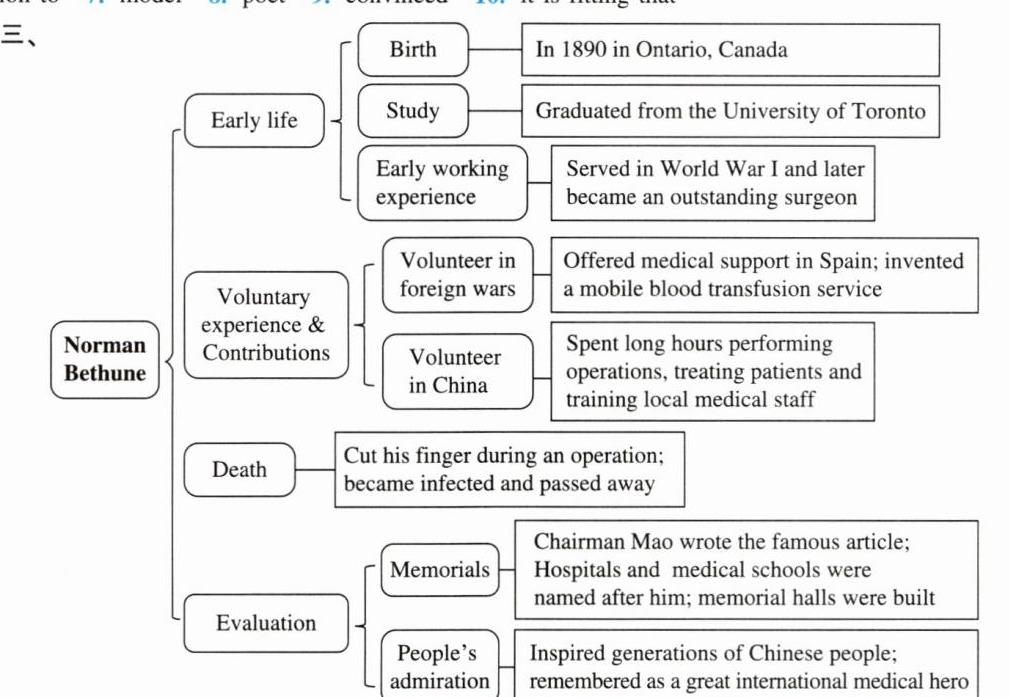
Norman Bethune was a great Canadian doctor and international humanitarian. Born in 1890 in Ontario, Canada, he graduated from the University of Toronto as a medical doctor in 1916. In his early years, he served in World War I and got rich experience in treating wounded soldiers. Later, he became an outstanding surgeon(外科医生) and was widely respected in the medical field.
Bethune was selfless and volunteered to serve in foreign wars. In 1936, he went to Spain to offer medical support during the war. To save more lives, he invented a mobile blood transfusion(输血) service, which greatly improved medical treatment for injured soldiers on the front line.
Bethune is best-known for his contributions to China during the Chinese People’s War of Resistance Against Japanese Aggression. In 1938, he decided to travel to northern China, where countless people suffered and lost their lives in the war. He worked selflessly for Chinese soldiers and ordinary local people. He spent long hours performing operations, treating patients and training local medical staff. He also improved simple medical equipment and simplified treatment methods to adapt to difficult wartime conditions.
Bethune never cared about his own safety or comfort. He always remained on the front line to save lives. Sadly, in 1939 in Hebei, he cut his finger during an operation. The wound became infected. With no timely and proper medical treatment, he passed away shortly after.
Though he had a short life, Bethune devoted himself entirely to helping others. To honour his great contributions, the Chinese people have kept his memory alive in many meaningful ways. After his death, Chairman Mao wrote the famous article In Memory of Norman Bethune to praise his great spirit. Moreover, hospitals and medical schools were named after him to uphold his selfless spirit. Memorial halls were also built in China for people to visit and learn from his deeds.
His spirit of selflessness and devotion has inspired generations of Chinese people.
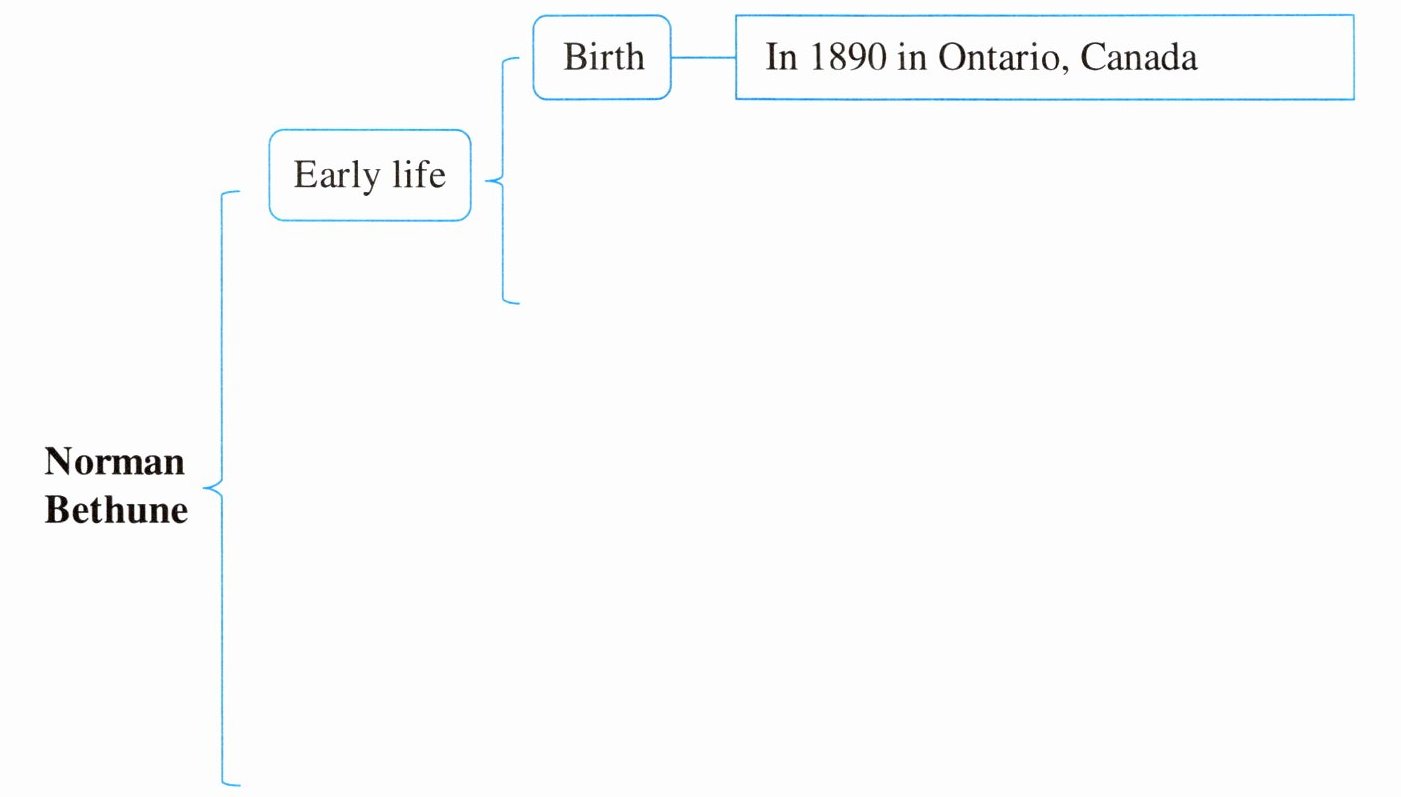
Norman Bethune was a great Canadian doctor and international humanitarian. Born in 1890 in Ontario, Canada, he graduated from the University of Toronto as a medical doctor in 1916. In his early years, he served in World War I and got rich experience in treating wounded soldiers. Later, he became an outstanding surgeon(外科医生) and was widely respected in the medical field.
Bethune was selfless and volunteered to serve in foreign wars. In 1936, he went to Spain to offer medical support during the war. To save more lives, he invented a mobile blood transfusion(输血) service, which greatly improved medical treatment for injured soldiers on the front line.
Bethune is best-known for his contributions to China during the Chinese People’s War of Resistance Against Japanese Aggression. In 1938, he decided to travel to northern China, where countless people suffered and lost their lives in the war. He worked selflessly for Chinese soldiers and ordinary local people. He spent long hours performing operations, treating patients and training local medical staff. He also improved simple medical equipment and simplified treatment methods to adapt to difficult wartime conditions.
Bethune never cared about his own safety or comfort. He always remained on the front line to save lives. Sadly, in 1939 in Hebei, he cut his finger during an operation. The wound became infected. With no timely and proper medical treatment, he passed away shortly after.
Though he had a short life, Bethune devoted himself entirely to helping others. To honour his great contributions, the Chinese people have kept his memory alive in many meaningful ways. After his death, Chairman Mao wrote the famous article In Memory of Norman Bethune to praise his great spirit. Moreover, hospitals and medical schools were named after him to uphold his selfless spirit. Memorial halls were also built in China for people to visit and learn from his deeds.
His spirit of selflessness and devotion has inspired generations of Chinese people.
答案